

An ancient predator, a collapsed tunnel, and the mausoleum that refuses to give up its secrets
Right, so picture this: it’s a perfectly ordinary Tuesday in Richmond, Virginia – autumn light doing that amber thing through the oak trees and underneath the Church Hill neighbourhood, the earth simply decides it has had enough. Workers boring through the old railway tunnel in 1925 hear a groan so deep it belongs to the geological record, not any sound a human throat should make. Then the tunnel collapses, and the world above swallows three men whole. If you grew up reading Lovecraft under the duvet with a torch, you already know where this is going.
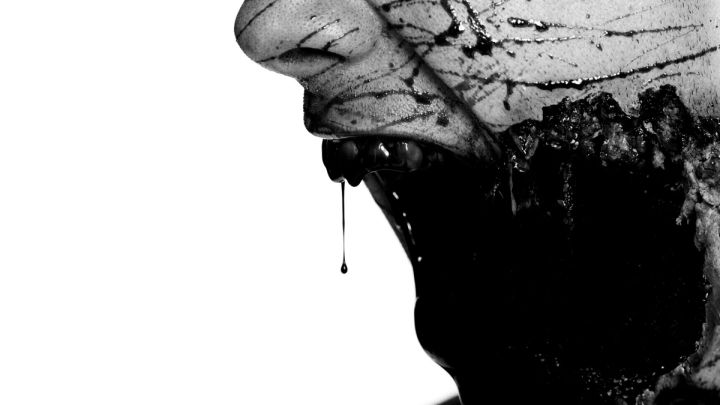
“They found a creature crouching over the victims, jagged teeth, wild eyes and it fled before they could catch it.”
The rescue teams who went in after the collapse weren’t prepared for what they found, and honestly, who would be? Because huddled among the dead and the dust, by all accounts of the legend, was something that wasn’t quite a man. Jagged teeth. An unnatural stillness. Crouching over the victims with the proprietary calm of something that considers other bodies a resource. The workers fled, because obviously they did. The creature fled too but with considerably more purpose. It sprinted through the Richmond night and disappeared into Hollywood Cemetery, where it apparently decided the mausoleum of one W. W. Pool was a perfectly acceptable bolthole. Reader, same.
Here’s the part that makes this legend genuinely satisfying from a mythology standpoint: there’s a second version. In the alternate origin story, the vampire was exiled from England run out by a populace who’d had quite enough of the blood-drinking, thank you very much and eventually ended up in Virginia.
This is the version I appreciate most, because it maps rather neatly onto a certain type of colonial Gothic. The Old World pushes out its monsters and they wash up somewhere newer, somewhere without the institutional memory to know what it’s dealing with. Sound familiar to anyone else from the Pacific? We had our own versions of creatures that crossed water. Taniwha don’t need mausoleums, but they absolutely understand the principle of staking a territorial claim.
Hollywood Cemetery itself deserves its own paragraph of appreciation, because it is genuinely, uncommonly beautiful in the way that only Victorian-era American cemeteries achieve all swooping hills over the James River, Confederate monuments, and the bones of two American presidents tucked into the hillside like a filing system for historical consequence.
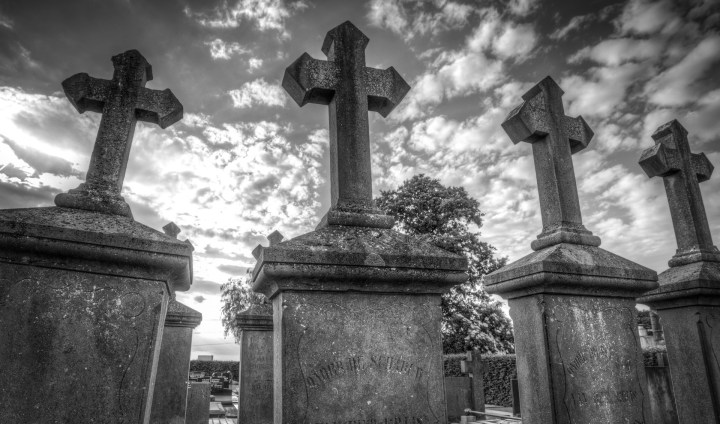
The Pool mausoleum sits within this landscape with the confidence of a structure that has something to hide. Local tradition holds that the stone around it bears scratch marks. That the temperature nearby dips even in July. That the padlock on the iron door has never, in living memory, been successfully opened from the outside.
What I find most compelling about the Richmond Vampire legend and I’ve spent a deeply unreasonable amount of time thinking about this is how perfectly it functions as industrial-era horror. The tunnel collapse was real. Three men did die. The creature that may or may not have been down there with them represents the 1920s working class confronting something ancient and indifferent beneath the city’s infrastructure. It’s the fear that progress itself disturbs something better left alone.
The Church Hill Tunnel is still there, bricked up, silent. And the Pool mausoleum still stands in Hollywood Cemetery locked, watching, patient in the way that things which do not age are always patient.
I’m writing this from New Zealand, where the night sits differently on the land, where our own dark waters have their own residents. But I know the chill of a story that refuses to stay buried. Some legends are like that. They just keep crawling back.
 Gothic Bite Magazine