
For centuries, Snow White has been celebrated as one of the world’s most beloved fairy tales. Yet beneath the poisoned apple and happily ever after lies imagery that modern psychology finds surprisingly unsettling.
The Brothers Grimm Fifty-Third Fairy Tale
The German fairy tale of Snow White was first written in the early 19th century. The first edition was published in 1812 by the Brothers Grimm as part of their collection, Grimms’ Fairy Tales and was the fifty-third entry.
But the final revision of the story was done in 1854 and can be found in the 1857 version of the Grimm’s Fairy Tales. It was first published in 1823 under the title Snow-Drop, which was the earliest translation. Another title used was Little Snow White.
The Fairy Tale We Think We Know
This summary of the fairy tale follows the plot found in the definitive 1857 edition from the Grimms’ Fairy Tales collection.
The story begins with a queen sewing next to an open window as it snows outside, and she pricks her finger with a needle from which three blood drops fall onto the snow. She says to herself, “How I wish that I had a daughter who had skin as white as snow, lips as red as blood and hair as black as ebony.” The queen later dies not long after giving birth to her daughter whom she names Snow White.

A year later, the king marries a beautiful woman, but her vanity and wickedness are pale in comparison to her witchcraft. She also is the owner of a magic mirror to whom she asks every morning, “Mirror, mirror on the wall, who is the fairest one of all?” And the answer is always the Queen and the mirror never lies. At the age of seven, Snow White’s fairness surpasses the Queen’s, and she is made aware through the mirror.
The Queen refuses to accept the answer. Her envy grows and from that point on she is determined to make a rival of Snow White. Unable to make her ugly, the Queen turns to a huntsman who she orders to bring Snow White into the forest and kill her. But killing Snow White isn’t enough. She commands him to bring back her lungs and liver so she could eat them with salt.
The huntsman does as he’s told and brings Snow White to the forest but when comes the time to kill the princess, he reveals the Queen’s plan and Snow White begs for her life, “Spare me this mockery of justice! I will run away into the forest and never come home again!” The huntsman spares Snow White and brings a boar’s lungs and liver to the Queen who eats them with salt.
After hours of running through the forest, Snow White finds a cottage belonging to seven dwarfs. She finds it empty but eats some of the food and drinks some of the wine before testing all the beds. Finding one she likes she falls asleep.
As the seven dwarfs enter their home, they believe a burglar went through their belongings and they search the house only to find Snow White sleeping in the last bed. When she wakes up, she tells them of the Queen and what she intended to do to her. They accept to have her live with them as long as she keeps the house in order. They warn her to be careful of strangers and not let anyone in while they are working in the mountains.
Meanwhile, the Queen believes Snow White to be dead and asks her question to the mirror again. The answer comes that only Snow White is the fairest in the land. But it also tells her that she is living with the dwarfs. She decides to take the matter into her own hands.
The Queen used her witchcraft to disguise herself first as an old peddler and offers Snow White a colourful silky laced bodice as a gift. She laces her up tightly and Snow White faints. When the seven dwarfs return, they loosen the lace and Snow White wakes up. On her second attempt, the Queen dresses as a comb seller and persuades Snow White to let her comb her hair with a poisoned comb. She is later revived by the dwarfs who remove the comb from her hair.
Lastly, the Queen cloaks herself as a farmer’s wife and gives Snow White an apple. Afraid, Snow White doesn’t accept it at first, but the Queen then cuts the apple in half, takes a bite from the green side and lets Snow White bite into the red poisoned side. She falls into a coma.
The seven dwarfs try to loosen her clothes, comb her hair, and Snow White doesn’t wake up. They believe the Queen has killed her and so they place Snow White in a coffin.
After three days of mourning, the dwarfs think it is time to bury Snow White, but she still appeared alive and so they move her to a glass coffin. They write her name in gold with a note letting anyone know she was the daughter of a king. The glass coffin was placed on a mountain and one dwarf guards it along with animals.
A while later, a prince on a hunting trip finds Snow White who appears to be dead in her glass coffin. The seven dwarfs tell him her story and so he offers a reward in exchange for him to take Snow White. They refuse. The prince begs them as he says that he can now no longer live without seeing Snow White. He would honour her and treat her as the most precious thing in his life.
Believing him, the dwarfs agree. The prince takes Snow White with him to her father’s castle. As she’s being transported, one of the servants loses balance against the glass coffin and this dislodges the piece of poisoned apple from Snow White’s throat. It magically revives her, and she awakens. Overjoyed, the prince declares his love for Snow White and she agrees to marry him.
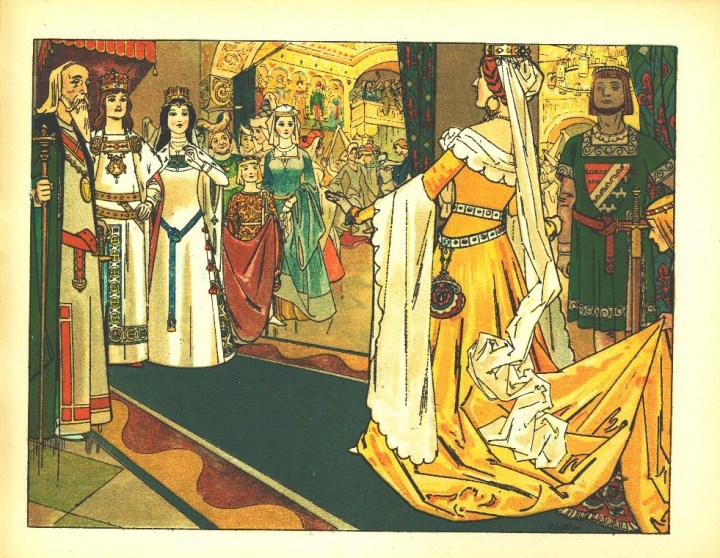
The Queen, invited to the wedding, dresses herself and asks her magic mirror who is the fairest of the land. The answer comes as a shock as it says the bride is a thousand times fairer than her. Finding no peace, the Queen decides to attend the wedding. Enraged after seeing that the bride is Snow White, the queen freezes in place. As a punishment for her attempts on Snow White’s life, the Queen is ordered to wear a pair of red-hot iron slippers and dance until she dies.
Yet one scene from this fairy tale has continued to provoke discussion among psychologists, folklorists, and modern readers alike: the prince’s fascination with a young woman he believes to be dead.
Word of Warning
It is important to distinguish literary symbolism from clinical psychology. Fairy tales are not psychiatric case studies, and there is no evidence that the Brothers Grimm intended to portray necrophilia. However, psychologists and modern readers have observed that certain images within the story resemble themes associated with necrophilic fantasy, particularly the idealization of a beautiful, motionless body believed to be dead.
Snow White Is Not Sleeping
In the Brothers Grimm fairy tale Snow White, the princess appeared lifeless three times. The third and final attempt came with the poisoned apple. Once she bit it, she fell into a coma but to the rest of the world she was dead. Her appearance never changed, but she remained unresponsive despite the dwarfs’ repeated attempts to save her.
After multiple tries at reviving Snow White, the dwarfs came to the realization that she may be dead. Pale, motionless, gone. They built her a coffin but after mourning her for days, they realized she wasn’t losing her beauty. She was a well-preserved corpse.
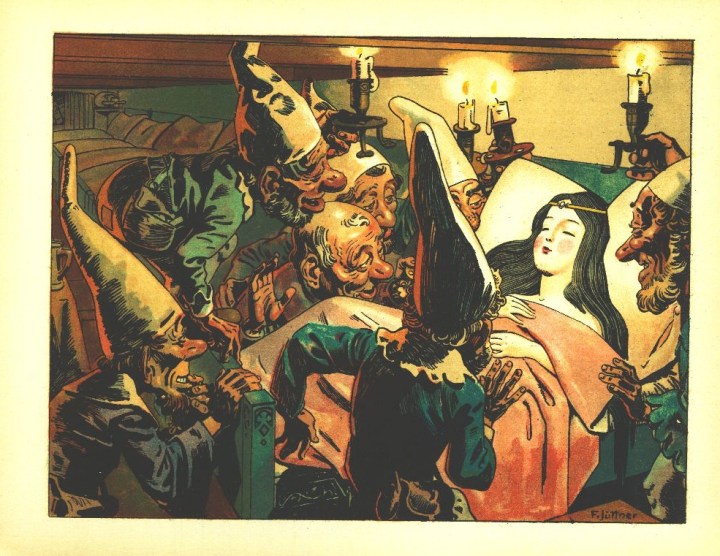
For that reason, they built a glass coffin. Unable to bring themselves to bury her, they placed Snow White where her beauty could still be seen. She appeared alive, but to them she was dead. To everyone around her, she was gone, making her preservation all the more significant. To the dwarfs, Snow White was a corpse, no matter how beautiful she remained.
The Glass Coffin
The dwarfs put Snow White in a regular wooden coffin but after mourning her for days, they realized her appearance hadn’t faded. Unable to bring themselves to bury her, they instead built her a glass coffin where her beauty could still be seen.
Whether the Brothers Grimm intended it or not, the glass coffin becomes a powerful symbol within the fairy tale. It becomes a vessel that preserves Snow White’s youth, displays her beauty, and transforms her into an image of untouched perfection. In a way, Snow White’s death becomes something beautiful, not horrific.
She’s admired by everyone who lays eyes upon her. The prince becomes fascinated by her beauty visible through the glass coffin and asks the dwarfs for permission to take her with him. The glass acts as a reflection of Snow White’s beauty more than it does a representation of death.
The Prince And Necrophilia
In the Snow White fairy tale, the prince develops an attachment to the princess who he believes is dead. That particular behaviour has raised eyebrows among some readers who draw parallels between his conduct and necrophilic imagery.
The prince declares that he can no longer live without Snow White. He begs the dwarfs for permission to bring her to his castle. His attraction to the princess can be interpreted as being enticed with apparent death and a passive body. Her beauty is idealized.
After receiving permission to bring her with him, the prince is taking Snow White to his castle. From the prince’s perspective, he is willingly taking home what he believes to be a corpse. In other words, he is moved by the beauty of a lifeless body.
The parallels to necrophilic imagery lie less in a complete lack of agency than in Snow White’s preserved beauty. She also looks alive despite being lifeless. The prince is overwhelmed by the princess’ appearance and doesn’t seem to mind that, to him, she is dead.
Beauty Frozen in Time
One of the biggest themes in Snow White is that the princess is immortalized exactly as she is. She will never age or change. Her state of lifelessness allows her to remain forever as she appears. Her beauty won’t fade, and she will remain forever young.
Snow White is viewed as delicate and kind. There is a purity to her, and she is accepting of everyone. She represents an ideal princess. And by falling into a coma after biting the poisoned apple, her perfection becomes forever preserved.
It is the combination of those themes that has fascinated artists for centuries. It is not only her physical appearance that is revered but her innocence and kindness. After all, kindness, innocence, and compassion often require far more courage than history gives them credit for.
Disney Softened the Horror
In 1937, Disney’s animated musical film Snow White and the Seven Dwarfs premiered in theatres. The Brothers Grimm fairy tale went under the knife, receiving a makeover for a much broader audience, including children.
The wonderfully acclaimed movie did some changes to the German fairy tale. The theme of cannibalism, in which the Queen orders the huntsman to bring her Snow White’s lungs and liver so she can eat them with salt, was pushed aside.
The three attempts on her life were reduced to the poisoned apple, which became an iconic symbol to represent Snow White. The bodice and poisoned comb were cut from the animated masterpiece.
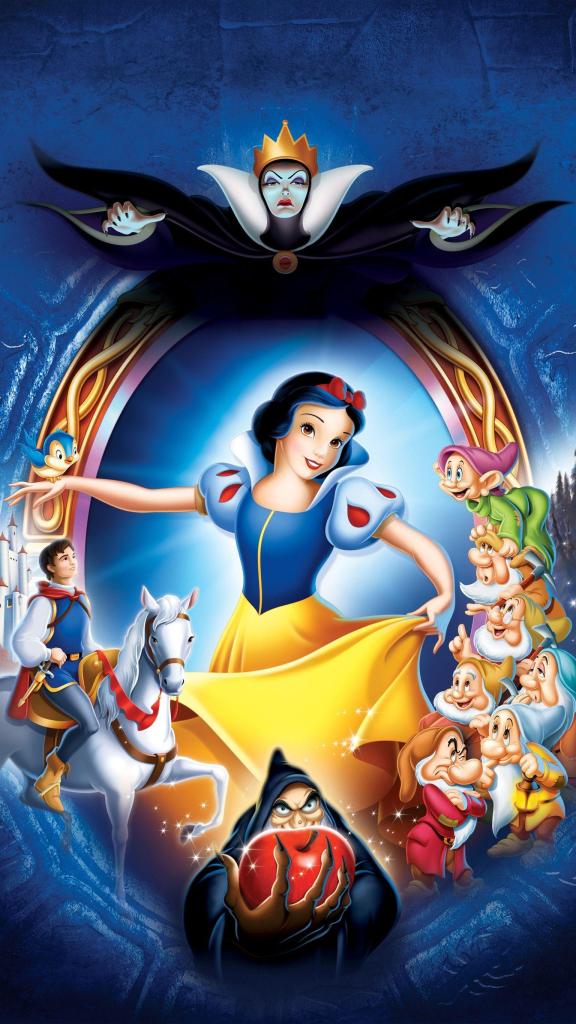
Another change was the Evil Queen’s implied death when she falls from the edge of a cliff as the dwarves run after her. This differs from the Brothers Grimm telling of the Queen attending the wedding of Snow White and the prince. It also removes the punishment of the Queen dancing in red-hot iron slippers until her death.
But the biggest change remains the prince no longer begging the dwarfs to let him take Snow White home or admitting he cannot live one more day without Snow White’s beauty. He also does not leave with what he believes to be her corpse. Instead, the prince kisses Snow White and when she awakens, she embraces him. It is followed by them leaving on his horse toward the castle and their happy ending.
While the original fairy tale went under surgery to appeal to a wider audience, Snow White and the Seven Dwarfs remained, at its core, the same fairy tale. The original themes are still found within the animated film. The themes of beauty and death remain woven into the story.
Final Thoughts
Whether viewed through folklore, literary symbolism, or modern psychology, Snow White remains far darker than many remember. The glass coffin does more than preserve a princess. It preserves one of the oldest and most unsettling questions in storytelling: why are beauty and death so often portrayed together?

