

Sitting in the Venetian Lagoon between Venice and Lido, Poveglia Island has been called the most haunted place in Italy—and quite possibly the world. Today, the Italian government keeps the island closed to visitors. But why? The answer begins with a plague.
The Romans first settled Poveglia sometime around the 5th century CE, as people from the mainland fled barbarian invasions. Its population grew steadily over the following centuries, thriving on agriculture and fishing. But in 1380, following a naval battle between Venice and Genoa, the Venetian government relocated the island’s residents to the mainland and converted it into a military outpost. Poveglia sat mostly deserted for the next few hundred years—and that quiet stretch of emptiness was about to become very important.
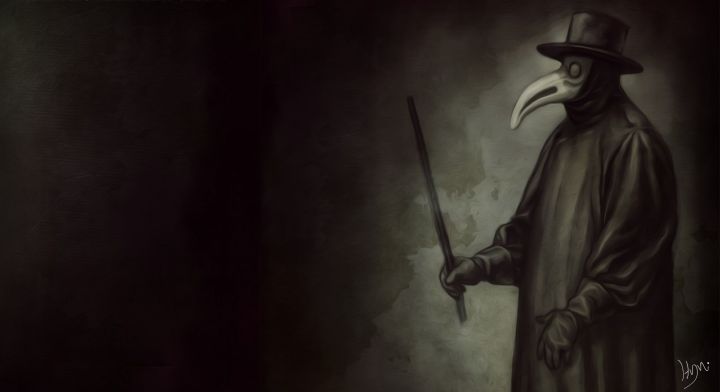
When the Black Death swept through Europe in the 14th century, Venice was one of its hardest-hit cities. The Republic of Venice needed somewhere to quarantine the sick and dispose of the dead—fast. Poveglia, already empty and conveniently situated in the lagoon, became the answer. Ships arriving in Venice were rerouted to the island first, where passengers were examined and the infected were forced to disembark. The sick, the dying, and the dead were all left on Poveglia together, with little distinction made between them. Bodies were piled into mass graves, then later burned in enormous pyres.
This continued on and off over several centuries, including during the devastating plague of 1630. Estimates vary, but historians believe that somewhere between 100,000 and 160,000 people died on Poveglia over the course of its use as a plague island. Archaeological surveys have confirmed that the soil of much of the island is roughly 50% human ash and bone. Fishermen in the area have long refused to cast their nets near the island, fearing they will pull up human remains—which, on occasion, they have.
The plague island was decommissioned in 1814. Then, in 1922, a new chapter of Poveglia’s dark history began when a psychiatric hospital was constructed on the island.
The hospital, which also served as a home for the elderly, quickly developed a sinister reputation. According to local legend, one particular doctor conducted cruel and unsanctioned experiments on his patients, performing surgeries without anesthesia, drilling into skulls, and subjecting the vulnerable residents to treatments that bore more resemblance to torture than medicine. Patients reportedly began seeing the ghosts of plague victims around the hospital, whispering to them from the shadows. Whether or not the staff believed these claims, the reports were largely dismissed as symptoms of mental illness.
The doctor’s end, as local legend tells it, was fittingly grim. He is said to have gone mad himself—some say driven there by the very ghosts his patients had described—and threw himself from the hospital’s bell tower. Some accounts say he survived the fall, only to be strangled by a mist rising from the ground. Whether legend or truth, the doctor vanished from the island under murky circumstances, and the hospital closed for good in 1968.
Since then, Poveglia has sat abandoned. The buildings are crumbling, reclaimed slowly by vines and the salt air off the lagoon. In 2014, the Italian government attempted to auction off a 99-year lease on the island for redevelopment, sparking international outrage and protests from Italian citizens who felt that the island’s dark history made it unsuitable for tourism. The auction was eventually suspended, and the island’s fate remains unresolved.
Those who have managed to access the island illegally—urban explorers, journalists, and the occasional ghost hunter—report a deeply unsettling atmosphere. The bell in the old campanile allegedly rings on its own, despite the clapper having been removed long ago. Voices have been heard in empty rooms. Shadows drift through the hallways of the derelict hospital. Some visitors say the island feels wrong in a way that’s difficult to articulate, a bone-deep unease that has nothing to do with the darkness.
Perhaps that’s not surprising. Poveglia Island has absorbed more than a millennium of suffering: plague victims burned before they were dead, psychiatric patients experimented upon without consent, and the desperate, the dying, and the forsaken—all left on a small island in the middle of a lagoon, with nowhere else to go. If anywhere in the world has earned its haunted reputation, it’s here.

