
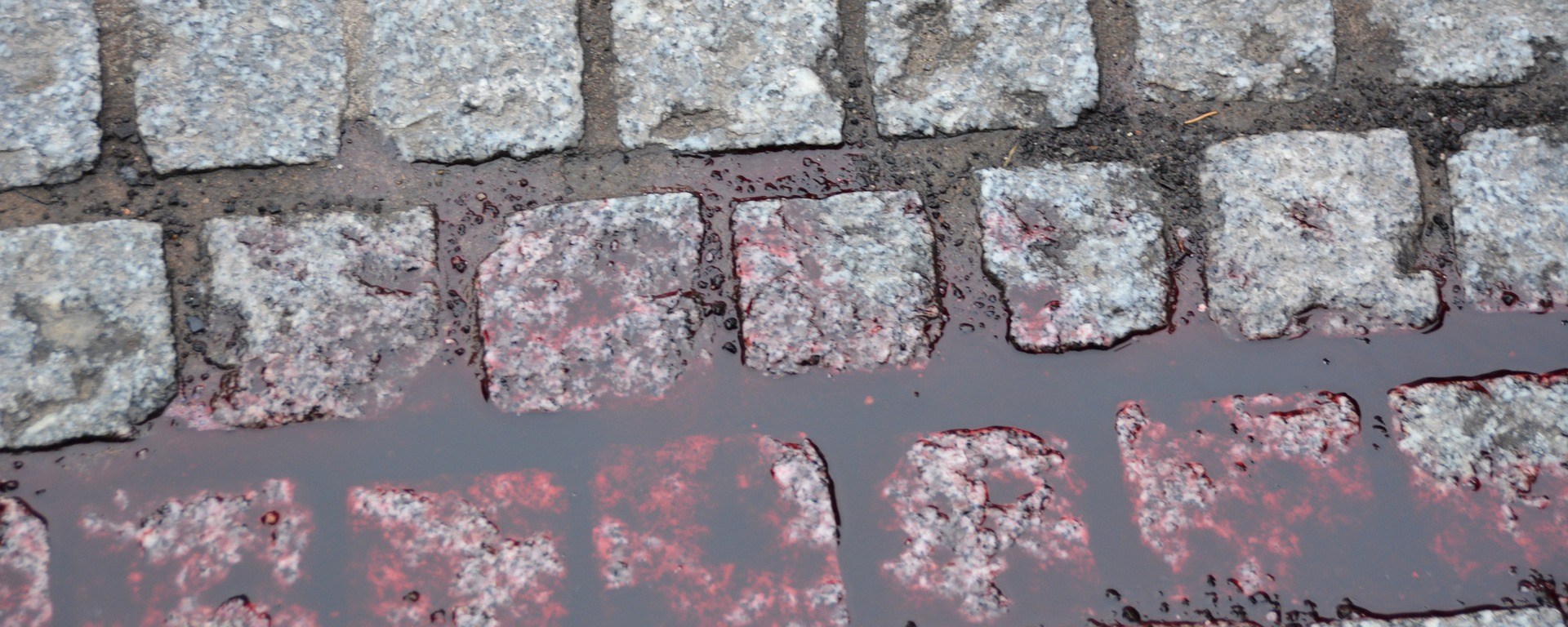
Somewhere beneath the feet of commuters crossing Philadelphia’s busy intersections, a secret is buried in the asphalt.
You might walk over it every single day without knowing. But if you stop, look down, and catch it at just the right angle, you’ll find a linoleum tile, roughly the size of a doormat pressed into the road’s surface and bearing one of the strangest phrases ever embedded in urban infrastructure: TOYNBEE IDEA IN MOVIE 2001 RESURRECT DEAD ON PLANET JUPITER. Welcome to the mystery of the Toynbee Tiles.
Since the 1980s, dozens of these handmade tiles have been discovered embedded in the streets of Philadelphia, New York City, Washington D.C., and Kansas City. Each one is a work of obsessive craft , cut from linoleum, coated in tar-like compounds, and apparently slipped beneath traffic until the weight of passing vehicles pressed them permanently into the road. Nobody saw them being installed. Nobody claimed credit. They simply appeared.
“They simply appeared pressed into the road by thousands of unknowing tyres, like messages from a ghost who needed the whole city as a printing press.”
The phrase itself is a riddle wrapped in a conspiracy theory. Arnold J. Toynbee, the British historian, wrote about cyclical history and, in one curious passage, floated the idea that the dead might one day be resurrected. The 2001 in the tile’s text almost certainly refers to Stanley Kubrick’s landmark 1968 film 2001: A Space Odyssey, with its themes of cosmic transcendence and transformation. But how these two ideas combine into a mandate to resurrect humanity on Jupiter and why that idea needed to be hammered into city streets is where rationality exits stage left.
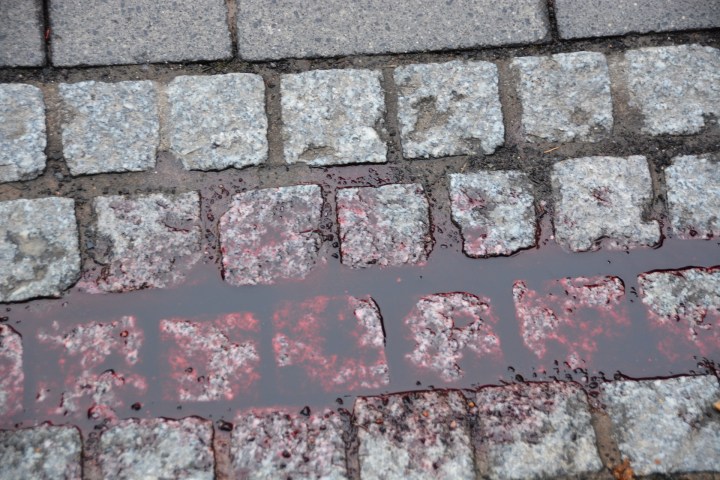
The tiles were not without variation. Some carried longer companion tiles nearby, dense with paranoid text railing against journalists, the Soviet Union, and a Philadelphia Inquirer reporter the author seemed to despise personally. These secondary tiles offered both personality and menace, suggesting someone who felt their grand idea had been suppressed and mocked and who had chosen the city’s asphalt as their manifesto.
The most compelling suspect identified through years of dedicated amateur investigation, culminating in the 2011 documentary Resurrect Dead was a reclusive Philadelphia man named James Lamb Jr. Lamb was a telephone company worker who, by all accounts, had developed a near-religious fixation on Toynbee’s resurrection concept and Kubrick’s film. He reportedly contacted journalists and even the Soviet Embassy about his ideas before his death in 2003. Evidence suggests he may have deployed tiles by dragging them beneath his car.
But evidence is not certainty, and the tiles guard their full story jealously. Most have been destroyed by road resurfacing. The few that survive are slowly being lost to time, crushed deeper into the earth, worn to illegibility by the tyres of a city that never knew to look down. What remains is a haunting portrait of one person’s obsessive, eccentric, achingly human desire to make the world believe in something extraordinary even if they had to embed it in the ground to be heard.
The Toynbee Tiles are many things: outsider art, urban myth, conspiracy artifact. But above all, they are a reminder that the strangest mysteries are not always found in ancient tombs or distant skies. Sometimes, they are right there underfoot, overlooked, pressed silently into the everyday world by someone who believed, with every fibre of their being, that the dead would rise again. On Jupiter.
 Gothic Bite Magazine