
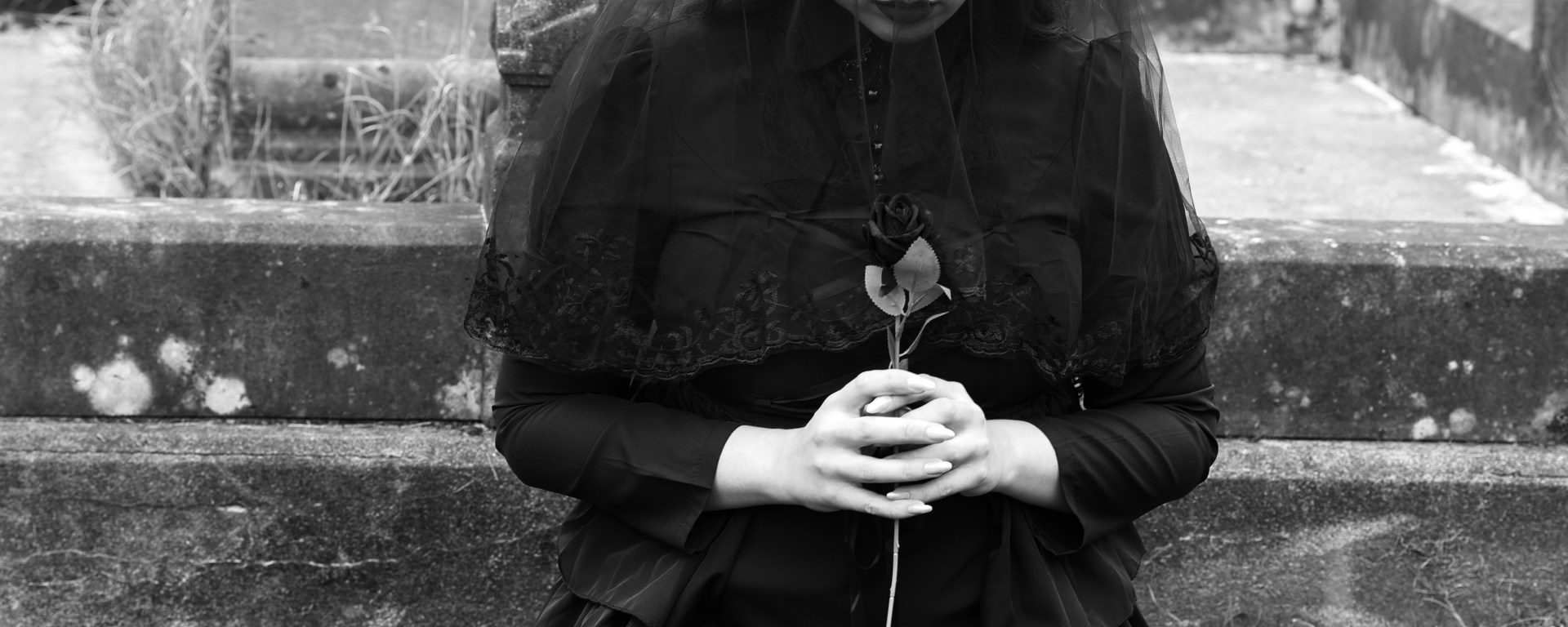
As both a photographer and someone who works in the funeral industry, I have always held a fascination with the theatricality and visual aesthetic of Victorian mourning practices. Death in the Victorian era was not hidden away or sanitised; it was ritualised, romanticised, and woven visibly into everyday life.

Mourning became a language in itself, communicated through clothing, jewellery, portraiture, and carefully observed social customs. Black crepe veils, jet jewellery, funeral cartes de visite, and elaborate graveside ceremonies transformed grief into something deeply visual and almost performative. It is this intersection between beauty, sorrow, symbolism, and identity that inspired this photographic series.
Modern society often treats death as something clinical and distant. In contrast, Victorian mourning culture embraced emotional expression openly and unapologetically. Widows in heavy black gowns and veils became haunting figures suspended between worlds, both present and absent, living yet symbolically consumed by loss. There is something profoundly gothic about that imagery, not merely in appearance but in atmosphere. The Victorian mourner became a character shaped by grief, ritual, and social expectation, and those themes continue to resonate strongly within gothic art and fashion today.
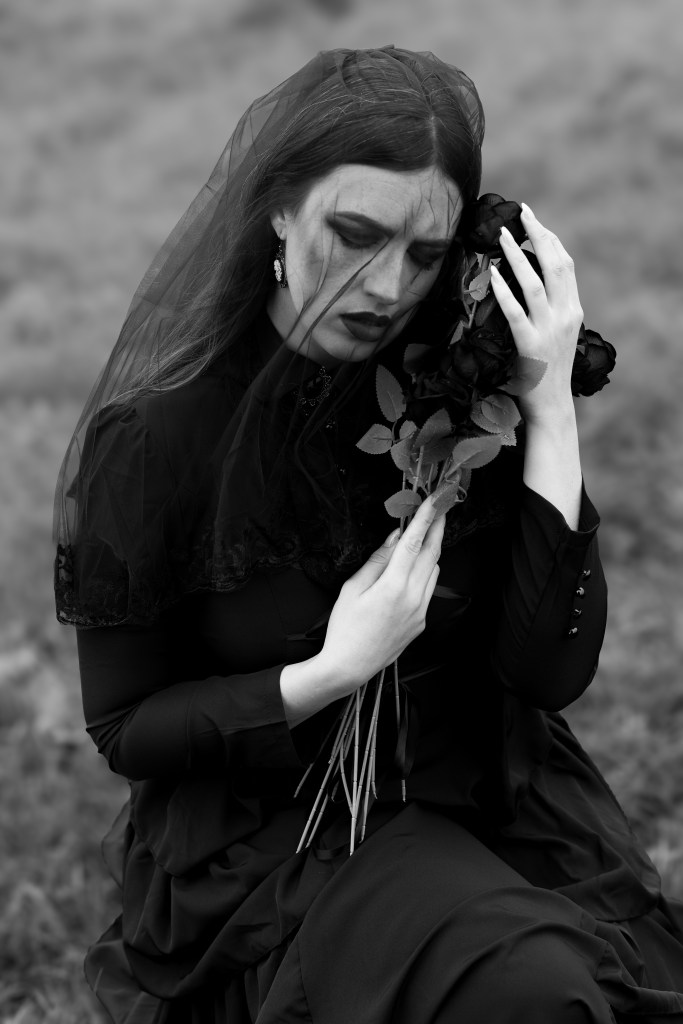
Through these photographs, I wanted to create portraits that evoke that same sense of melancholy elegance. The black veil serves as both a literal and symbolic barrier, obscuring and revealing the subject simultaneously. Veils have always fascinated me within funeral traditions because they represent privacy, separation, and transition. In these images, the veil becomes almost spectral, softening the figure and creating the impression of someone caught between memory and reality. The use of monochrome photography further reinforces this timeless quality. Removing colour strips the image back to emotion, texture, contrast, and shadow, allowing the viewer to focus entirely on mood and expression.
The bouquet of black roses featured throughout the series acts as another symbolic element. Roses traditionally signify love, devotion, and remembrance, but rendered in black they become distorted into something darker and more ambiguous. They suggest grief that has become internalised, love transformed through mourning into something eternal and unreachable. I wanted the flowers to appear almost funereal offerings, carried not only for the dead but perhaps for the mourner herself.

Location also played an important role in shaping the atmosphere of the work. I often subscribe to the idea of psychogeography, the idea that the land holds onto memory. So the ruined stone backdrop and isolated landscape were chosen specifically to create a feeling of decay, solitude, and permanence. Gothic imagery has always been deeply connected to ruins, cemeteries, and abandoned spaces because they visually remind us of mortality and the passage of time. These environments mirror the emotional landscape of grief itself, quiet, reflective, and haunted by absence.
Working within the funeral profession undoubtedly influences how I approach photography. Daily exposure to mourning rituals has given me a greater appreciation for the symbolism surrounding death and remembrance. I see funerals not only as ceremonies of loss but also as carefully constructed acts of love and visual storytelling. This series draws directly from that understanding. Rather than presenting death as frightening, I wanted to portray mourning as something intimate, poetic, and strangely beautiful, a meditation on memory, identity, and the enduring gothic romance of grief.
Model Emma Stacey
My Portfolio https://huwlloydgothicphotos.myportfolio.com/
My Instagram @mourninglightphoto
Kind regards
Huw Lloyd


Impressive! Love it.
LikeLiked by 1 person