
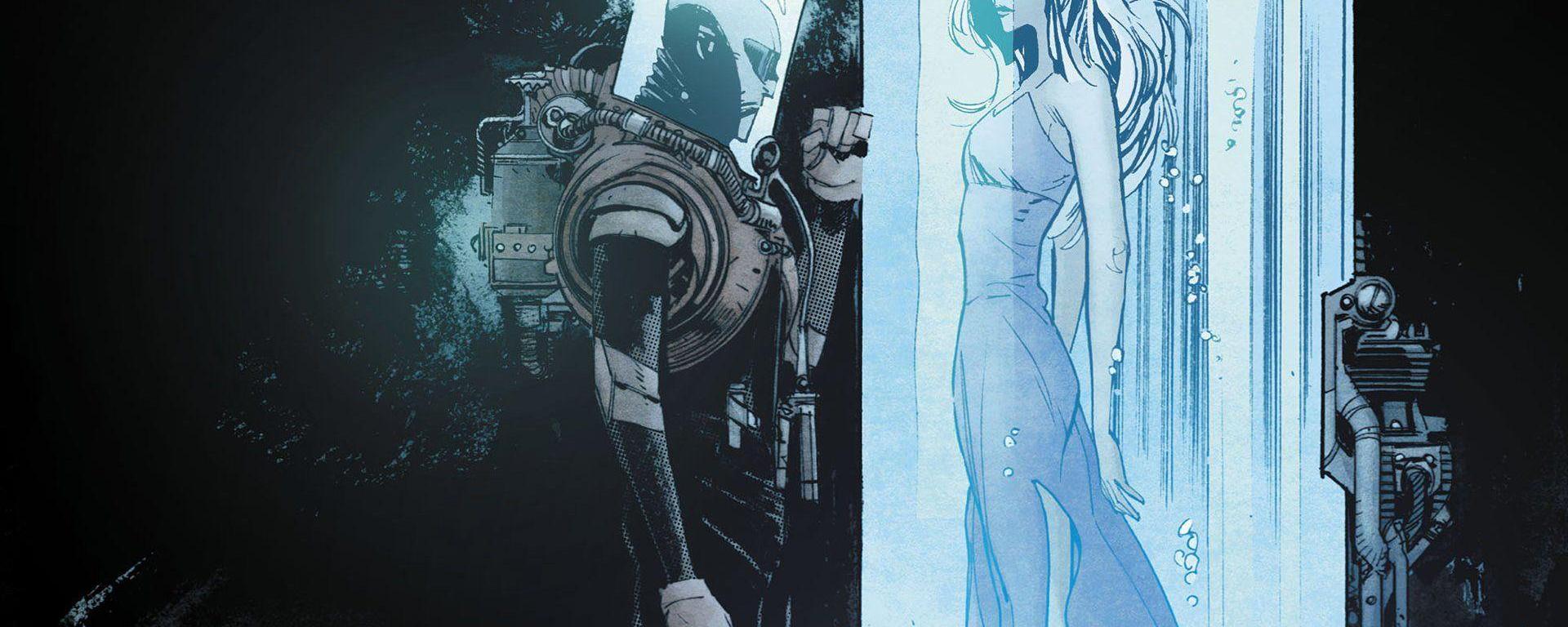
Mr. Freeze’s Arkham File follows Victor Fries’ transformation from an accomplished scientist into a man defined entirely by devotion. This deep psychological breakdown uncovers his misanthropy, obsessive grief, and intense experiments that turn science into obsession. Explore how Mr. Freeze transforms his pain into a personal crusade, using cryogenics as both a weapon and shield against Batman.
Mr. Freeze isn’t the typical inmate at Arkham Asylum. He may be the most emotionally burdened of them all. Unlike Gotham’s other criminals, who act on impulse, revenge, or entitlement, Fries operates with obsessive grief. He is not a madman consumed by chaos but a widow and scientist consumed by torment and obsession.
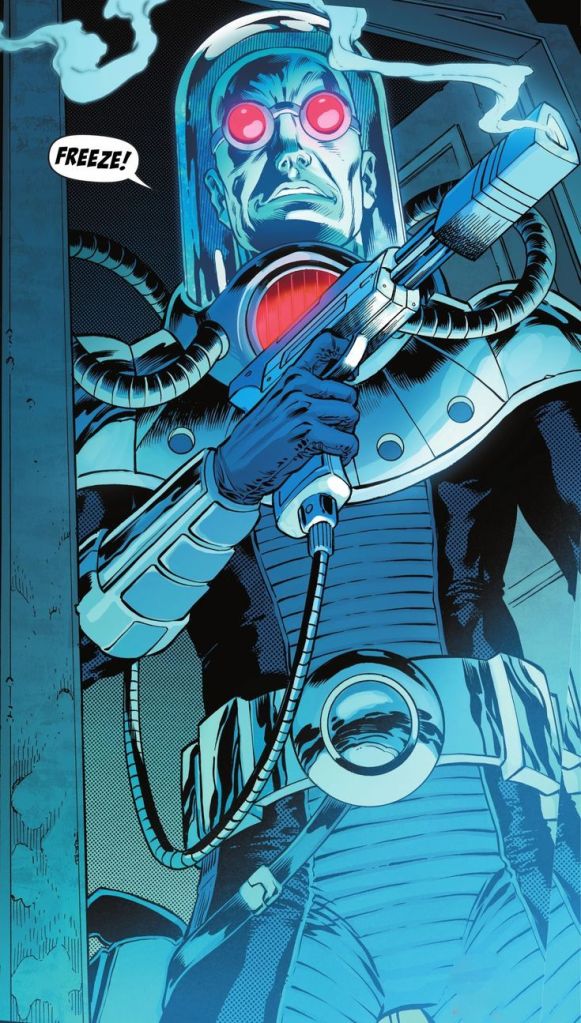
Step inside the Arkham File and explore the psychology behind Gotham’s most tormented adversary.
The Arkham Asylum Files
Arkham Asylum stands as Gotham City’s monument to madness, a place built for rehabilitation but infamous for its failures, horrors, and revolving-door villains.
Some criminals leave Arkham worse than when they arrived. Others use it as a temporary resting place before their next crime spree.
But what about Mr. Freeze?
Unlike Arkham’s other inmates, driven by delusion, revenge, or chaos, Victor Fries is driven by something far more dangerous than madness itself. He doesn’t seek power or to rule over Gotham, he seeks to resurrect his wife.
So, is he truly insane? Or is he something much more dangerous?
This Arkham File dissects his isolation, obsessive grief, and psychological dependence on cold, both as a physical necessity and as a reflection of his emotional state.
Step inside the Asylum. Let’s see what makes Mr. Freeze dangerous.
Mr. Freeze’s Psychological Profile
ARKHAM ASYLUM PSYCHIATRIC REPORT
PATIENT: DR. VICTOR FRIES
THREAT LEVEL: HIGH
EVALUATING PSYCHIATRIST: ‘DR.’ [REDACTED]
DATE: N/A
The Rejection of Humanity: Why Mr. Freeze Focuses on His Wife
Psychological Profile & Diagnosis
1. Misanthropy
Freeze demonstrates pronounced misanthropic tendencies, showing a deep distrust and emotional disconnection from humanity, which he views as indifferent or expendable in comparison to his devotion to Nora.
Victor Fries does not seek rehabilitation, he seeks to resurrect his wife regardless of the amount of dead bodies he leaves in his wake. Even his own condition of living in sub-zero temperatures comes second to his wife.
Victor Fries does not hate humanity in the traditional sense. Rather, he has withdrawn from it entirely. To him, the world has already failed in its most fundamental purpose to preserve what he loved most. Everything beyond Nora has become irrelevant.
2. Schizoid Personality Disorder Traits: Isolation as Survival
Mr. Freeze exhibits traits commonly associated with Schizoid Personality Disorder, particularly in his emotional detachment and extreme social withdrawal. He shows little interest in forming relationships, engaging with society, or participating in the emotional exchanges that define human connection.
To Victor Fries, most people are no longer individuals, they are obstacles, variables, or collateral damage in the pursuit of his singular goal.
However, Freeze does not fit a textbook schizoid profile. What makes him psychologically distinct is the exception to his detachment: his wife, Nora. While he remains emotionally distant from the rest of humanity, his attachment to Nora is absolute and unwavering.
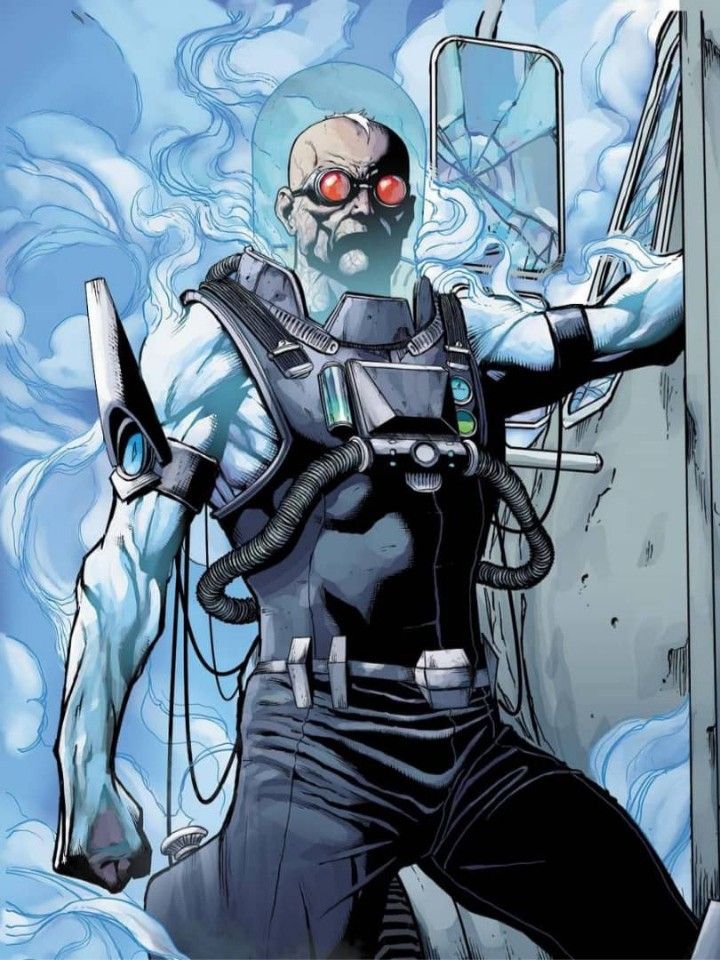
This creates a paradox. Freeze is not incapable of emotion, only of extending it beyond a single person. His entire emotional capacity has collapsed inward, focused entirely on one person, leaving nothing for anyone else.
In this sense, he is not devoid of empathy, but selectively empathetic. Nora exists within his emotional world. Everyone else exists outside of it.
His physical condition reinforces this isolation. Forced to exist in sub-zero environments, Freeze is literally separated from human warmth. His environment mirrors his psyche, cold, controlled, and devoid of connection.
Isolation, for Victor Fries, is not a symptom. It is a state of being.
3. Persistent Complex Bereavement Disorder: Frozen in Grief
At the core of Mr. Freeze’s psychology lies Persistent Complex Bereavement Disorder, an unresolved and prolonged form of grief that prevents emotional closure.
Victor Fries does not accept loss. He rejects it.
Rather than processing Nora’s condition as irreversible, he suspends her in time, literally and psychologically. Cryogenics becomes more than a scientific solution; it becomes a denial of reality itself.
Freeze is not moving forward, he is preserving the past.
This inability to let go transforms grief into obsession. Every action he takes, every crime he commits, is justified through a single belief: that Nora can be saved, no matter the cost.
His identity is no longer that of a scientist, or even a man. It is defined entirely by his role as Nora’s savior.
This creates a dangerous psychological loop:
- The more he loses, the more desperate he becomes
- The more desperate he becomes, the further he detaches from reality
- The further he detaches, the more justified his actions feel
In this way, Freeze is not simply grieving, he is trapped within grief, unable to progress beyond it.
He is, in every sense, emotionally frozen.
Evolution of Mr. Freeze Persona
Victor Fries’ transformation into Mr. Freeze is not a sudden descent into madness, but a gradual evolution shaped by grief, obsession, and circumstance. While his methods have evolved across different interpretations in DC Comics, his core motivation has remained unchanged: preserving Nora at any cost.
Originally introduced as Mr. Zero in the Silver Age, the character was reimagined in Batman: The Animated Series, where his tragic origin as a scientist trying to save his terminally ill wife became central to his identity. This version redefined him, not as a gimmick villain, but as a man driven by loss. From that point forward, most comic iterations have embraced this darker, more human portrayal.
What began as a desperate attempt to save Nora through cryogenics quickly became something far more extreme. Each failure, each interference, from corporate betrayal to Batman’s intervention, pushed Fries further away from ethical science and deeper into moral isolation. His work shifted from preservation to control, from healing to domination over life and death itself.
As his condition worsened, Freeze became permanently dependent on sub-zero environments, forcing him into a life physically and psychologically removed from humanity. His cryogenic suit is not just protection, it is a barrier between himself and the world he no longer belongs to. Warmth, once associated with love and life, is replaced by cold precision and emotional suppression.
Across various comic arcs, including storylines where Nora is revived, altered, or even becomes a separate antagonist, Freeze’s instability becomes even more apparent. When his purpose is threatened or fulfilled, he does not recover, he fractures psychologically. Without Nora as his anchor, his identity collapses, revealing that his obsession is not just about saving her, but about sustaining himself.
This creates a psychological paradox. Freeze is driven by love, yet expresses it through detachment, destruction, and control. The more he attempts to preserve Nora, the more he erases what remains of his humanity.
Victor Fries did not lose his humanity all at once. He froze it, piece by piece, until nothing remained but purpose.
Relationship with Batman: A Tragic Reflection
The conflict between Batman and Mr. Freeze is not simply hero versus villain, it is a clash between acceptance and denial.
Batman accepts loss.
Freeze rejects it.
Both men are defined by trauma. Bruce Wayne channels his pain into justice, using discipline and restraint to prevent others from suffering as he did. Victor Fries, however, refuses to move forward. He turns inward, devoting himself entirely to reversing the one loss he cannot accept.
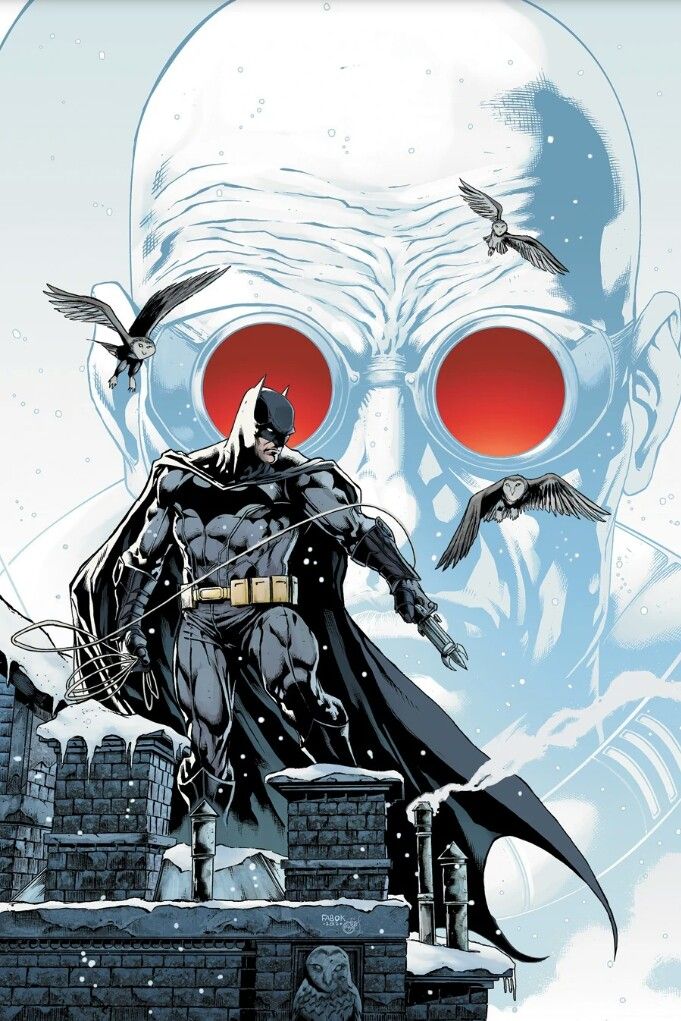
Where Batman draws a line, Freeze erases it.
To Batman, grief is something to endure.
To Freeze, grief is something to conquer.
This is what makes their encounters so compelling. Batman sees in Freeze what he himself could have become, a man consumed entirely by loss, willing to sacrifice everything for one impossible outcome.
Freeze, in turn, sees Batman as a contradiction. A man who has suffered deeply, yet chooses to let go rather than take control. To Freeze, this is not strength, it is failure.
Their conflict is not fuelled by hatred, but by opposing responses to the same wound.
Batman fights to protect the living.
Freeze fights to preserve the past.
And in doing so, they stand as reflections of what grief can create, one forged in resilience, the other frozen in obsession.
Final Verdict: The True Nature of Mr. Freeze
Victor Fries is not driven by chaos, nor by a desire for power. He is driven by grief: unresolved, unrelenting, and all-consuming.
His crimes are not acts of cruelty for their own sake, but desperate attempts to preserve the one person who gave his life meaning. In his mind, the world has already failed him. Everything that follows is justification.
Unlike many of Gotham’s villains, rehabilitation may not be impossible but it would require him to do the one thing he has refused from the beginning: let go.
Until then, containment remains the only viable solution, even if it has never been permanent.
Mr. Freeze is not trying to destroy the world.
He is trying to undo it.
And Gotham remains frozen in the aftermath of his grief.
 Gothic Bite Magazine