
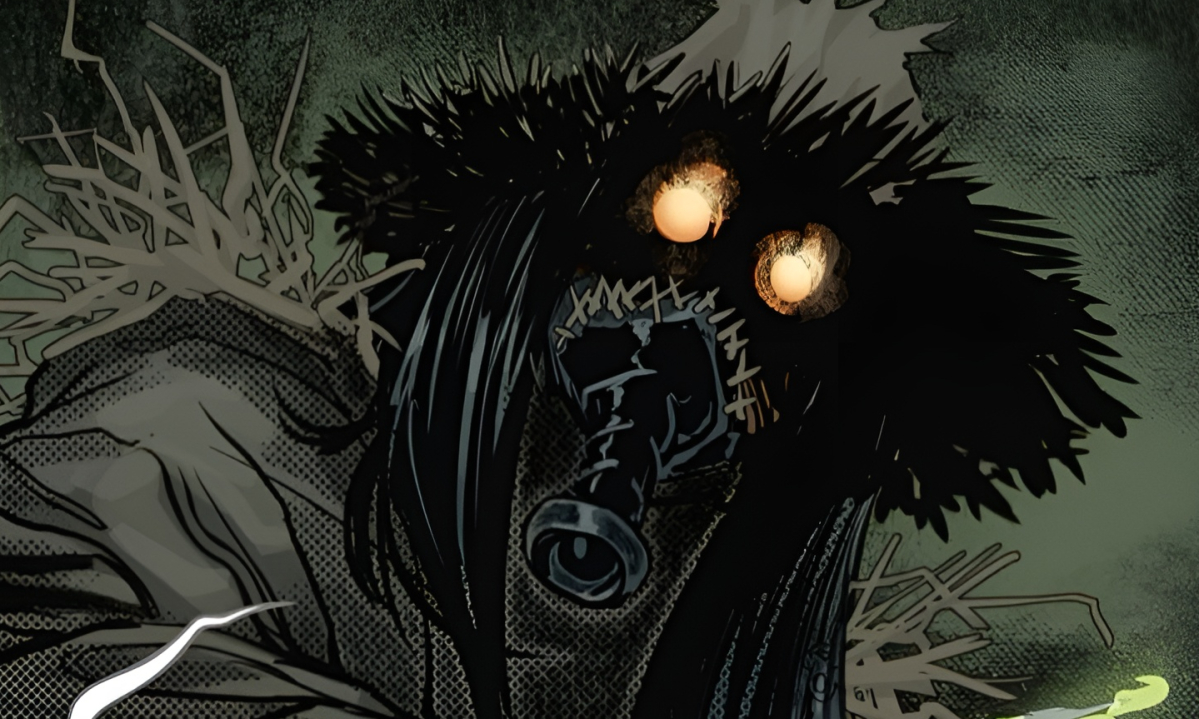
Scarecrow’s Arkham File exposes Dr. Jonathan Crane’s terrifying evolution from abused victim to Gotham’s master of fear. This deep psychological breakdown uncovers his antisocial traits, obsessive fears, and escalating experiments that turn terror into science. Explore how Scarecrow wages a chilling war of ideology against Batman through weaponized fear.
Dr. Jonathan Crane isn’t just another inmate at Arkham Asylum, he’s its most devoted scholar. Unlike Gotham’s other criminals, who act on impulse, revenge, or delusion, Crane operates with methodical precision. He is not a madman consumed by chaos but a scientist consumed by obsession.
Step inside the Arkham File and explore the psychology behind Gotham’s most terrifying adversary.
The Arkham Asylum Files
Arkham Asylum stands as Gotham City’s monument to madness, a place built for rehabilitation but infamous for its failures, horrors, and revolving-door villains.
Some criminals leave Arkham worse than when they arrived. Others use it as a temporary resting place before their next crime spree.
But what about the Scarecrow?
Unlike Arkham’s other inmates, driven by delusion, revenge, or chaos, Jonathan Crane isn’t bound by illusion. He doesn’t seek power or personal gain, he seeks validation.
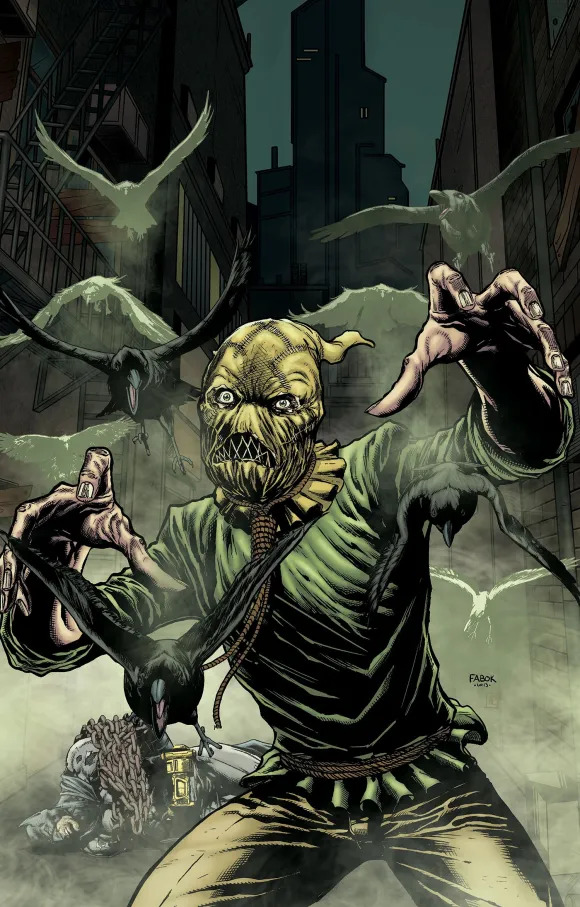
So, is he truly insane? Or is he something far more terrifying?
This Arkham File dissects the antisocial nature, obsessive psychology, and fear-driven philosophy of Gotham’s most nightmarish mind.
Step inside the Asylum. Let’s see what makes the Scarecrow scary.
Scarecrow’s Psychological Profile
ARKHAM ASYLUM PSYCHIATRIC REPORT
PATIENT: DR. JONATHAN CRANE
THREAT LEVEL: HIGH
EVALUATING PSYCHIATRIST: ‘DR.’ [REDACTED]
DATE: N/A
The Obsession Factor: Why the Scarecrow Focuses on Fear
PSYCHOLOGICAL PROFILE & DIAGNOSIS
1. Antisocial Personality Disorder (ASPD)
The Scarecrow exhibits traits commonly associated with Antisocial Personality Disorder (ASPD), though his behavior extends beyond simple criminality into calculated psychological manipulation.
Jonathan Crane does not act impulsively in the traditional sense. While he is capable of sudden, extreme actions, these moments are often rooted in a deeper fixation, his need to provoke, observe, and understand fear. His violence is not reckless; it is experimental.
His deceitfulness is central to his methodology. Crane does not simply lie, he constructs scenarios, manipulates perception, and psychologically engineers his victims’ experiences. Fear, to him, is not just an emotion, but a controlled environment.
Perhaps most defining is his lack of remorse. Crane deploys his toxin indiscriminately, showing no concern for age, innocence, or consequence. To him, suffering is not collateral, it is data.
His disregard for social norms and laws is not rebellion, but rejection. His expulsion from Gotham University was not a failure in his eyes, but proof that conventional systems could not contain his work.
Jonathan Crane does not seek rehabilitation, he seeks to impose it. Through forced exposure to fear, he attempts to recreate his own psychological transformation in others, believing that terror is not something to be avoided, but something that reveals truth.
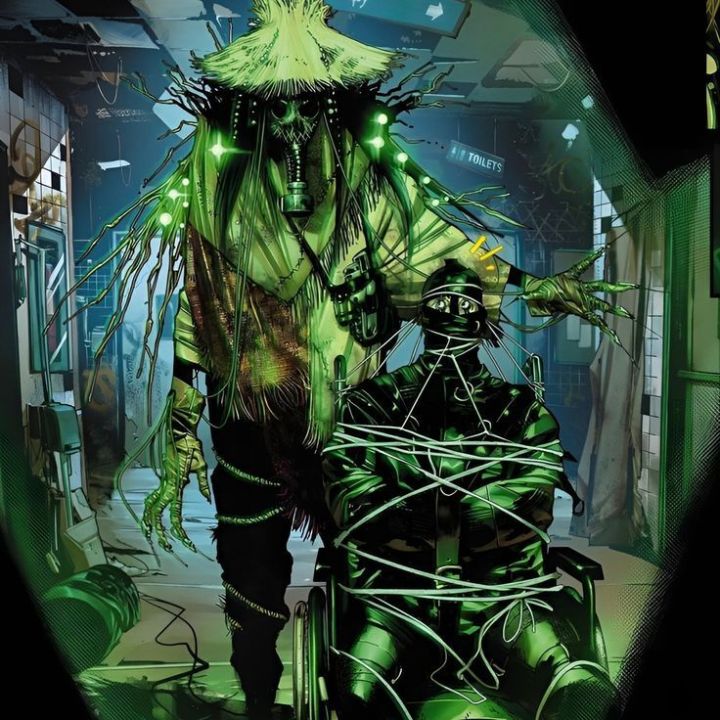
2. Complex Phobias: A Network of Fear
The Scarecrow’s psychology aligns with what could be described as a network of complex phobias, where multiple fears intertwine to shape not only perception, but identity itself.
Jonathan Crane is not driven by fear in the way his victims are, he is defined by it. His earliest trauma, often depicted as an attack by a murder of crows, left a lasting imprint that shaped his understanding of fear as both overwhelming and transformative. What once terrified him became something to study, control, and ultimately weaponize.
His ornithophobia does not disappear, it evolves. Rather than overcoming his fear of crows, Crane reclaims it, reshaping it into the very image of the Scarecrow persona. In doing so, he transforms a symbol of vulnerability into one of power.
Similarly, his encounters with Batman introduce another layer to his psychological landscape. The presence of bats, an embodiment of fear itself, does not diminish Crane’s obsession but reinforces it. Batman becomes both a challenge and a confirmation of Crane’s belief: that fear is not just a reaction, but a force capable of shaping identity.
These overlapping fears do not paralyze him, they refine him. Crane does not seek to eliminate fear within himself. Instead, he integrates it, studies it, and projects it outward.
In this way, Scarecrow is not a man who suffers from fear.
He is a man who has learned to live within it, and make others do the same.
3. Obsessive-Compulsive Disorder (OCD)
Scarecrow displays obsessive tendencies that mirror aspects of obsessive-compulsive patterns, though in his case, these traits are not confined to internal distress, they are externalized into deliberate, controlled action.
Jonathan Crane is fixated on fear not simply as a concept, but as both a weapon and a solution. His thoughts repeatedly return to the same question: how fear can be isolated, intensified, and imposed. This fixation does not remain theoretical, it demands expression.
His compulsive behaviors manifest through constant experimentation. Crane continuously refines his fear toxin, adjusting its potency, delivery, and psychological impact with near-scientific precision. Each iteration is not just an improvement, but a necessity, an attempt to perfect fear itself.
Unlike traditional obsessive-compulsive patterns, where compulsions are performed to reduce anxiety, Crane’s actions appear to reinforce it. His lifetime of abuse and social isolation did not lead him to avoid fear, but to confront and control it. What once overwhelmed him is now something he recreates in others.
This creates a disturbing inversion. Crane does not seek relief from his obsessions, he sustains them. Fear is not something he escapes. It is something he cultivates, studies, and spreads.
In this way, Scarecrow is not trapped in a cycle of anxiety.
He has transformed that cycle into a method.
Origins: From Victim to Victor of Fear
Jonathan Crane’s early life was marred by abuse and neglect. In some iterations, his own father subjected him to brutal fear-based experiments, locking him in dark spaces and exposing him to psychological torture. These relentless encounters didn’t break him, they made him.
Fear became Crane’s obsession, not just as a coping mechanism but as a tool. Pursuing psychology, he masked his madness behind academia until he was dismissed from Gotham University for reckless endangerment. His descent into the Scarecrow persona wasn’t an accident, it was a deliberate evolution.
Evolution of the Scarecrow Persona
Jonathan Crane’s transformation into Scarecrow is not static—it is an ongoing evolution shaped by obsession, experimentation, and an ever-deepening understanding of fear.
In his earliest appearances, Crane relied on psychological manipulation and primitive fear-inducing methods, using his knowledge of human phobias to intimidate and control. However, as his confrontations with Batman intensified, so too did his methods. Fear was no longer just a concept—it became a measurable, weaponized force.
The development of his fear toxin marked a turning point. What began as a chemical experiment grew into a refined instrument of psychological warfare, capable of forcing victims to confront their most deeply rooted fears. With each iteration, the toxin became more potent, more targeted, and more invasive—blurring the line between hallucination and reality.
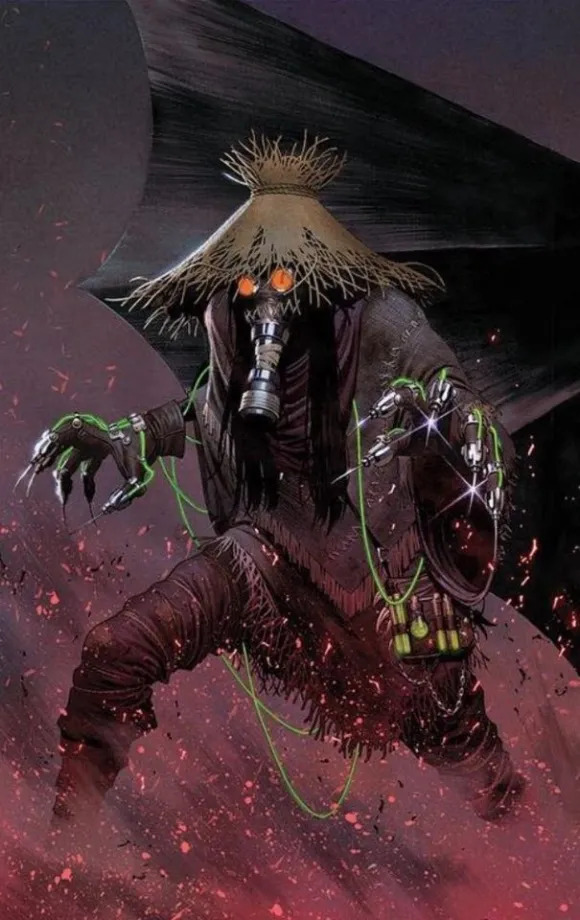
Repeated exposure to his own toxin created a disturbing shift within Crane himself. In some interpretations, he becomes increasingly resistant to fear, creating a paradox: a man obsessed with fear who no longer experiences it in a conventional sense. Yet rather than freeing him, this absence only deepens his fixation. He does not abandon fear—he studies it, perfects it, and imposes it onto others.
His evolution reaches its most extreme form in transformations such as the Scarebeast, where Crane abandons the role of observer entirely and becomes the embodiment of fear itself. No longer content with studying terror, he chooses to live it, turning his own body into a manifestation of his ideology.
Throughout various comic arcs, his encounters with Batman serve as both resistance and reinforcement. Batman survives the toxin. He resists the hallucinations. He endures. But for Crane, this is not failure—it is data. Each encounter refines his methods, bringing him closer to his ultimate goal: proving that no mind, not even Batman’s, is beyond the reach of fear.
Scarecrow does not simply evolve his weapons.
He evolves his understanding of fear—and in doing so, becomes something far more dangerous than a man.
Relationship with Batman: A Dark Reflection
The conflict between Batman and Scarecrow is more than hero versus villain, it is a psychological confrontation between control and exposure.
Batman uses fear as a tool.
Scarecrow uses fear as a weapon.
Where Batman directs fear outward, toward criminals, Crane turns it inward, forcing his victims to confront what they cannot escape. He does not simply want to defeat Batman. He wants to dismantle him.
To Scarecrow, Batman is not just an opponent, but the ultimate subject. A man built on fear, shaped by trauma, and sustained by control. If fear is truly the strongest force in the human mind, then even Batman should not be immune to it.
Every encounter between them is an experiment. Every dose of toxin, a question: What happens when the man who weaponizes fear becomes consumed by it?
Batman resists. He endures. He survives.
But Scarecrow does not need to win.
He only needs to prove that, beneath the mask, Batman is just another man afraid of the dark.
Final Verdict: The True Nature of Scarecrow
Dr. Jonathan Crane is not merely a victim of his past, he is an architect of fear by choice.
His crimes are not acts of desperation, but deliberate psychological warfare designed to expose what he believes is the only truth: that fear governs all.
Rehabilitation? Impossible. His obsession is not a symptom, it is a philosophy.
Containment remains the only viable option, though Arkham Asylum has never truly held him.
Scarecrow is not trying to overcome fear.
He is trying to prove that fear is all there is.
And Gotham is not just his laboratory, it is his experiment.

