
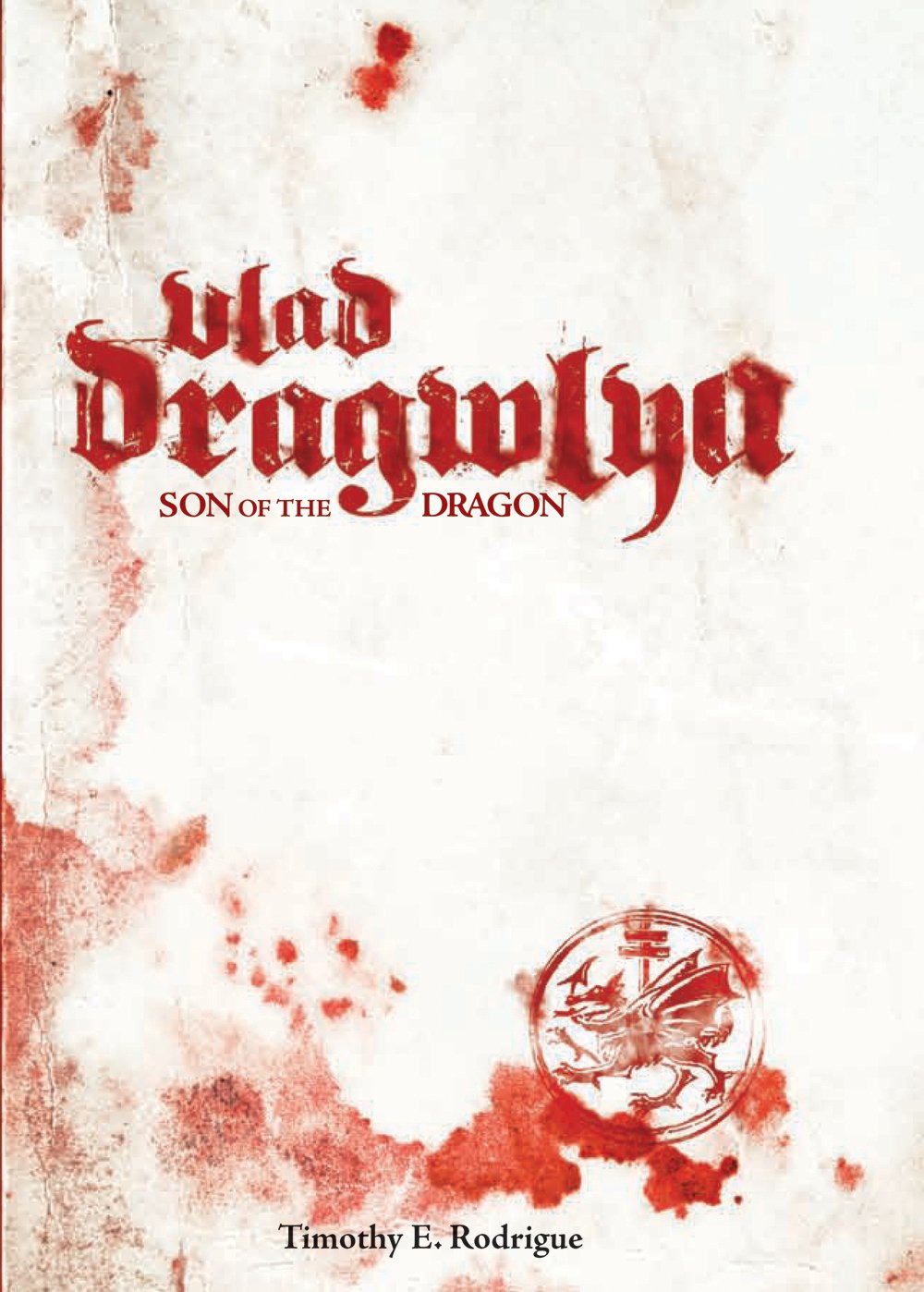
As an obsessive fan of Vlad Dracula, I find myself often buying books about his life, whether it is historical fiction or purely history. So, here’s my review of the book Vlad Dragwlya by Timothy E. Rodrigue.
Official Summary of Vlad Dragwlya
Here begins a very cruel frightening story about a wild bloodthirsty man Prince Dragwlya… The war-torn principality of Wallachia is a perilous fulcrum, one of the few geographical boundaries that hinders the Ottoman Empire’s march across Europe.
There are those who would gladly bow to the demands of the Turkish if it meant the procurement of their lands and wealth. There are others who would defy the sultans with every last breath. Prince Vlad III, Dragwlya, is of the latter ilk. Eastern Europe is decidedly Machiavellian, and Dragwlya is the epitome of the doctrine.
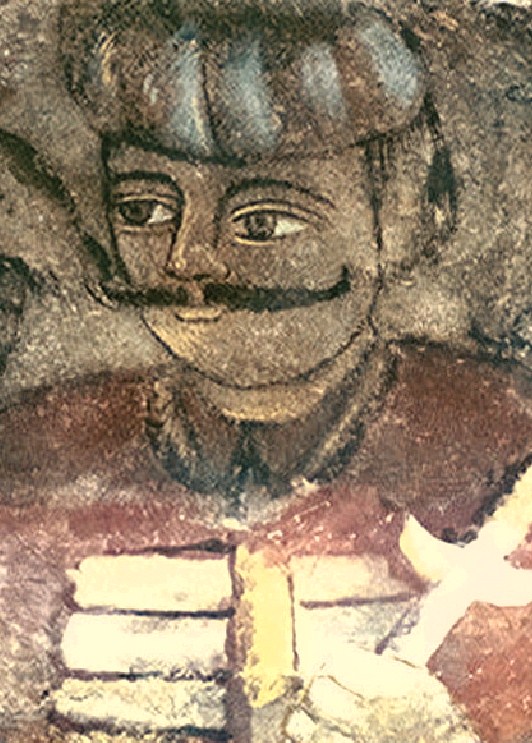
He prizes his subjects’ fear more than their love, ruling them with stringent, fanatical edicts that follow a categorical imperative. No one is above his law. No one is above justice. In seeking his birthright, however, Dragwlya learns justice is not always swift. His allies and adversaries are often one in the same, and security is largely an illusion.
Only by ridding his principality of its foreign threats and its enemies from within will Wallachia have peace. Dragwlya’s methods for doing so are beyond imagining.
My Summary Of Vlad Dragwlya In My Words
Vlad Dragwlya, the novel revolves around the official archives and historical findings of Vlad Dracula’s life. We follow his story and that of his enemies and family members, such as Mircea.
We start the journey in Vlad Dracul II, Vlad Dracula’s father’s life, and it branches out to understand each point occurring in Vlad’s life. Politics, religion, marriage, sex life, wars, campaigns and torture are all present to make this book possible.
The catch is that one must enjoy history retelling in its most direct point. The writing is dry and straight to the point. Although it is Vlad’s life, it is historical fiction, so it takes liberties where fiction meets history.
The pace can sometimes be slow but picks up where action requires it. All the prominent points in Vlad’s life occur in the book. I encountered hiccups, but overall, it is a novel that falls more on the technical side of Vlad’s life than a traditional historical fiction novel.
The Overall Thoughts About Vlad Dragwlya
If you are looking for a traditional historical fiction novel about Vlad the Impaler‘s life, this book isn’t for you. There is no smoothness flowing through a storyline but instead blocks for each date that is mentioned throughout the book in every chapter.
The book is written per block and moves from one point of view to the next and from one location to another. It gives you the impression of reading a Wikipedia page turned into a script deprived of dialogue. I often found myself saying it was like I read a Netflix docu-series reenactment script narrated by unimpressed historians.
It is easy to follow due to each scene’s dates, locations, and clear blockings. It is essential to do so when writing a book based on technicality and history. However, I often wondered if the author liked Wladislaus Dragwlya – Vlad Dracula – or not. The writing is objective and can make the reader question the author’s position.
Another detail I’ve encountered was that Timothy E. Rodrigue uses both the imperial and metric systems in the book. Usually, one chooses which, and it remains the same throughout the book. It took me by surprise.
What Surprised Me In The Vlad Dragwlya Book
My whole life, I mostly read novels written by men. Some of my favourite books are the novelization of Assassin’s Creed by Oliver Bowden and Uhtred the Bold by H A Culley. My favourite series is The Saxon Stories by Bernard Cornwell. Growing up, I read R.L. Stine, Stephen King, J.R.R. Tolkien, Terry Brooks, Daniel Sernine, and more.
“I believe the road to hell is paved with adverbs.”
Stephen King
My point is that I’m used to a masculine way of writing. Men might not necessarily dominate the genres I read, but most fill the pool. The straightforward approach, the more raw characters, and the attention to technicalities are second nature to me when reading. I can recognize a masculine reading versus a feminine one easily.
While a man wrote Vlad Dragwlya, I couldn’t connect, which was strange. The writing is telling versus showing. As a writer and author, the words from Stephen King stuck with me my whole life, “I believe the road to hell is paved with adverbs.” This book has many and makes the reading one on the surface.
What About The Characters And Relations Of Vlad Dracula
I tried to connect with the characters, but I couldn’t. Vlad the Impaler had a life worth telling, but his character was dry as in, if he were a spice, he’d be flour. The introduction to his first impalement described in the book was boring and lacked emotion. I wanted to feel something, but nothing happened.
There is a lack of passion and colour in the writing. I felt no spark while reading it. I wanted to see it through not only due to my OCD but also curiosity to know if I could learn something historically speaking, and for that, I did. But if you’re looking for a book to lose yourself in, that isn’t the one. It’s a book of description, not action.
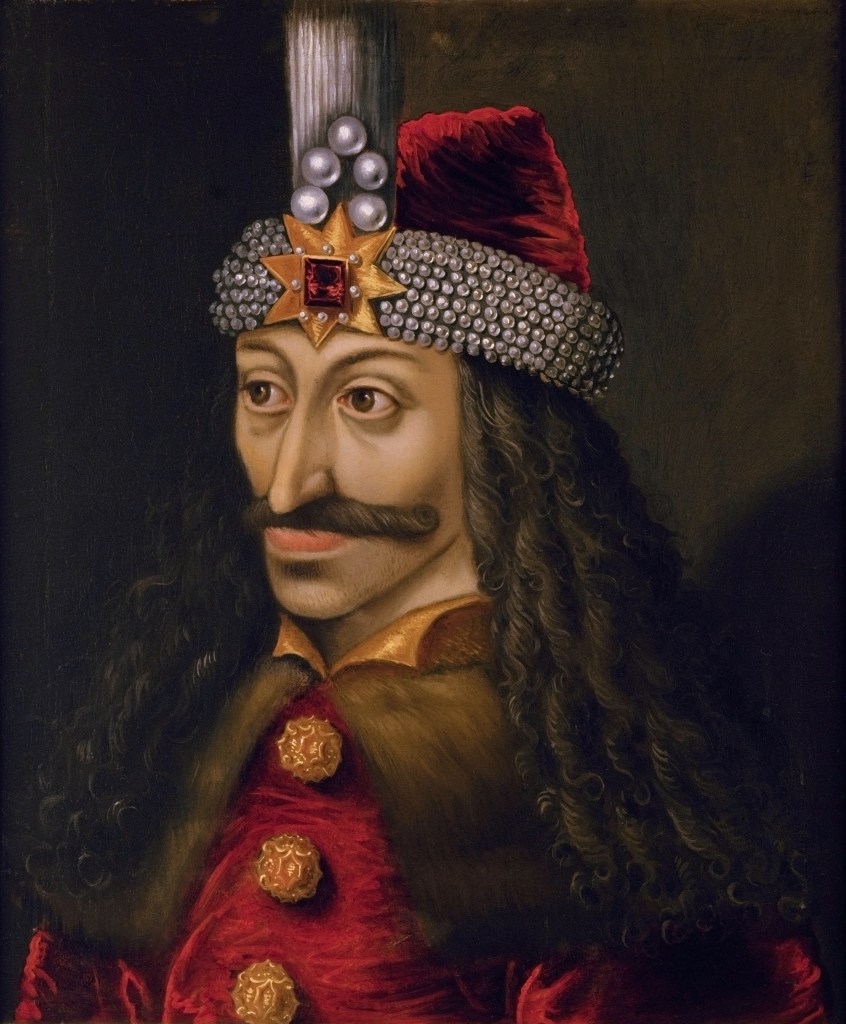
The author obviously chose to have Vlad suffer from psychopathy. His apathy, arousal for pain in others, high threshold of pain for himself, disinterest in emotional attachment, manipulation, hearing voices, and animal cruelty. It’s there in the way he has him react to actions. However, Vlad was a master at politics and seducing people to get what he wanted. Some moments in the book show a contradiction to it.
The presence of women in Vlad’s life is depicted very stereotypically, as a man using women as objects to dispose of when done. I’m not talking about the mistress who was disembowelled; that is a fact that happened in Vlad’s life. I’m talking about women mentioned in general.
While the names are wrong, the relationships are also superficial, and the typical woman madly in love with him while he doesn’t care, blah, blah, blah, is so blatant I rolled my eyes into my skull and saw my brain. Those women knew they were mistresses; some of them were sex workers, and there was no attachment except money. Also, Katharina Siegel is never mentioned.
The Historical Facts in Vlad Dragwlya
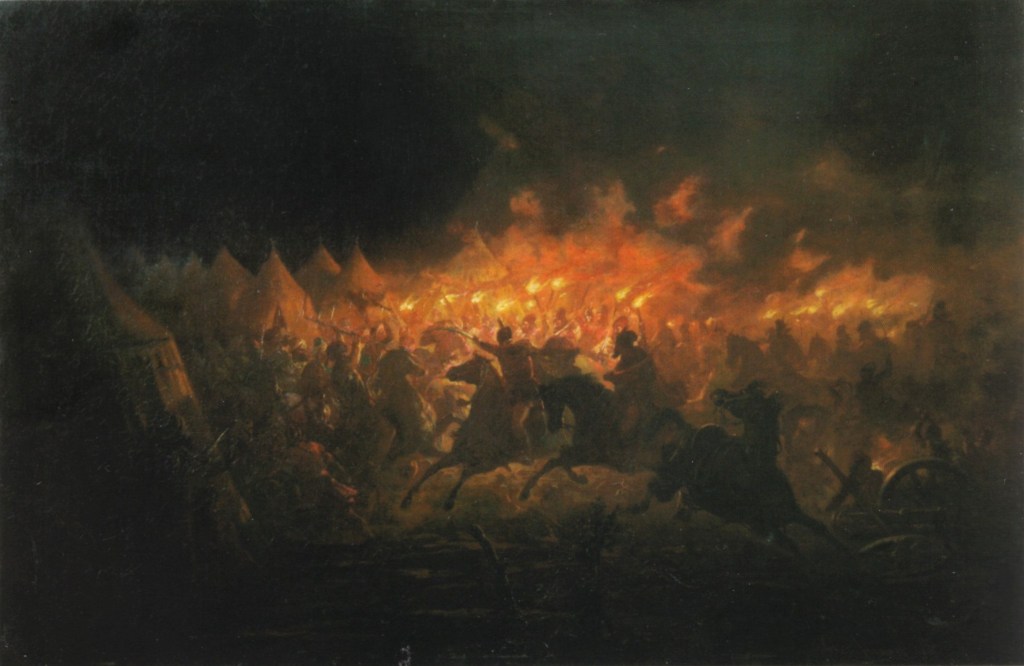
The book contains all the significant historical facts from Vlad the Impaler’s life. From the three envoys who had their turban nailed to their skulls to the man complaining about the smell and getting impaled higher than the rest. You can find them all in the book with dates and locations.
The main points of Vlad’s life are well documented in the book. While it’s not a story per se, it is a recollection of his life with some liberties in dialogues and what the people might have felt. However, don’t expect a romance, war action-driven pace or a horror story. That isn’t the book; it’s a historical recollection with some fictional details.

While dry and on the surface, Vlad Dragwlya does tell the story of Vlad III. There are sections of the book concerning Vlad that are false but are known as public knowledge. In the 1400s, the printing press existed, and pamphlets of sensationalized stories about Vlad the Impaler existed. Those non-proven historical sections are fiction as they were printed despite lacking truth.
The forged letters, the escape from Poenari Castle, the officer killed while the thief is let loose, all of those moments in Vlad’s life are depicted. Timothy E. Rodrigue could have done better in telling Vlad III’s story. However, we’ll never know if he holds Vlad in high regard or sees him as an evil death machine.
I recommend the book for those looking for historical blockings of Vlad’s life to read as a history book. Again, this isn’t historical fiction as we know but more like a collection of events from Vlad’s life.
 Gothic Bite Magazine
I do recommend the book for history purposes. It’s fun to have actual dates and locations on hand when reading about someone’s life.
LikeLike