

On a muggy August night in 1977, a strip of computer printout rolled out of a machine at Ohio State University’s Big Ear radio telescope, and astronomer Jerry Ehman did something almost no scientist ever gets to do.
He grabbed a red pen, circled six characters on the page, and wrote a single word in the margin that would echo across decades: Wow!
“1 1 1 1 1 1 2 3 4 6 E Q U J 5 4 3 2 1 1 1 1 1 Wow!” — J. Ehman Aug 1977
Those six alphanumeric characters 6EQUJ5 represented a 72-second blast of radio energy arriving at exactly 1420.405 megahertz, the so-called hydrogen line. This is the frequency that scientists had long theorised an intelligent civilisation might use to broadcast across the cosmos, because hydrogen is the most abundant element in the universe and any space faring species would know it. The signal was precisely what the Search for Extraterrestrial Intelligence had dreamed of finding. It arrived. It dazzled. Then it was gone.
“It was the most significant signal we have ever received and the most maddening, because we only got it once.”
The signal originated somewhere in the direction of the constellation Sagittarius, near a star cluster called Chi Sagittarii. It bore all the hallmarks of an interstellar transmission: the right frequency, the right bandwidth, the right intensity profile rising and falling exactly as it should if a powerful beam swept across Earth like a lighthouse. No known natural phenomenon produces a narrowband signal of that kind. Comets, pulsars, quasars none of them fit. Yet every subsequent attempt to detect it again has returned nothing. The sky in that region has been scanned hundreds of times since 1977, by dishes far more sensitive than Big Ear ever was. Silence.
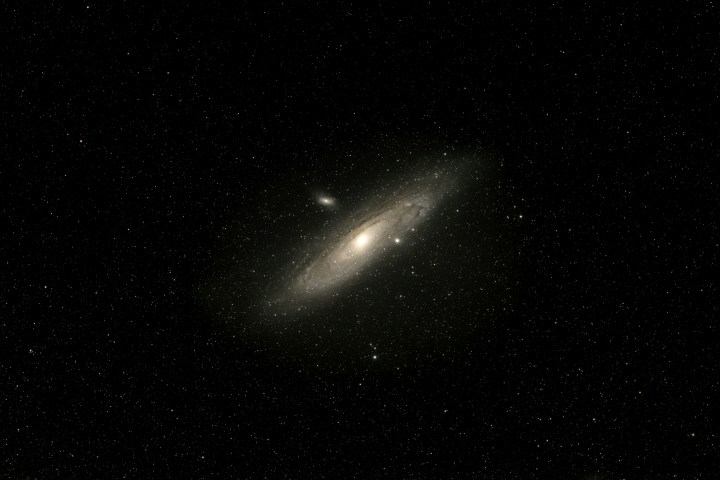
The explanations that scientists have proposed over the years range from the mundane to the deeply strange. A satellite reflection? Big Ear was shielded against those. A military broadcast? No frequency match. Astronomer Antonio Paris suggested in 2017 that two comets passing through the region 266P/Christensen and 335P/Gibbs might have produced a hydrogen cloud that generated the signal. The theory was elegant, but follow-up observations of other comets at that frequency found nothing similar. Other researchers have pointed out that the original comet positions don’t perfectly align. The mystery refused to close.
What lingers is not just the scientific puzzle but the eerie poetry of it. The universe is estimated to contain two trillion galaxies. For fifty years, humanity has aimed instruments at the sky and mostly received hiss. Then for exactly 72 seconds, something was different. Something: a comet, a cosmic fluke, a civilisation on the far side of the galaxy spoke at precisely the frequency we were designed to hear. And then it stopped, as if it knew we were listening, thought better of it, and moved on.
Jerry Ehman spent his life insisting the Wow! signal should not be oversold. He wrote papers urging caution, reminding colleagues that a single detection proves nothing. But even he admitted he had no adequate explanation. The printout he annotated is now something close to a relic ,a piece of thermal paper that may record either the greatest coincidence in the history of science, or the first and only time another mind reached across the dark and brushed against ours.
Either way, it has not been called back.

