
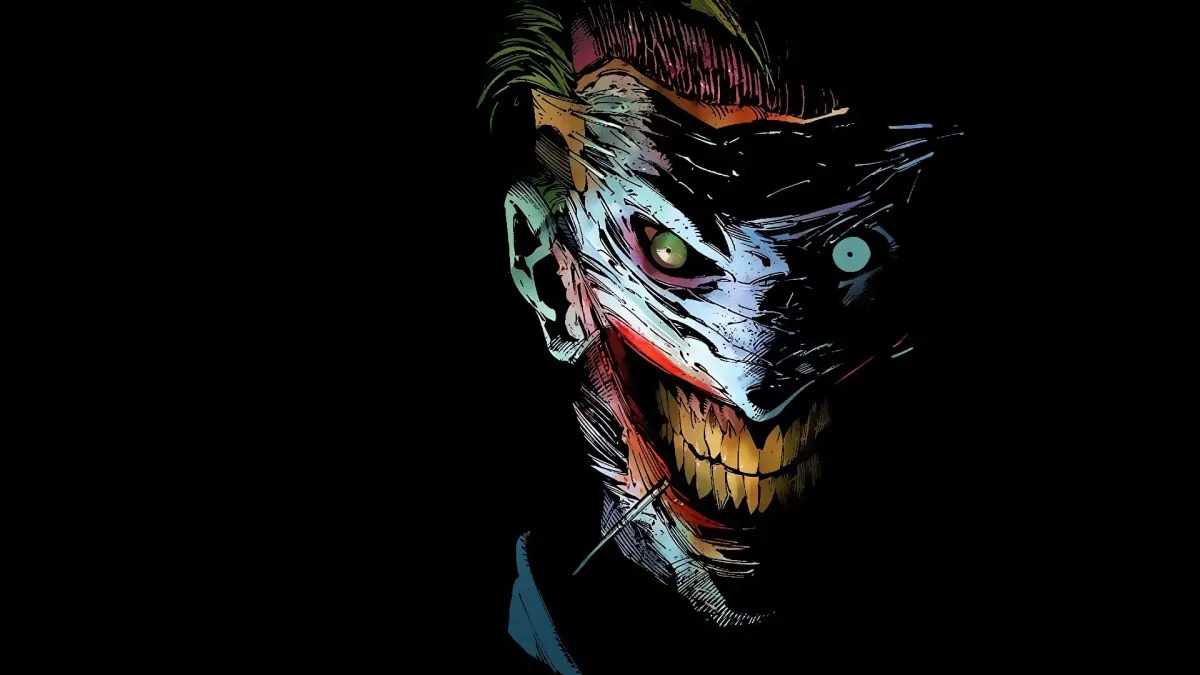
The Joker isn’t just a criminal, he’s a walking nightmare of unpredictability. A man without fear, without remorse, and without a past that can neatly explain his madness. Step inside the Arkham File and explore the psychology behind Gotham’s most terrifying adversary.
The Arkham Asylum Files
Arkham Asylum stands as Gotham City’s monument to madness, a place built for rehabilitation but infamous for its failures, horrors, and revolving-door villains.
Some criminals leave Arkham worse than when they arrived. Others use it as a temporary resting place before their next crime spree.
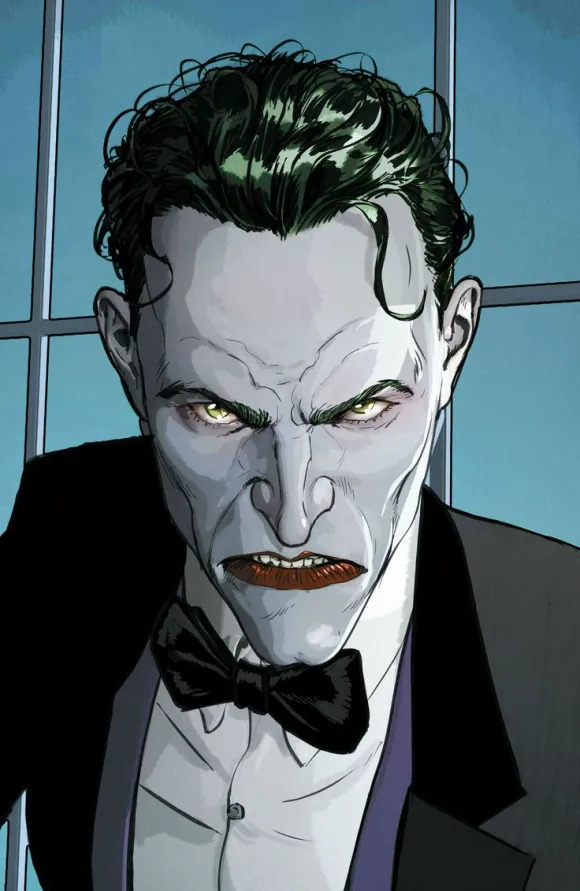
But what about the Joker?
Unlike Arkham’s other inmates, driven by delusion, revenge, or trauma, the Joker isn’t bound by the past. He doesn’t seek redemption or control, he thrives in pure, calculated chaos.
So, is he truly insane? Or is he something far more terrifying?
This Arkham File dissects the psychopathy, nihilism, and twisted philosophy of Gotham’s most dangerous mind.
Step inside the Asylum. Let’s see what makes the Joker tick.
Joker’s Psychological Profile
ARKHAM ASYLUM PSYCHIATRIC REPORT
- PATIENT: UNKNOWN (“JOKER”)
- THREAT LEVEL: MAXIMUM
- EVALUATING PSYCHIATRIST: DR. [REDACTED]
- DATE: N/A
SUBJECT OVERVIEW
The individual known as “The Joker” is Gotham’s most lethal and unpredictable criminal. Despite multiple incarcerations, he has shown no signs of remorse or rehabilitation.
Joker is not merely a killer, he is a psychological terrorist. He doesn’t murder for necessity, revenge, or profit. Instead, he orchestrates suffering with surgical precision, selecting victims who will cause maximum emotional devastation, particularly for Batman.
Unlike many of Arkham’s inmates, the Joker does not suffer from clear delusions. His actions are not erratic but calculated. He chooses chaos over order, pain over peace, suffering over sanity.
The Chaos Factor: Why the Joker Defies Diagnosis
PSYCHOLOGICAL PROFILE & DIAGNOSIS
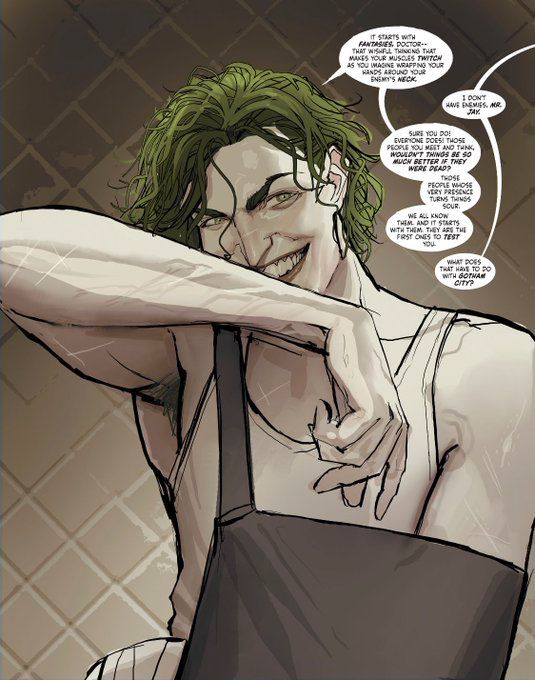
1. Schizotypal Personality Disorder (STPD): Distorted Reality and Self-Awareness
The Joker exhibits traits commonly associated with Schizotypal Personality Disorder, though his behaviour cannot be confined to any single clinical framework. His perception of reality is not simply distorted, it is fluid, self-aware, and often deliberately manipulated.
Unlike individuals who struggle to distinguish reality from illusion, the Joker appears to move between them with intent. In some interpretations, he demonstrates an awareness of his own existence as a character, referring to himself as a “punchline” or part of a larger narrative. Whether this is genuine delusion or calculated performance remains unclear, but that ambiguity is precisely what makes him dangerous.
His grandiosity is not rooted in ego alone, but in detachment from conventional meaning. He places himself above morality, law, and even consequence, not because he believes he is superior, but because he believes none of it truly matters.
Socially, the Joker is profoundly disconnected. He does not form relationships, he orchestrates them. People are not companions or adversaries in the traditional sense, but pieces in a larger psychological game, used to provoke reactions, test limits, and create chaos.
His emotional responses further reflect this instability. Laughter, his most defining trait, is not simply an expression of humor, but a reaction to absurdity, pain, and contradiction. He laughs at suffering, including his own, not because he fails to understand it, but because he rejects its significance.
In this way, the Joker does not experience reality as others do.
He reshapes it, until nothing remains but the joke.
2. Psychopathy: Triarchic Model of Psychopathy
The Joker’s behaviour aligns closely with the Triarchic Model of psychopathy, which examines personality through three dimensions: boldness, disinhibition, and meanness. However, in Joker’s case, these traits do not simply coexist, they reinforce one another, creating a personality that thrives on chaos rather than control.
Boldness defines his fearlessness. The Joker operates without hesitation, unaffected by pain, imprisonment, or the constant threat of death. This is not courage in the traditional sense, but a complete absence of fear as a limiting factor. His composure allows him to remain calm in situations that would break others, giving him an almost theatrical presence. He does not just endure danger, he performs within it. His ability to manipulate others, including trained professionals like Harleen Quinzel, stems from this same confidence. He presents himself as someone who has nothing to lose, making him both unpredictable and persuasive.
Disinhibition is where his behavior becomes most volatile. The Joker does not recognize boundaries: social, moral, or physical. His actions often appear impulsive, but beneath that chaos lies intent. Violence, for him, is not a means to an end, but an expression. Even self-harm becomes part of the performance, as seen when he allows his own face to be removed and later reattaches it as a grotesque symbol. These acts are not simply reckless, they are statements, reinforcing his rejection of consequence and identity.
Meanness reveals the core of his detachment. The Joker does not experience empathy in any meaningful sense. People are not individuals to him, but tools, props, or punchlines. His preference for psychological torment over immediate death reflects a deeper level of cruelty, he is not interested in ending lives quickly, but in breaking minds. Even those closest to him, such as Harley Quinn, are reduced to objects within his narrative, valued only for how they serve his chaos.
Taken together, these traits do not just describe the Joker, they define a system. Fearlessness allows him to act, disinhibition removes restraint, and meanness ensures there is no moral barrier to stop him.
In the Joker’s mind, there are no limits, only opportunities to prove that nothing matters.
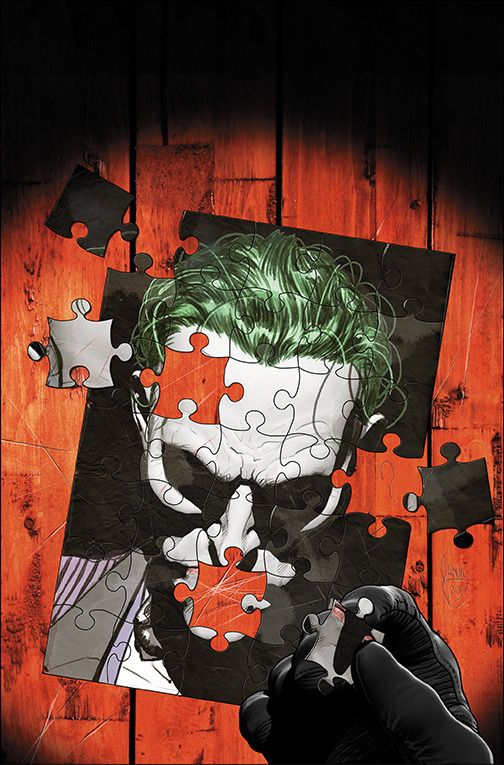
Evolution of the Joker Persona
The Joker is not a static identity, it is an ever-changing reflection of chaos itself, shaped and reshaped across decades of DC Comics history.
In his earliest appearances during the Golden Age, the Joker was a theatrical criminal mastermind, dangerous, but grounded. His crimes were elaborate, his methods calculated, and his presence unsettling, yet still tethered to the world of organized crime. But even then, there were glimpses of something deeper: a man who did not simply commit crimes, but performed them.
As the character evolved, particularly through darker reinterpretations such as The Killing Joke and A Death in the Family, the Joker transformed from criminal into symbol. His actions became less about gain and more about meaning, or rather, the destruction of it. He no longer sought control of Gotham. He sought to expose its fragility.
Central to this evolution is his relationship with Batman. The Joker does not exist in isolation; he evolves in response to Batman. As Batman becomes more disciplined, more controlled, more symbolic, the Joker becomes more erratic, more philosophical, more extreme. Each confrontation pushes him further, not into madness, but into clarity.
Over time, the Joker sheds any consistent origin, any fixed identity. In some versions, he is a failed comedian. In others, an agent of chaos with no past at all. This inconsistency is not a flaw, it is the point. The Joker is not meant to be understood. He is meant to be reinterpreted.
This constant reinvention allows him to adapt not only to Gotham, but to Batman himself. He escalates when Batman resists. He retreats when Batman loses control. He evolves not to survive, but to remain relevant.
What emerges is not just a villain, but an idea.
The Joker is no longer a man with a past.
He is a response.
A response to order.
To control.
To Batman.
And as long as Batman exists, the Joker will continue to evolve.
Batman & The Joker: A Psychological Tug of War
3. The Jason Todd Experiment: Attempt to Break Batman
One of the Joker’s most infamous acts was not simply an act of violence, it was a calculated psychological experiment designed to fracture Batman at his core.
Jason Todd, the second Robin, was never just a target. He was chosen. The Joker lured him in through emotional manipulation, exploiting his search for his biological mother. From the beginning, this was not about killing Jason—it was about what Jason represented.
What followed was not random brutality, but controlled suffering. The Joker ensured Jason remained conscious for much of the assault, prolonging the experience, turning pain into a message rather than an end. Every blow was deliberate. Every moment extended.
But the true objective was not Jason.
It was Batman.
The final stage of the “experiment” was engineered with precision. By leaving Jason in an exploding warehouse, the Joker created a scenario where Batman could arrive, but not in time. This was not chance. It was timing designed to fail.
The outcome forced Batman into a moral paradox:
Kill the Joker and abandon the very code that defines him.
Or spare him and accept that his mercy has consequences.
For the Joker, this is the ultimate question. Not whether Batman can win, but whether Batman can remain himself.
Jason Todd was never just a victim.
He was the variable in an equation meant to prove that even the strongest mind can be broken.
And yet, the Joker does not seek a definitive victory.
He pushes Batman to the edge, but never allows him to fall.
Because the moment Batman breaks,
the joke is over..
The Batman Obsession: A Twisted Codependency
The Joker’s fixation on Batman goes far beyond traditional enmity. It is not rooted in hatred, revenge, or even victory—it is rooted in necessity.
Time and time again, the Joker leaves clues behind, not out of arrogance, but intention. He creates paths for Batman to follow, ensuring that the game continues. Without Batman, there is no tension, no resistance, no audience to witness the chaos he creates.
Even more telling is his refusal to expose Batman’s identity. Despite numerous opportunities, and in some interpretations, clear awareness, the Joker chooses not to reveal it. To do so would end the dynamic. It would collapse the illusion. Batman would no longer be a symbol, but just a man.
And that is not what the Joker wants.
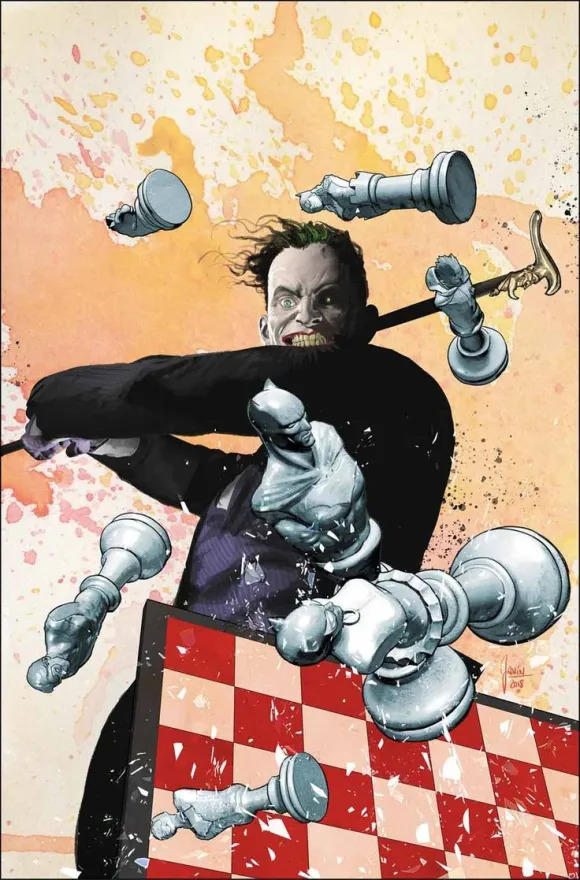
To the Joker, Batman is not simply an opponent. He is a counterpart. A necessary presence that gives meaning to his actions. Every crime, every scheme, every act of chaos is performed with Batman in mind.
This creates a relationship that is deeply unbalanced. Batman seeks to stop the Joker. The Joker seeks to engage him.
Joker does not hate Batman.
He needs him.
Without Batman, there is no one to challenge his philosophy, no one to react, no one to prove that the world can be pushed to its limits.
This is not a rivalry. It is a dependency.
Not a partnership, but something closer to a psychological parasite, sustained by the very mind it seeks to break.
Final Verdict: The Joker’s True Nature
The Joker does not fit within traditional definitions of insanity. His actions are not the result of confusion or delusion, but of clarity, twisted, deliberate, and fully aware.
He understands the world.
He simply rejects it.
His crimes are not impulsive acts of violence, but calculated expressions of a belief: that morality is fragile, identity is performative, and meaning itself is a construct waiting to be broken.
Rehabilitation is not possible, not because he cannot change, but because he does not want to. The Joker is not searching for help. He is testing limits.
Containment remains the only option, yet even that is temporary. Walls cannot hold an idea, and the Joker has long since become more than a man.
He is not driven by chaos alone.
He is driven by the need to prove that everything can fall apart.
And Gotham is not just his stage. It is the proof.
 Gothic Bite Magazine