

For some, fascination with death goes beyond curiosity and into something far more unsettling. This article explores the psychology, history, and meaning behind one of the most taboo paraphilias.
There are people who find beauty in death and to some of those people, beauty becomes desire and their fantasies turn into the eroticization of sexual acts with the dead. This complex sexual fantasy has a name and that name is necrophilia. It is a paraphilia focusing on the dead or in other words, corpses.
Some people believe that necrophilia solely revolves around “sick people” while others understand that it’s a delicate balance between life and death. However, this paraphilia, when taken to the extreme, exists only with non consensual practices. No amount of BDSM can save an extreme necrophiliac.
In this article, we will explore the psychological impact of necrophilia, its origins and its connection to death. We will see the implications of this particular paraphilia and how it is a crime if taken out of fantasy and into real life.
What is Necrophilia
Necrophilia is the sexual attraction or sexual acts involving corpses. It can both be through direct intercourse with corpses and the sexual arousement of being in the presence of one or close to one.
It is a paraphilia recognized by the World Health Organization (WHO) and it is classified within broader paraphilic disorders in psychological literature.
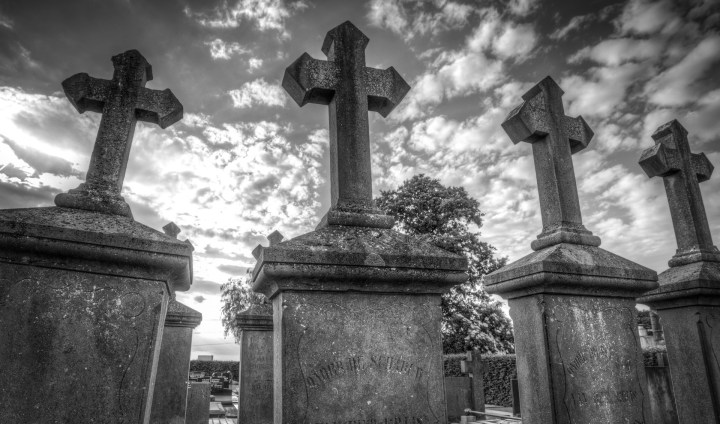
Necrophilia can refer to sexual arousal ranging between sexual domination of a partner that is non-responsive, fetishization of death and corpses, and bereavement of a close sexual partner.
Necrophilia can exist within the broader context of BDSM (Bondage, Discipline, Dominance, Submission, Sadism, and Masochism,) where sometimes it involves role play instead of a real corpse. One sexual individual pretends to be dead and their partner takes on the role of the necrophile. It would be seen as exploring power dynamics, submission, and dominance through consensual role-play.
It can be seen as an expression of dominance above all else. Dominance over helplessness mixed with a fixation on death.
But did you know that there are many cases of animal necrophilia referred to as Davian behaviour? It is most likely that animals cannot distinguish between a receptive mate and a recently deceased one. This results in some animal species and insects fully copulating with recently killed mates.
Psychological Foundation of Necrophilia
One of the most commonly discussed foundations is the desire for absolute control. Unlike relationships with living individuals, a deceased body presents no autonomy, rejection, or emotional complexity. For some individuals, this eliminates the anxiety associated with intimacy, allowing them to engage in a form of connection that feels entirely safe and predictable.
Closely related to this is a profound fear of rejection or inadequacy. Individuals who struggle with social interaction, attachment, or self-worth may develop alternative forms of intimacy that remove the possibility of emotional failure. In this context, necrophilia can be understood as an extreme manifestation of avoidance rather than aggression.
Another factor explored in psychological literature is objectification taken to its furthest extent. The human body is no longer perceived as a person, but as an object, completely detached from identity, agency, and consent. This detachment allows for behaviours that would otherwise be constrained by empathy or social norms.
Some researchers have also examined links between necrophilia and thanatophilia, or a broader fascination with death itself. In these cases, the attraction may not be solely about control or avoidance, but about an emotional or symbolic connection to death, mortality, and the boundary between life and nonexistence.
Additionally, in rare cases, necrophilia has been associated with psychopathy or severe personality disorders, particularly when it appears alongside other violent or criminal behaviors. However, it is important to note that not all individuals with such paraphilias exhibit violent tendencies beyond their specific fixation.
From a psychological perspective, necrophilia is not driven by a single cause, but rather a combination of control, avoidance, detachment, and fascination with death. Understanding these factors does not justify the behaviour, but it does provide insight into how such extreme paraphilias can develop.
Necrophilia and BDSM: The Role of Simulation and Control
While necrophilia is typically associated with criminal behaviour and extreme pathology, some of its underlying psychological elements can appear in consensual and symbolic forms within BDSM dynamics.
In certain cases, individuals may engage in roleplay scenarios where one partner assumes a passive, unresponsive, or “lifeless” role, while the other takes on a dominant position. This dynamic is not about death itself, but rather about the illusion of stillness, control, and absence of resistance.
From a psychological perspective, this can reflect some of the same underlying themes associated with necrophilia, particularly control, detachment, and the removal of interpersonal complexity, but within a consensual and negotiated framework.
Unlike necrophilia, which involves the absence of consent, BDSM practices are defined by clear boundaries, communication, and mutual agreement.
For some participants, this type of roleplay may also intersect with broader themes of power exchange, vulnerability, and trust, rather than a literal attraction to death. The “lifeless” aspect becomes symbolic, representing complete surrender or stillness, rather than an actual fixation on mortality.
It is important to distinguish between fantasy and behaviour. In these contexts, the elements associated with necrophilia are not enacted in reality but are instead transformed into controlled, consensual expressions within a structured dynamic.
This distinction highlights a broader psychological pattern: even the most taboo themes can sometimes be reinterpreted through fantasy, where meaning, control, and consent reshape their expression.
Historical and Cultural Roots of Necrophilia
Necrophilia is often perceived as a modern psychological anomaly, yet references to interactions with the dead—both symbolic and literal—can be traced back through history and across cultures. While not always framed in explicitly sexual terms, the presence of the dead body has long occupied a complex space between reverence, fear, and taboo.
In ancient civilizations, the dead were frequently treated with ritualistic care, reflecting beliefs about the afterlife and the continued presence of the soul. In Ancient Egypt, for example, the process of mummification preserved the body as a vessel for the spirit, emphasizing the importance of physical integrity after death. However, historical accounts also suggest that embalmers were sometimes monitored or restricted, indicating an early awareness of the potential for inappropriate contact with corpses.
In other cultural contexts, the boundary between the living and the dead was less rigid. Certain funerary practices involved prolonged contact with the deceased, whether through mourning rituals, preparation of the body, or symbolic acts meant to maintain a connection with lost loved ones. These practices were not inherently deviant but demonstrate how proximity to death was once a more normalized part of human experience.
Literature and folklore have also contributed to the cultural imagination surrounding death and desire. In some traditions, stories emerged of individuals drawn to the dead, often framed as moral warnings or reflections of transgression. These narratives reinforced the idea that crossing the boundary between life and death was not only unnatural but deeply unsettling.
By the 19th century, necrophilia began to be more clearly identified and categorized within emerging fields such as psychiatry and criminology. As societies moved toward stricter social and moral codes, behaviors involving the dead became increasingly pathologized and associated with deviance, rather than ritual or symbolism.
Understanding the historical and cultural roots of necrophilia reveals that it does not exist in isolation. Instead, it emerges from a long-standing human fascination with death, the body, and the fragile boundary between presence and absence. While modern psychology classifies it as a paraphilia, its deeper origins are intertwined with how different cultures have understood death itself.
The Complete Total Dominance
Necrophilia exists because of the need of particular individuals toward absolute control, no autonomy, rejection, or emotional complexity. The elimination of anxiety.
For some, the fascination with death goes a step too far and the expression of emotional intimacy is inappropriate to say the least. It pushes boundaries beyond what is acceptable and the eroticism of a corpse becomes a problem that needs solving. Necrophilia can even be seen as an illness and therapy is needed to cure the patient.
Like many dark paraphilias, necrophilia shines a spotlight on all the complexities of the human desire. And it is one of the darkest psychological illnesses we know. It is sadly a most complex paraphilia.
Necrophilia remains one of the most extreme expressions of human detachment from life itself—where desire, control, and death intersect in ways that challenge both psychology and morality.
 Gothic Bite Magazine