
Let’s talk about the so-called “vampire burials” found in 2004 in Bulgaria. Let’s talk about their real archeological finds, and not internet creepypasta.
What Happened In The 00s In Bulgaria?
It was in 2004 that archeologists uncovered medieval skeletons in Sozopol, a coastal town on the Black Sea. The corpses dated roughly to the 13th-14th century.
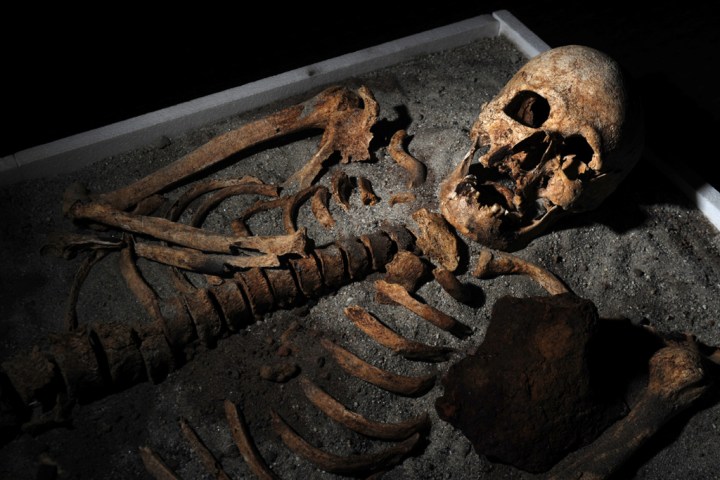
But why does it matter so much, and why is it called a “vampire burial”? Well, for once, the skeletons had iron rods driven through their chests.
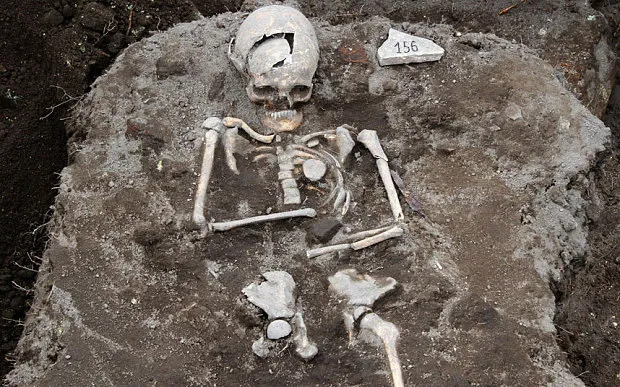
The hammered rods went through the sternum to physically pin the body to the ground. The result tells us it was a very deliberate act.
In Debelt, not far from Sozopol, archeologists found other similar burials from the same era. Iron rods were also found hammered through their torso.
The most important detail: these weren’t isolated cases. Bulgaria has documented dozens of burials of the same nature over the years.
Why Were They “Pinned”?
This is where folklore comes in.
In medieval Balkan belief systems, certain people were thought capable of becoming revenants (undead spirits) after death. These were not the glamorous, cape-wearing vampires of later fiction. They were bloated, disease-spreading corpses blamed for plagues, crop failures, or mysterious deaths.
The idea was simple and practical; if you feared someone might rise from the grave, you physically prevented them from doing so.
Iron was especially significant because it was believed to have protective, apotropaic (evil-repelling) properties. It symbolically “neutralized” the corpse.
Who Were These People?
Here’s the part that’s more grounded and less supernatural.
The individuals were likely social outcasts, criminals, people accused of heresy, or those who died under unusual or suspicious circumstances
In tight medieval communities, reputation mattered. If you were feared in life, you might be feared in death. This wasn’t random hysteria since it was targeted.
Why the 700+ Year Old Date Matters
These burials predate Bram Stoker’s Dracula (1897) by centuries. They show that vampire folklore in the Balkans was deeply rooted long before Victorian literature romanticized it.
The Balkans, especially Bulgaria, Serbia, and Romania, were major epicentres of vampire legend. In fact, the English word “vampire” likely entered Western Europe in the early 18th century via reports from this region.
Is This Unique to Bulgaria?
Not at all, but Bulgaria has some of the clearest physical evidence.
Other anti-vampire burial practices in Eastern Europe included decapitation, placing stones in the mouth, removing the heart, burning the body, and face-down burials.
It’s fascinating because it shows how seriously communities took the idea of post-mortem danger.
The Psychological Angle
If you zoom out, these burials tell us more about fear management than monsters.
When medieval communities faced disease, unexplained death, social tension, and religious anxiety, they created rituals to regain control.
Pinning a corpse to the ground? That’s pure fear. It’s not irrational when you understand the worldview.
So Were They “Real Vampires”?
Archaeologically speaking, no supernatural evidence.
Culturally speaking? Absolutely real. They were real in belief, and belief shapes behaviour.
And honestly? The fact that communities felt strongly enough to alter burial practices says everything about how powerful those fears were.
 Gothic Bite Magazine