
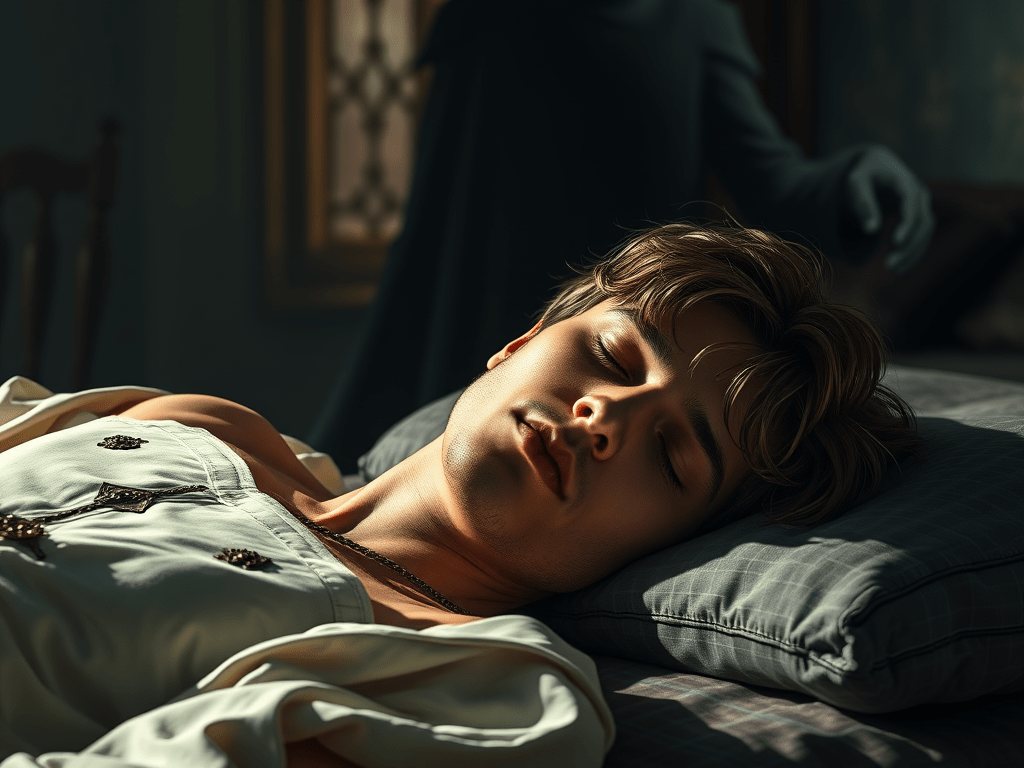
A gothic exploration of paraphilia, trauma, and unconscious desire.
What Is Somnophilia?
What is the somnophilia paraphilia? Explore the psychology of the sleep fetish known as “Sleeping Beauty Syndrome” in this gothic, trauma-informed deep dive.
“Do not awaken her,” they whispered. But what if the allure lies not in the waking…but in the waiting?
In the velvet hush of night, when the world exhales and stillness reigns, some hearts stir with forbidden fire. Somnophilia, also called “Sleeping Beauty Syndrome,”is one of psychology’s darkest, least-discussed paraphilias. To some, it’s a dangerous deviation. To others, a misunderstood obsession.

And in the gothic world, it becomes myth, metaphor, and mirror.
What is Somnophilia?
Somnophilia is a rare paraphilic disorder in which an individual becomes sexually aroused by someone who is asleep, unconscious, or otherwise unresponsive. The term was first introduced by Dr. John Money, a controversial psychologist known for his work on sexual behavior and identity.

Unlike many fetishes, somnophilia touches on the edge of non-consent, an extremely sensitive and ethically fraught area. And yet, the lines between fantasy and pathology are rarely black and white.
Fairy Tales or Fetishes?
Pop culture has romanticized unconscious femininity for centuries. Consider Sleeping Beauty, Snow White, even The Little Mermaid: characters rendered powerless, voiceless, often saved, or claimed, by a man who acts without their awareness. These are not just stories; they are cultural imprints of somnophilic fantasy.

In many cases, people with somnophilic fantasies are not predators. They are obsessives. They are fantasists. They are often individuals with OCD, PTSD, or attachment disorders, where the idea of passive intimacy offers a sense of control and safety.
The Psychology Behind the Sleep Fetish
For some, somnophilia represents a desire for dominance. For others, it’s about proximity without fear—a closeness unmarred by expectation or rejection.
Psychologically, somnophilia is sometimes linked to:
- Early attachment trauma
- Anxiety or obsessive-compulsive disorder
- Fantasies involving submission or control
- Difficulty navigating mutual vulnerability in relationships
These aren’t excuses—they’re explanations. And the more we understand, the more we can draw boundaries between ethical roleplay and harmful behavior.
Is Somnophilia Always Non-Consensual?
No. In fact, many individuals explore somnophilia consensually in BDSM and kink communities. Pre-negotiated “sleep play” scenes, hypnotic roleplay, and agreed-upon boundaries are part of safe, sane, and consensual kink practices.

Fantasy does not equal intention. But acting without consent? That’s the hard line, always.
Gothic Monsters, Mental Health & the Forbidden Mind
As someone with OCD and taboo thought patterns, I know what it feels like to be haunted by desires that feel monstrous, terrifying, or socially repulsive. That’s why I use gothic storytelling to unearth the beauty and rot beneath our masks.
Somnophilia is not about love—it’s about control, silence, the terror of rejection, and the ache to be near someone without ever being known. It is the prince who kisses the corpse and calls it affection.
But isn’t that the heart of many paraphilias? The need to rewrite pain as passion?
🔐 Read the Uncensored, Clinical Version
In the premium version of this article: available to my Patreon, Substack, and Kickstarter members, I dive into:
- Real-life case studies of somnophilia (identities protected)
- In-depth trauma and psychological origin breakdowns
- Clinical interpretations vs. kink community insights
- The moral, legal, and fantasy implications of unconscious play
- A personal essay: When OCD and Fantasy Collide

🗝️ Join me inside the castle. The full descent awaits only the brave. I have this paraphilia, do you want to understand it from a vampire’s point of view?
Available on [Patreon], [Substack], or [Kickstarter].
Because monsters deserve nuance—not exile.
OCD Vampire
 Gothic Bite Magazine