
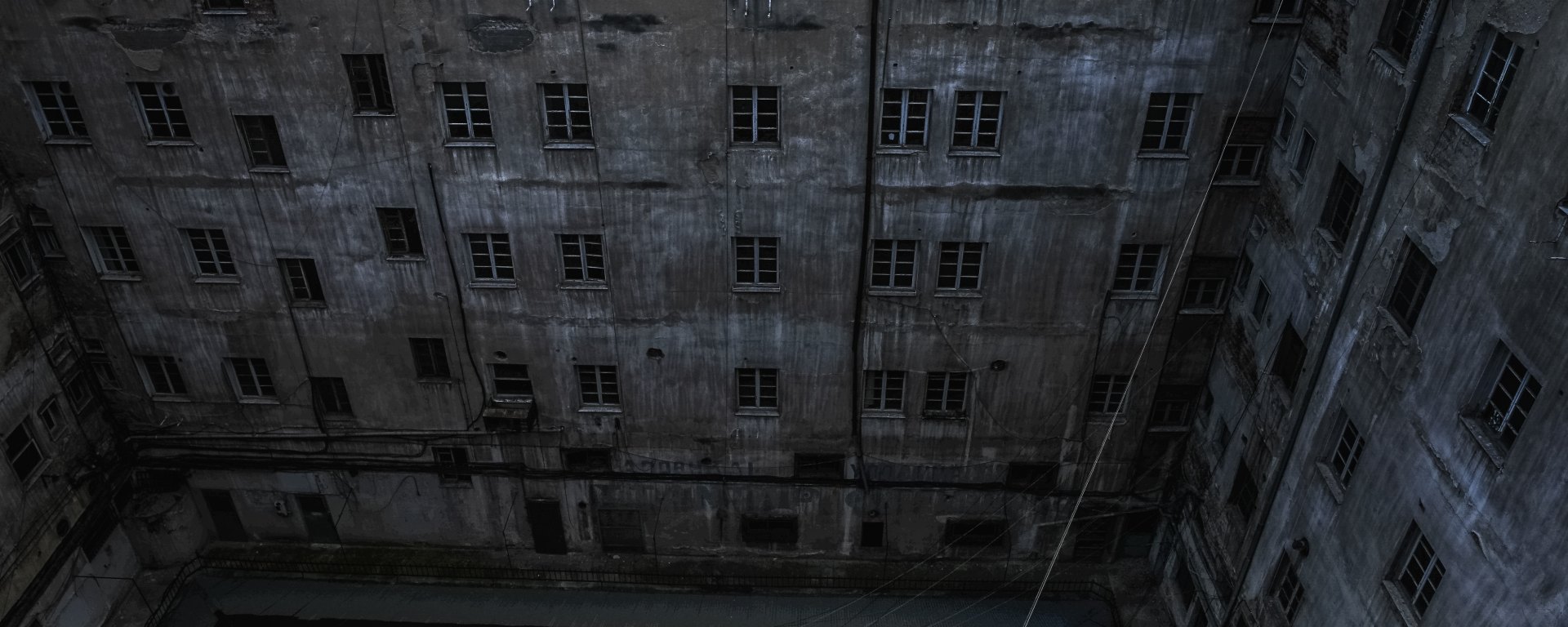
A bag of dog food to enter. A waiting list of 27,000 people. A $20k cash prize. But what is McKamey Manor, really? And how did it become the source for a 32-page lawsuit?
McKamey Manor is a notoriously intense survival horror-themed haunted house attraction located in Summertown, Tennessee. The founder, Russ McKamey, has been known to be an avid horror fan since childhood, and in 1989 he decided to build his very own haunt in San Diego, California. He attempted to move to Illinois and Arizona in 2014, but the backlash to his presence was so strong that he abandoned the attempt. The San Diego house closed in 2015, but two years later, McKamey moved to Summertown and reopened for business: passionate about humane animal treatment, he only asked for a 50-pound bag of dog food or a donation to animal welfare as admission.
The tour lasts 8-10 hours, but no guest has ever reached the end. The Chamber iteration of the experience originally offered $20,000 to anyone who could complete the tour, with the caveat that $500 would be deducted from the final prize for every time a bold adventurer failed one of the challenges inside the attraction. To participate, hopefuls had to complete a sports physical, show proof of medical insurance, pass a background check, show a doctor’s note vouching for physical and mental stability, pass a drug test, watch a 2-hour video showing experiences of past participants, and sign a 40-page waiver. Participants also had to be at least 18 years of age, with people of ages 18-20 requiring parental approval, as well as comply with rules that ban running, pushing, using profanity, and touching props or actors.
In some ways, the waiver itself is part of the horror. One volunteer guide claimed that the waiver lists risks such as being tattooed, having fingernails removed, being waterboarded, or having teeth extracted. The Tennessee location also included a personal interview with McKamey, so that he could tailor the experience to each participant’s personal fears. Some have theorized that the waiver and interview process are psychological ploys designed to unsettle participants before they ever make it to the attraction—which is no cake walk in itself.
After completing the interview, passing all associated tests and checks, and signing the waiver, the participant would meet McKamey at another agreed-upon location. From there, the participant would allegedly be abducted, blindfolded, and tortured in a van, before being dumped at the Summertown location to endure another 4-5 hours. Supposedly, at the end of this harrowing endeavor, the participant would then be escorted to a secondary location just across the state line in Huntsville, Alabama. To date, nobody has ever made it to the Huntsville location.
Controversy rapidly followed McKamey. Unlike California, Tennessee state law stipulates that consent for things like haunted houses can be withdrawn at any time until the event is concluded, regardless of whether the participant signs a waiver saying otherwise. McKamey Manor adopted a safeword rule to accommodate this, despite having previously branded itself as being one of the few extreme haunts to lack one.
However, in 2016, participant Laura Hertz Brotherton claimed that her safeword was repeatedly ignored, and that she was later treated at a hospital for extensive injuries. It was brought to court by Tennessee Attorney General in 2023 over allegations about withdrawn consent being ignored, lack of access to the waiver, and the inability for contestants to win the prize money. McKamey filed a 32-page countersuit, claiming that the request violated his First, Fourth, Fifth, and Fourteenth Amendment rights, and the case was ultimately dropped in August. The legality of the attraction remains unclear, but the case forces an uncomfortable question about where the line is between consensual horror and harm.
 Gothic Bite Magazine