
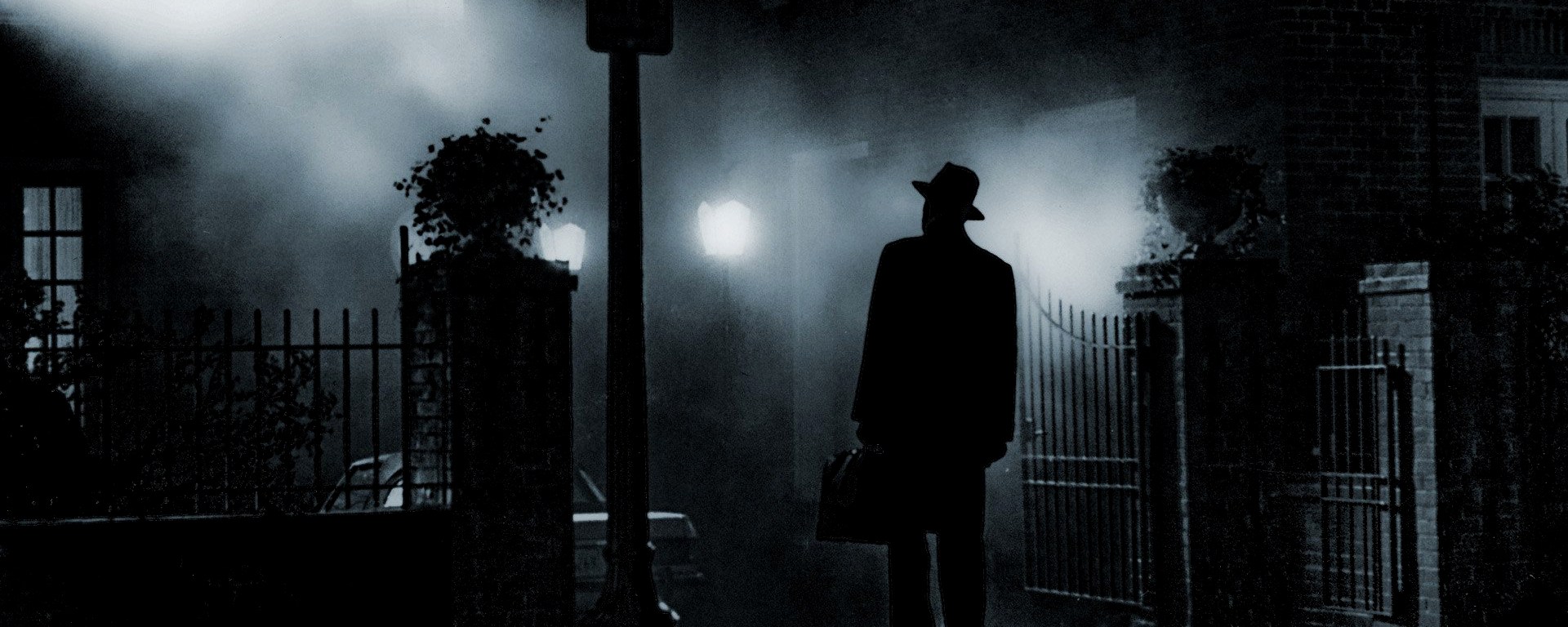
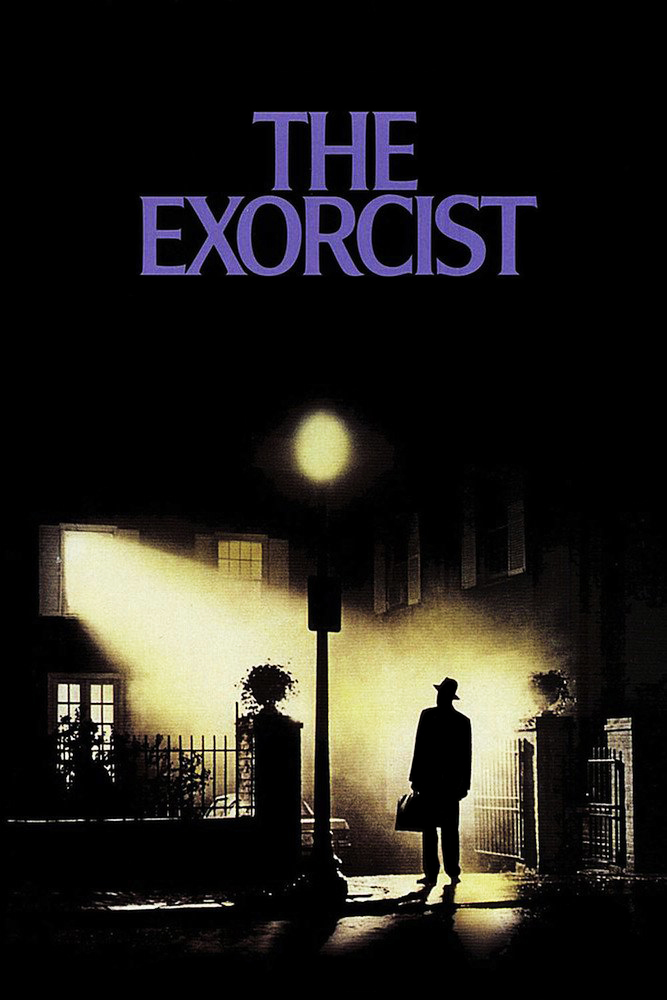
Hello, and welcome back to Reel Horror, where we discuss the real-world inspirations behind horror films. Today, we’ll be looking at the Roland Doe case, which inspired William Peter Blatty’s 1971 novel and subsequent film The Exorcist.
The Roland Doe case is one of the most-documented possession cases in American history. It entered the mind of the public in 1949, when several newspapers printed anonymous articles describing the possession and exorcism of a 14-year-old boy in Missouri, pseudonymously referred to as Roland Doe or Robbie Mannheim. It is widely believed that these articles were written by Luther Miles Schulze, the former pastor of Doe’s family. The case itself was documented in a diary by Raymond J. Bishop, a priest who was present at the exorcism. Much of the information now known comes from a book by Thomas B. Allen.
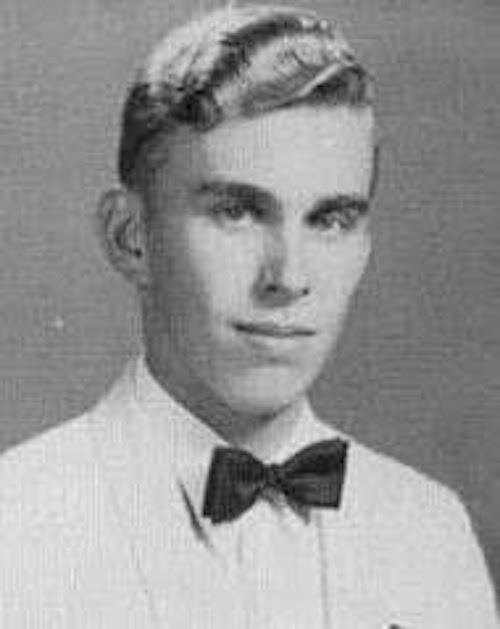
Roland Doe, whose real name was Ronald Edwin Hunkeler, was born in 1935 to a German Lutheran family in Cottage City, Maryland. He was an only child, and he was particularly close with his aunt, a spiritualist named Harriet. During the 1940s, Harriet introduced Hunkeler to concepts of spiritualism, including the use of a Ouija board. She passed away when Hunkeler was around 13 years old. Devastated, Hunkeler regularly attempted to contact her using the board. The family began to experience unexplainable scratching sounds, furniture moving on its own, and objects like vases levitating when Hunkeler was nearby.
In 1949, the family turned to Schulze for assistance. In his own life, Schulze was fascinated by parapsychology, and he arranged for Hunkeler to spend a night under observation in his home. Schulze reported the same phenomena occurring and recommended that the family contact a Catholic priest. Hunkeler was soon sent to Georgetown University Hospital, where a Jesuit priest named Edward Hughes attempted the first of several exorcism rituals. It came to an abrupt halt when Hunkeler slipped out of his restraints, broke a bedspring from under the mattress, and slashed Hughes’s arm with it.
Scratches also appeared on Hunkeler’s body, spelling out the word “Louis”. Hunkeler’s mother was from St. Louis, Missouri, and upon seeing this word, the family traveled to a relative’s home in St. Louis for a change of scenery. Hunkeler’s cousin contacted two priests from Saint Louis University: Raymond J. Bishop, a professor, and William S. Bowdern. They visited Hunkeler and watched objects fly across the room, with Hunkeler speaking in a guttural voice in a shaking bed. Hunkeler was also strongly repulsed by sacred symbols.
Bowdern obtained permission from the archbishop to perform another exorcism at the psychiatric wing of the Alexian Brothers Hospital. Two more priests, Walter Halloran and William Van Roo, were also called to assist Bowdern with the ritual. According to an account published by Douglas Lockhart in 1999, a total of 48 people witnessed the exorcism. Hunkeler’s mattress at the hospital allegedly began to shake again during the Litany of the Saints portion, and more scratches appeared, spelling out “evil” and “hell” or appearing in images like a pitchfork. Hunkeler also broke Halloran’s nose.
Finally, after a violent episode on April 18th, Hunkeler suddenly calmed. He told the attending priests that he had experienced a vision of St. Michael the Archangel, who cast out the demons that were torturing him. Halloran later reported that Hunkeler went on to live a quiet, ordinary life. The case was one of the first broadly publicized possessions, and as a result, it drew attention from both skeptics and the Catholic Church. Mark Opsasnick emerged as a critic, discovering that many of the accounts of the case were sensationalized and based on rumors that were never documented. Thomas B. Allen wrote in 1993 that “the consensus of today’s experts” was that Hunkeler “ was just a deeply disturbed boy”. The Catholic Church used the incident as a precedent for high-profile exorcism cases, emphasizing adherence to the Rituale Romanum to avoid hysteria.
The Roland Doe case was reported in August of 1949 in The Washington Post as a front-page story under the headline “Priest Frees Mt. Rainier Boy Reported Held in Devil’s Grip”. A student at Georgetown University named William Peter Blatty used this article as the basis for the novel The Exorcist in 1971, though he changed several details of the case. The book sold 13 million copies in the United States and remained on The New York Times Best Seller list for 57 weeks (17 of which saw it at the top). He adapted it into a film version in 1973 with William Friedkin and won an Academy Award for the screenplay, as well as Golden Globes for Best Picture and Best Writing. It became the first horror film ever to be nominated for the Best Picture Oscar.
 Gothic Bite Magazine