
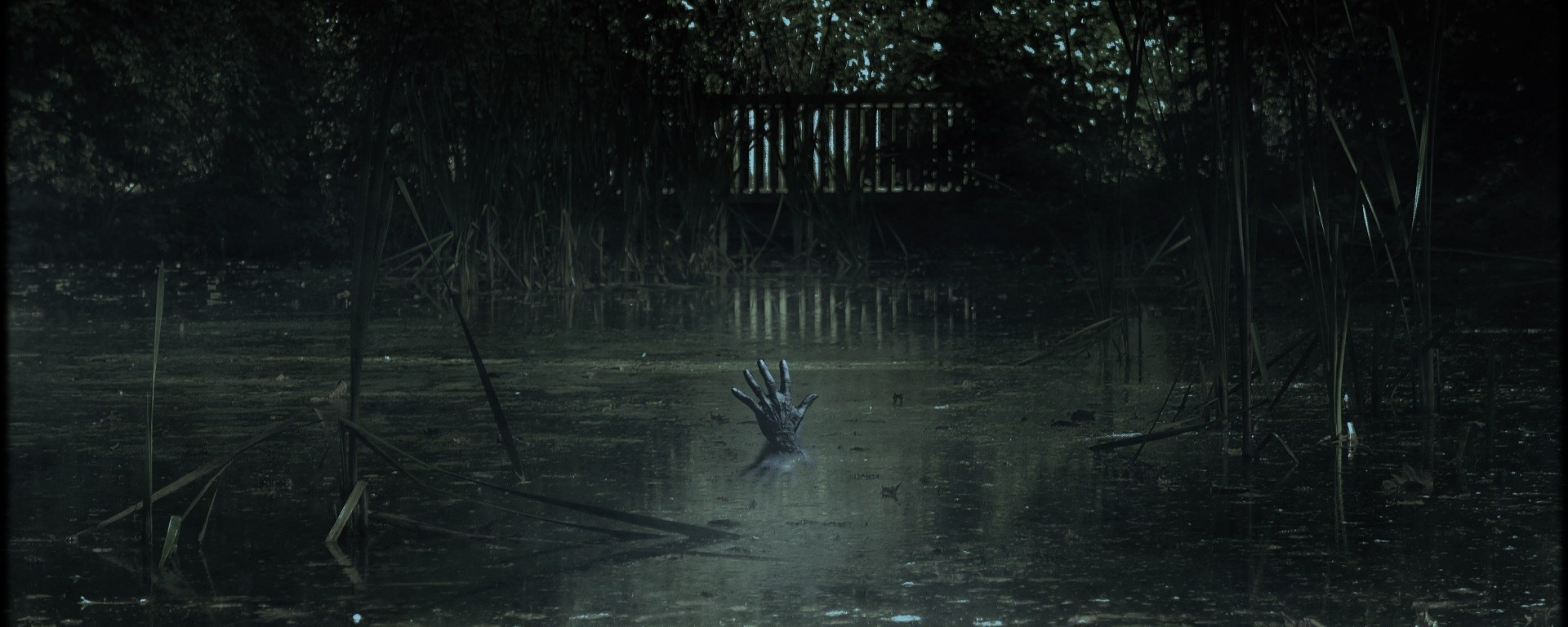
Sceadugenga is one of those wonderfully eerie Old English words that feels like it walked straight out of a cursed forest and is meant to haunt.
What Is The Etymology Of The Word?
Sceadugenga is an Old English word, and while Anglo-Saxon was spoken roughly from 450 CE to 1150 CE, we can narrow it down!
The word sceadugenga is attested in Beowulf, which gives us the best reference point since the manuscript dates around 1000 CE, but the poem itself was likely composed earlier, in the 700 to 900 CE.
So the word was definitely in use by the early Anglo-Saxon period, and probably already established in spoken language before it was ever written down.
But what does the word mean? Well, ‘sceadu’ means shadow and ‘genga’ means walker or goer. Put together, it literally means “shadow-walker” or “one who moves in the shadows.”
Where Does The Sceadugenga Appears?
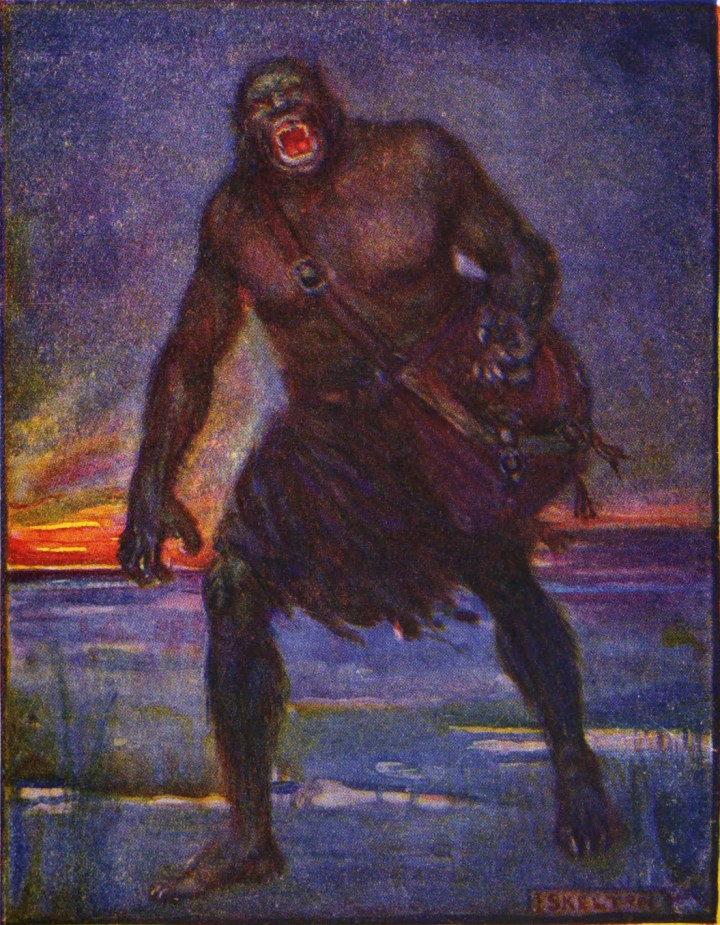
The term is most famously used in the epic poem Beowulf, where it describes the monster Grendel.
Every nail, claw-scale and spur, every spike
and welt on the hand of that heathen brute
was like barbed steel. Everybody said
there was no honed iron hard enough:
to pierce him through, no time proofed blade
that could cut his brutal blood caked claw
But Grendel is described as a sceadugenga mainly because he lurked in darkness, stalks his victims at night and exists on the boundary between human and the supernatural.
It’s not just a physical description—it carries a strong sense of menace, exile, and otherworldliness.
What Does The Word Imply?
This word isn’t just “a creature in the shadows.” It suggests something deeper: Outcast existence, a being separated from society or light. It also suggests a predatory presence, something that watches and waits. And finally, supernatural undertone, not quite human, not quite beast.
In Beowulf, it reinforces the idea that Grendel belongs to a cursed lineage, tied to darkness both physically and morally. In fact, it is believed he is a descendant of the biblical Cain, the first murderer in the bible.
Why It Still Hits Hard Today
Even now, sceadugenga feels powerful because it taps into a universal fear of something unseen, something moving just outside your vision, and something that shouldn’t be there.
Honestly, it’s the kind of word that would fit perfectly in gothic horror, dark fantasy, or anything involving creatures that don’t belong in the light.
Where Can You Find A Sceadugenga Today?
In The Last Kingdom, young Uhtred of Bebbanburg romanticizes the idea of becoming a sceadugenga. That tells you a lot about his mindset; he wants to be something feared, elusive, almost mythic.
But in his description, a sceadugenga can shapeshift!
So… Do Sceadugenga ShapeShift?
Short answer: not in the original sense. In The Saxon Stories series, Bernard Cornwell is embellishing, but for a reason that makes sense to the readers.
In actual Old English usage, like in Beowulf, a sceadugenga is a shadow-walker. It does not explicitly mean a shapeshifter.
In fact, Grendel, the classic sceadugenga, isn’t really a shapeshifter, he’s just a night-stalker, something that comes out of darkness, and a being tied to fear and the unknown.
Why Bernard Cornwell Adds Shapeshifting Vibes
Cornwell is leaning into how people in that time might imagine such a creature. Especially from a boy’s point of view.
Imagine living in the Dark Ages for a moment. You feel like you’re being followed, but when you turn around, nobody is there. If something moves unseen, it might be changing form. If it appears and disappears, it must be supernatural. If it survives in darkness, it’s not fully human

So “shape-shifting” here is less literal biology and more, “This thing doesn’t behave like anything we understand.”
What Young Uhtred Really Means
When Uhtred says he wants to be a sceadugenga, he’s not saying, “I want to turn into an animal.” Uhtred wants to move unseen and wants to strike fear. He wants to be more of a legend than a man.
Basically, he wants to be a predator in the dark, not bound by normal rules.
A More Grounded Interpretation
If you strip away the myth, a “sceadugenga” in a realistic sense would be a stealthy warrior, someone who uses darkness, terrain, and surprise, maybe even what we’d now call a raider, scout, or assassin-type fighter.
The Cool Part
Bernard Cornwell is doing something clever. He’s showing how a child like Uhtred hears old mythic words, misunderstands or romanticizes them, and turns them into something bigger and more magical.
Which honestly fits perfectly with his character. He’s always chasing legend status.
So, About the Sceadugenga
If you catch something in the corner of your eye, only for it to vanish when you turn your head…If you feel as though someone is following you, yet no one is there when you look…If you sense a presence watching you, though no eyes can be found…perhaps it is the sceadugenga lingering just beyond your sight.
I knew I had to write about this creature the moment I encountered it in The Last Kingdom by Bernard Cornwell. It is an ancient being that deserves far more recognition than it has received, especially considering that works like Beowulf continue to hold relevance today.
I hope this brief introduction has helped shed light on the sceadugenga (shay-duh-gen-gha) and perhaps introduced you to something new and unsettling.
 Gothic Bite Magazine