

Step into the dimly lit chamber of 17th-century France, where shadows dance with secrets and whispers of witchcraft linger in the air. Amid this eerie setting stands Catherine Monvoisin, a woman of intrigue and mystery, facing an uncommon fate.
Enveloped by darkness, her silhouette is illuminated solely by the flickering flames held by faceless figures passing judgment upon her. Yet, amidst the solemnity of her impending doom, Catherine’s enigmatic presence defies convention.
Join us as we unravel the enigma of Catherine Monvoisin, a woman whose life defies the norms of her time and whose story unveils the complexities of an era steeped in superstition and fear.
Catherine Monvoison was born Catherine Deshayes in 1640. She went on to marry a Parisian Jeweller and silk merchant named Antoine Monvoison. Life was great for them, as they had acquired great wealth and status; that was until Antoine’s business took a hit.
Catherine refused to return to the poverty she had grown up with, so she turned to some gifts that she believed God had given her, which included fortune-telling. The fortune-telling was questioned by the church in 1665 or 1666, but they still allowed her to continue.
From this time, she expanded her business to face-reading, palm reading, and more covert business acts, which included giving illegal abortions to wealthy French aristocrats.
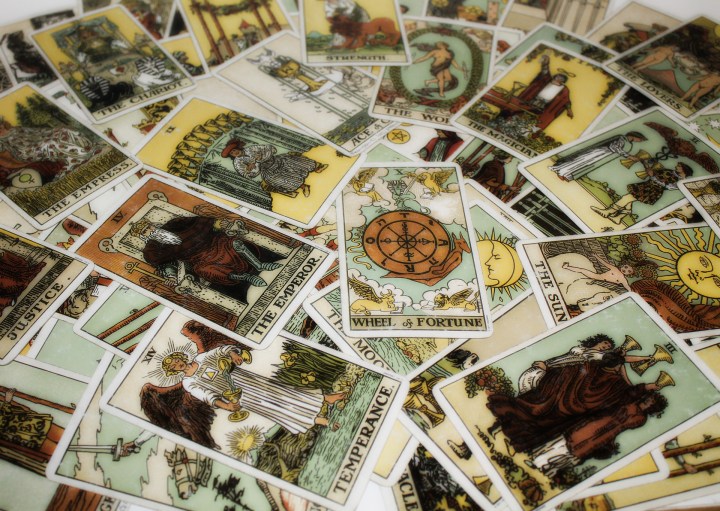
As her connections within the world of the elites grew, she decided to branch out even further into the world of dark magic by selling amulets, objects, love spells, and potions. People loved her spells so much and believed that they worked that they would hire her to cast spells to gain more wealth and clients for their businesses or greater success in life.
As her popularity grew, so did the income flowing in, and with a lot of money came the desire for more. Catherine became money and power-hungry, becoming increasingly embroiled in the world of dark arts and black magic.
She would host elite parties, and this would become the beginning of her killings as at the parties, she would perform a ritual called “Black Mass” in which she would sacrifice animals and eventually babies that were sold to her by enslaved people and peasants in exchange for money, food, etc.
It was shortly after this time that Catherine earned herself a new nickname, “La Voison,” also known as The Lady of Poison. She branched out into making poisons for those who wanted to kill someone or harm them. As there was a high demand, Catherine began hiring others, known as “professional poisoners,” to assist her in fulfilling orders and expanding their business model.

During this time, Catherine was accused of killing her husband, yet she denied, of course, the allegations. It is believed that during her time of venturing into the business of sacrificing and poisoning, she killed about 2,500 babies. Of course, as Catherine was very charming and considered a high-profile socialite, none of the charges ever stuck.
Catherine’s downfall, however, began when one of King Louis XIV’s mistresses attempted to poison him, as he was waning in his interest in her and wouldn’t let her get away with being dismissed. The King then alerted the authorities to arrest a local fortune teller named Magdelaine de La Grange, whom the mistress had implicated.
Of course, Magdelaine wasn’t going to be thrown under the bus, so the blame game began with her blaming Marie Bosse, and then Marie, who was part of Catherine’s group of professional poisoners and also jealous of Catherine’s status, threw Catherine under the bus.
Catherine was arrested, and the tale known as the “Affair of the Poisons” was revealed as a lot of the elites and wealthy French had been in her circle. It caused a scandal that rocked 17th-century French Society, and Catherine revealed to the authorities the names of all those high-society members. A total of 300 people were imprisoned during the investigation, and 36 were executed for their crimes.

Despite Catherine not admitting any guilt or confessions on her part, the evidence against her was overwhelming, and Catherine was sentenced to death in 1680 and burned at the stake, which was, as we know, the punishment reserved for those accused of witchcraft. It was believed that she had not only killed 2,500 babies but also poisoned about 1000 people.
The tale of Catherine, known as “La Voisin,” serves as a cautionary narrative, revealing the perilous journey from the allure of magic and power to the depths of evil. Catherine’s descent underscores the seductive nature of ambition and desire, illustrating how easily one can be drawn into darkness when consumed by the insatiable hunger for more.
Her story underscores the timeless truth that human nature often craves beyond what is necessary, leading to destructive paths.
In our pursuit of fulfillment, it is crucial to acknowledge the risks associated with unchecked ambition and greed. Catherine’s tragic narrative reminds us of the importance of contentment and gratitude for what we already possess.
Rather than endlessly chasing after elusive desires, we should find solace in appreciating the blessings that surround us. For it is in embracing gratitude and satisfaction that we shield ourselves from the pitfalls of temptation and preserve the light within us, steering clear of the shadows that threaten to consume our souls.
 Gothic Bite Magazine