
Fairy tales, as we know them today, are often softened, sanitized versions of their grim past. Before Disney transformed them into magical adventures for children, these stories were cautionary tales—dark warnings about the dangers of vanity, betrayal, and death.
Fairy tales often arrive in our lives as bedtime stories, wrapped in glittering enchantments and happy endings. But the origins of these tales are far from innocent. Before Disney gave us a spellbound princess awakened by true love’s kiss, Sleeping Beauty was a harrowing parable. One that was drenched in themes of sexual violence, cannibalism, and the grotesque misuse of power.
Just as Snow White‘s tale hides murder and necrophilia under a frosted sugar coating, Sleeping Beauty’s story is another gothic lesson in vulnerability, control, and the fine line between magic and malevolence.
The Origins of Sleeping Beauty: The Maiden and the Monster
The earliest version of the tale appears in Sun, Moon, and Talia, written by Giambattista Basile in the 17th century, a piece so disturbing that it makes the Grimms’ version seem almost wholesome.
In this Italian rendition, the beautiful Talia is not awakened by a kiss. She is raped by a king while still asleep, and later gives birth to twins while unconscious. One of the babies sucks the poisoned flax from her finger, waking her at last, not into a fairytale romance, but into trauma, confusion, and motherhood.
Later, the Brothers Grimm offered a more subdued version titled Briar Rose. Their 1812 retelling, while still dark, replaced outright violation with magical sleep, replacing rape with a kiss and softening the implications of power imbalance. Yet even the Grimms could not fully erase the unsettling themes inherent to the tale.
Perrault’s Sleeping Beauty: The Ogress, the Children, and the Forgotten Ending
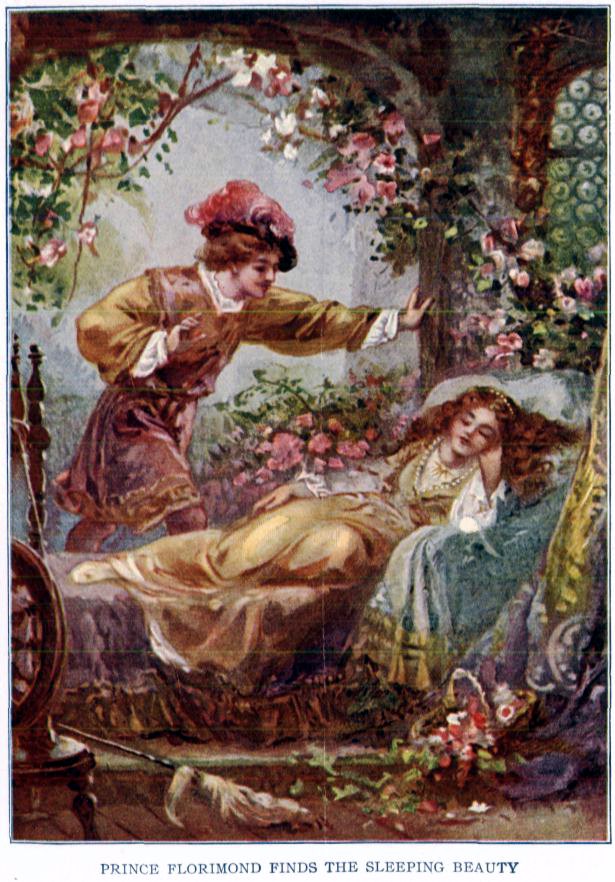
While most people credit the Brothers Grimm for the story of Sleeping Beauty, it was Charles Perrault who first gave us the French literary version of La Belle au Bois Dormant in 1697. His tale straddled the line between Basile’s grotesque realism and the Grimms’ sugar-spun fantasy. Perrault preserved the darker undertones: a princess fated to sleep for a century, a mysterious prince who awakens her, and a deeply gothic twist: the prince’s ogress mother, who plots to devour Aurora and her children.
This macabre subplot, often omitted from modern adaptations, is a classic gothic turn: a monstrous mother figure, cannibalism, deception, and a pit of vipers. It ties the story back to ancient fears of motherhood, bloodlines, and the consuming power of time.
The Curse: A Death Sentence for Beauty
In most versions, the story begins with a royal birth and a celebration interrupted by a neglected, vengeful fairy. The fairy curses the baby, often out of petty slight: a forgotten invitation, a perceived disrespect, and foretells that the princess will prick her finger on a spindle and die.
The “spindle” here is no arbitrary object. In folklore, spinning is tied to fate and femininity, often symbolizing the inescapable weaving of one’s destiny. To prick her finger on it is to bleed for her beauty, for her gender, for her symbolic purity.
Later softened into a sleep rather than death, the curse nonetheless retains its fatalistic edge. The girl is doomed from birth, her beauty both her blessing and her executioner.
The Sleeping Maiden: An Image of Passive Perfection
Sleeping Beauty: Aurora, Talia, Briar Rose, Églantine, represents a gothic ideal of femininity: silent, still, pure, and untouched. In many ways, she is a living corpse, a figure preserved in time, suspended between life and death. The image of a beautiful girl asleep in a tower for a hundred years is haunting not because of the magic, but because of the implications:
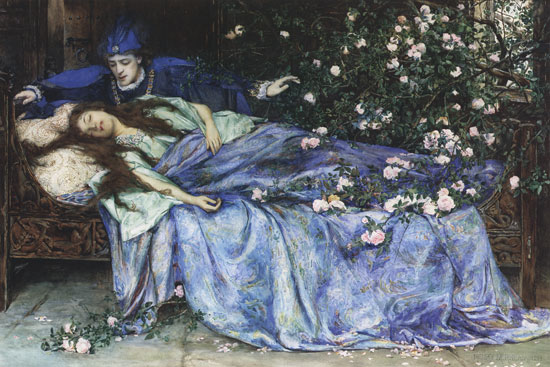
She is powerless. She is objectified. She is violated, either symbolically or literally, in nearly every version of the tale.
In the darker variants, men come to her tower not to rescue, but to claim. In Sun, Moon, and Talia, the king takes her body without consent. In other stories, she is married while asleep. These elements reveal the disturbing power dynamics underpinning many older fairy tales: where female bodies are property, and beauty is both armor and curse.
The Thirteenth Fairy: The Rejected Outcast as Gothic Catalyst
The villain of Sleeping Beauty, the wicked fairy or spiteful witch, is not inherently evil. She is an outsider, denied inclusion, and her curse is retaliation against a world that has dismissed her. She is a classic gothic figure: the Other, the shadow, the spurned woman turned monstrous.
Her curse is often seen as an overreaction, but viewed through a gothic lens, it is a scream for recognition, a violent assertion of power in a society that ignored her. Some scholars view her as a proto-feminist figure, twisted by rejection, yes, but also bold enough to challenge royalty.
She embodies the darker truth of the tale: that one’s fate can be shaped not by love, but by neglect and resentment.
The Castle: Fortress, Coffin, and Cathedral of Sleep
The castle where Aurora lies sleeping is a potent symbol. Encased in thorns and silence, it becomes a tomb, a fortress of forgotten time, and a metaphorical womb of death and rebirth. The world outside changes and decays while the girl remains perfectly preserved.
In gothic literature, castles are often places of madness, decay, and isolation. Here, the enchanted castle becomes a cathedral of suspended time. Nature reclaims the land, and only a “true” prince may cut through the briars. But what does that mean? That only royalty can “rescue” a woman from her fate? Or is the forest a symbol of untamed femininity: a wall of nature grown wild in defiance of time?
The “Kiss”: Love or Possession?
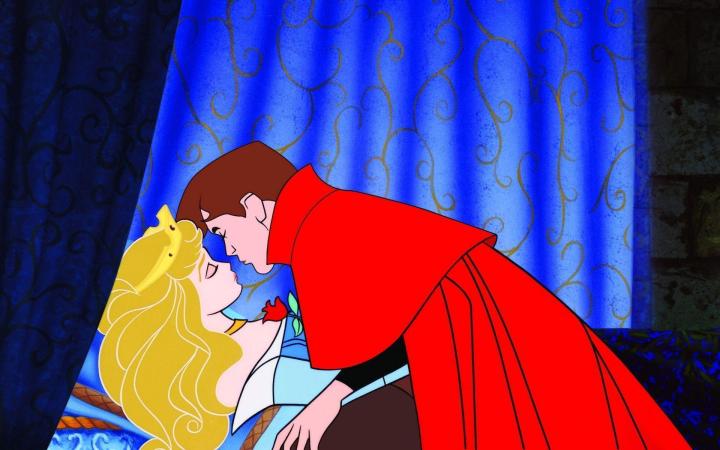
In the sanitized versions, a prince stumbles upon the sleeping maiden, kisses her, and she awakens. This is presented as romantic, a triumph of love. But strip away the gloss and what remains is disturbing:
A man kisses a woman who cannot consent.
A man claims her before she awakens.
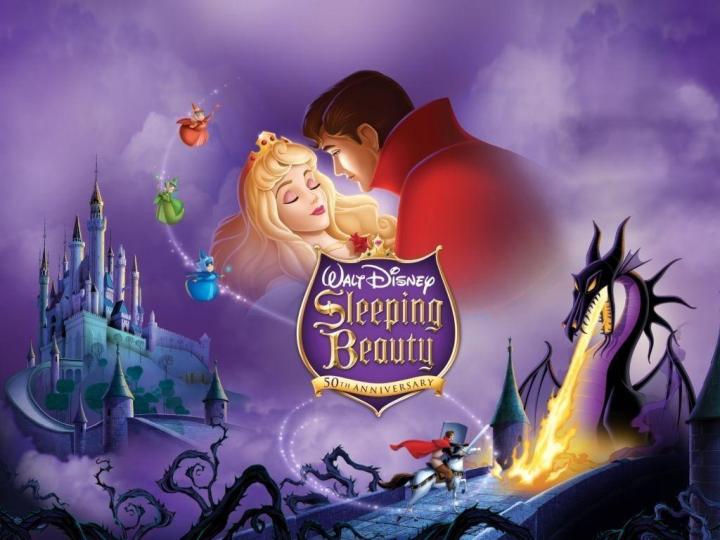
Even in the Grimm’s telling, where the kiss is less explicitly sexual, it remains a gothic metaphor for the male gaze, desire enacted upon a passive woman, the fantasy of love with no resistance. The motif has deeply influenced modern horror and gothic romance, where the sleeping or comatose woman is both desired and feared.
The Ogre Queen: Cannibalism and Court Intrigue
Charles Perrault’s La Belle au Bois Dormant adds a grotesque postscript rarely included in modern adaptations. After the princess and prince marry, his mother, the queen, turns out to be an ogress who craves human flesh. She demands to eat the children of Sleeping Beauty: Aurora’s own son and daughter, named “Dawn” and “Day.”
A cook spares the children, but the queen is eventually exposed and punished, thrown into a vat of vipers and toads. This cannibalistic subplot, largely forgotten in pop culture, is a striking echo of the Snow White queen’s hunger for her stepdaughter’s heart. It reminds us that the danger is not only male predators, but also monstrous maternal figures—twisted by jealousy, hunger, and ancient rage.
The Gothic Legacy of Sleeping Beauty: Themes and Reflections
- The Sexual Politics of Silence
- The princess does not speak. She sleeps. She is “acted upon.” This reflects the historical silencing of women—where their bodies are seen, desired, and controlled, but their voices are absent.
- The princess does not speak. She sleeps. She is “acted upon.” This reflects the historical silencing of women—where their bodies are seen, desired, and controlled, but their voices are absent.
- Beauty as Curse
- Aurora’s beauty is her doom. It invites obsession, violence, and objectification. Gothic literature often explores beauty as a kind of doom—an ethereal, haunted trait that brings misfortune rather than joy.
- Aurora’s beauty is her doom. It invites obsession, violence, and objectification. Gothic literature often explores beauty as a kind of doom—an ethereal, haunted trait that brings misfortune rather than joy.
- Time as Terror
- The passage of a hundred years while the maiden sleeps is terrifying. Everything dies around her, except her. It is a vision of being out of time, a living ghost. She becomes a relic, not a person.
- The passage of a hundred years while the maiden sleeps is terrifying. Everything dies around her, except her. It is a vision of being out of time, a living ghost. She becomes a relic, not a person.
- The Forest of Thorns
- The brambles around the castle are not just magical obstacles. They are metaphors for sexual protection, psychological trauma, or societal restrictions. They can be seen as the unconscious mind resisting awakening, or the physical body resisting violation.
- The brambles around the castle are not just magical obstacles. They are metaphors for sexual protection, psychological trauma, or societal restrictions. They can be seen as the unconscious mind resisting awakening, or the physical body resisting violation.
Sleeping Beauty in Modern Culture: From Maleficent to Madness
While Disney’s Sleeping Beauty (1959) immortalized the aesthetic—pink gowns, fairies, spinning wheels—it omitted the raw fear at the heart of the story. Maleficent became a misunderstood villain in modern retellings, reclaiming some of the agency stripped from the original “evil fairy.”
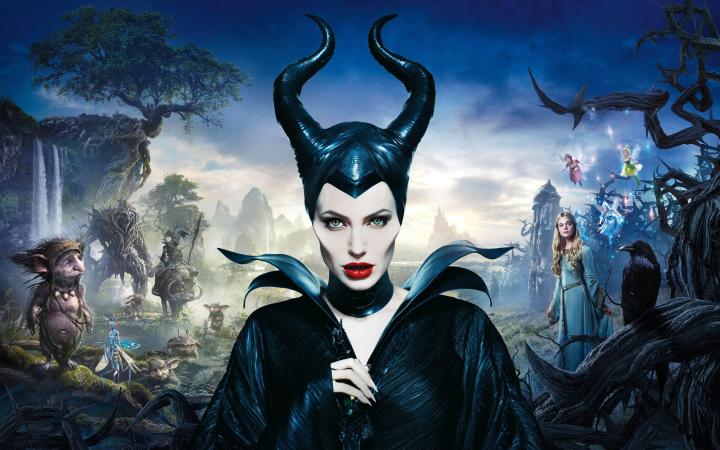
Films like Maleficent (2014) complicate the original tale, reframing the kiss as maternal love and challenging the notion of male rescue. Meanwhile, gothic reinterpretations such as The Company of Wolves and Angela Carter’s The Bloody Chamber delve deep into the sexual violence and female awakening inherent in the original myths.
The Lasting Legacy of Sleeping Beauty
Sleeping Beauty is not a tale of romance. It is a cautionary fable about power, silence, and predation. Beneath the dreamy aesthetics lies a skeleton of horror—sleep as death, beauty as bait, love as ownership.
In the gothic tradition, this story endures because it speaks to the fear of being powerless, voiceless, and reduced to a symbol. But it also whispers of awakening—of emerging from darkness, of reclaiming agency after centuries of sleep.
Perhaps that is the most haunting aspect of all: Sleeping Beauty is not just about a girl waiting to be kissed. It is about the world that allowed her to fall asleep in the first place.
 Gothic Bite Magazine