
Fairy tales, as we know them today, are often softened, sanitized versions of their grim past. Before Disney transformed them into magical adventures for children, these stories were cautionary tales—dark warnings about the dangers of vanity, betrayal, and death.
Snow White and the Seven Dwarfs is no exception. The version we recognize today, filled with dwarfs, a poisoned apple, and a prince’s kiss, is a far cry from its gruesome origins, where murder, necrophilia, cannibalism, and violent revenge played central roles.
The Origins of Snow White: A Tale of Death and Jealousy
The earliest known version of Snow White can be traced back to The Young Slave, written by the Italian author Giambattista Basile in the 17th century. However, the most famous early rendition comes from the Brothers Grimm in 1812. Their version, titled Schneewittchen, was part of Grimm’s Fairy Tales, a collection of dark folklore meant to reflect the raw and brutal realities of life.
Unlike the cheerful adaptation most people know today, the original Grimm tale was far more macabre:
- Snow White’s biological mother wished for a child “as white as snow, as red as blood, and as black as ebony.” However, after giving birth, she died, and her father remarried a woman whose beauty was matched only by her cruelty.
- The evil queen did not immediately resort to poisoning her stepdaughter. Instead, she tried to kill Snow White multiple times—
- A Tight Corset: She disguised herself and laced Snow White’s corset so tightly that she could not breathe and collapsed.
- A Poisoned Comb: She offered a beautiful comb soaked in poison, which put Snow White into a deathlike state.
- The Poisoned Apple: Only after failing twice did the queen resort to the infamous apple, poisoning only one side so she could convince Snow White it was safe.
- A Tight Corset: She disguised herself and laced Snow White’s corset so tightly that she could not breathe and collapsed.
Each attempt was a metaphor for the dangers of vanity and deception, reinforcing the grim reality of survival in a cruel world.
The Magic Mirror: A Gothic Symbol of Obsession
The Queen’s magic mirror is one of the most famous elements of the story, but its origins and symbolism run deeper than mere vanity. Mirrors have long been associated with divination, truth, and the supernatural, often appearing in folklore as portals to another world.
In Snow White, the mirror is not just a reflection of reality but an omniscient judge of beauty and worth. It fuels the Queen’s paranoia, becoming a symbol of her descent into madness—a gothic trope where the protagonist is tormented by their own desires.
Some scholars suggest that the mirror represents society’s rigid beauty standards, an external force dictating self-worth and driving people to destruction.
The Role of the Dwarfs: Guardians or Something Darker?
The seven dwarfs in the Grimm version are far removed from Disney’s cheerful miners. While they provide Snow White with refuge, their true nature is ambiguous. Dwarfs in folklore were often depicted as earthly spirits, alchemists, or guardians of hidden treasures.
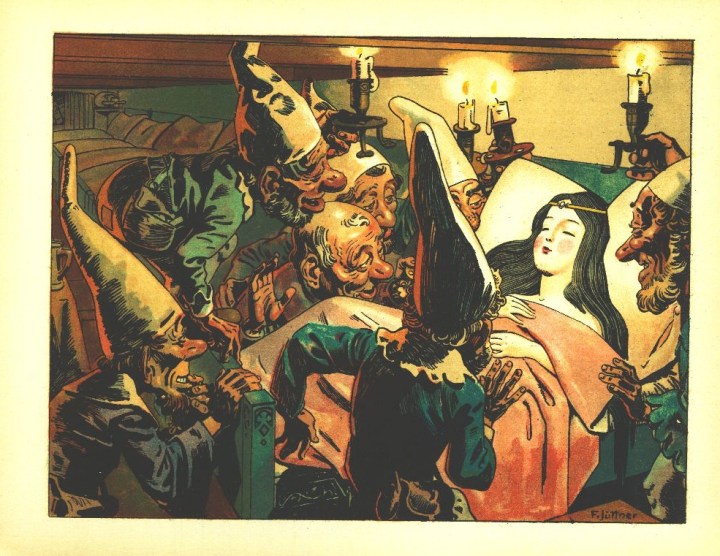
Their presence in Snow White may symbolize the underworld, as they work in the mines—traditionally seen as a place between life and death.
Some interpretations suggest that the dwarfs represent the seven deadly sins, though this is debated. Regardless, their role as Snow White’s protectors makes them one of the most enigmatic elements of the tale.
The Role of the Black Forest: The Meaning Behind The Trees
It is hard to say what the Black Forest truly represents in the Grimm fairy tale as it aligns with their aesthetic. However, the way we see Snow White is an image of innocence and naivety. She was kept in a castle ‘safe’ but now the huntsman pushes her into the unknown to save her life.
It is possible that the Black Forest was a place of legend where mystical occurrences take place. Since Snow White never ventured away from the castle, perhaps it signifies her fears of the unknown until she finds refuge into the Dwarfs’ cottage and realizes change can be scary but also, a good thing.
The Black Forest appears to be more of a moment of growth for Snow White.
The Hidden Gothic Themes and Dark Symbolism
Like many fairy tales, Snow White is layered with eerie symbolism that reflects deeper fears and historical anxieties:
1. The Queen as a Gothic Monster
The Evil Queen is more than just a wicked stepmother—she is a Gothic villain embodying vanity, jealousy, and obsession with youth. She is a woman willing to commit murder to preserve her beauty, foreshadowing the modern horror trope of the “eternal youth” obsession.
2. The Queen’s Cannibalism
In the Grimm version of the tale, the Evil Queen requests that the huntsman bring back Snow White’s lungs and liver. In some other versions of the tale, she asks for her heart. The reason being to serve Snow White for dinner, so that she could eat the princess.

We know the huntsman is disarmed by the princess’ innocence and beauty and instead warns Snow White, sending her into the dark forest as he brings back the organs of a pig to satisfy the Queen.
3. Snow White as a Living Corpse
Snow White’s death-like sleep and the glass coffin evoke imagery of necrophilia and the romanticization of death. Some interpretations suggest that the prince’s “kiss” in early versions was not as innocent as it seemed, but rather an eerie fascination with a beautiful corpse, which is in line with the standard of feminine beauty of the time.
However, in the original Grimm version of the tale, the prince doesn’t kiss Snow White. He finds the glass coffin and walks up to her, attracted by her beauty. Then, due to a bump into the coffin, the apple bite is no longer stuck in Snow White’s throat, having her wake up.
In other words, it’s through Disney’s fascination with the ‘true love’s kiss’ that they accidentally created this whole myth surrounding Prince Charming, Florian, being a necrophiliac.
4. The Unhealthy Beauty Standards of the Time
The Queen’s desire for beauty at all costs reflects historical beauty standards that were deeply tied to illness and death. The phrase “skin as white as snow, lips as red as blood” aligns with the beauty ideals associated with tuberculosis and other deadly illnesses.
Pale skin, flushed lips, and a fragile appearance were considered attractive, as they signified purity, delicacy, and even a romanticized version of suffering.
In history, some women even deliberately made themselves look sick to conform to these standards, further tying the tale to gothic themes of morbidity and beauty.
The End of the Evil Queen: As Medieval As It Gets!
The Evil Queen’s fate in the Disney adaptation of the fairy tale has her fall to her death on a ‘dark and stormy night’ along with boulders. Although we do not see her fall to the ground, one can assume it was the end for her.
However, in the real fairy tale, Snow White and Prince Charming, ‘Florian,’ get married and invite the Evil Queen despite her obvious jealousy toward the princess to their wedding.
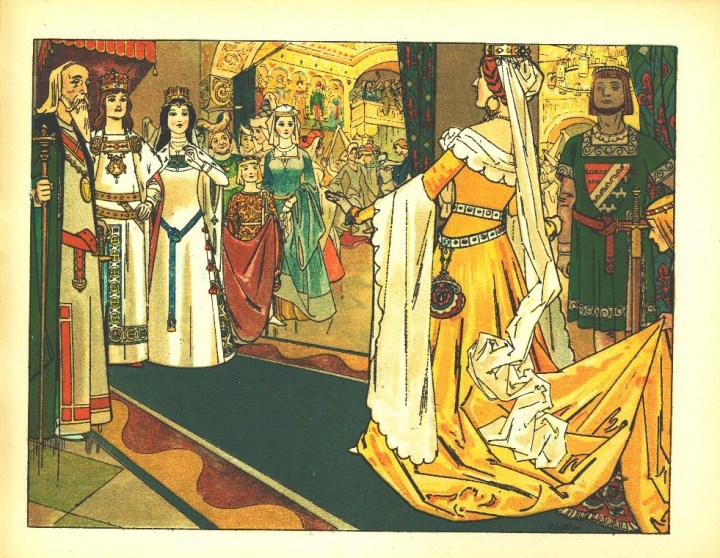
Upon witnessing the love between Snow White and Prince Charming, she is petrified with fright. That is when iron slippers are heated red hot and brought to the Evil Queen where she is forced to dance until she collapses in agony and dies. Medieval justice, one could call it.
The Italian vs. German Versions: Key Differences
- The Young Slave (Italy, 1634): In Basile’s version, the Snow White character is cursed at birth and hidden away, eventually found in a coffin-like state. The prince’s obsession with her is more necrophilic, as she is revived only after his mother attempts to kill her out of jealousy.
- Schneewittchen (Germany, 1812): The Brothers Grimm expanded the role of the Evil Queen, added the three murder attempts, and introduced the seven dwarfs, creating the version most recognized today.
The Lasting Legacy of Snow White
From Gothic literature to horror cinema, Snow White remains one of the most influential fairy tales.
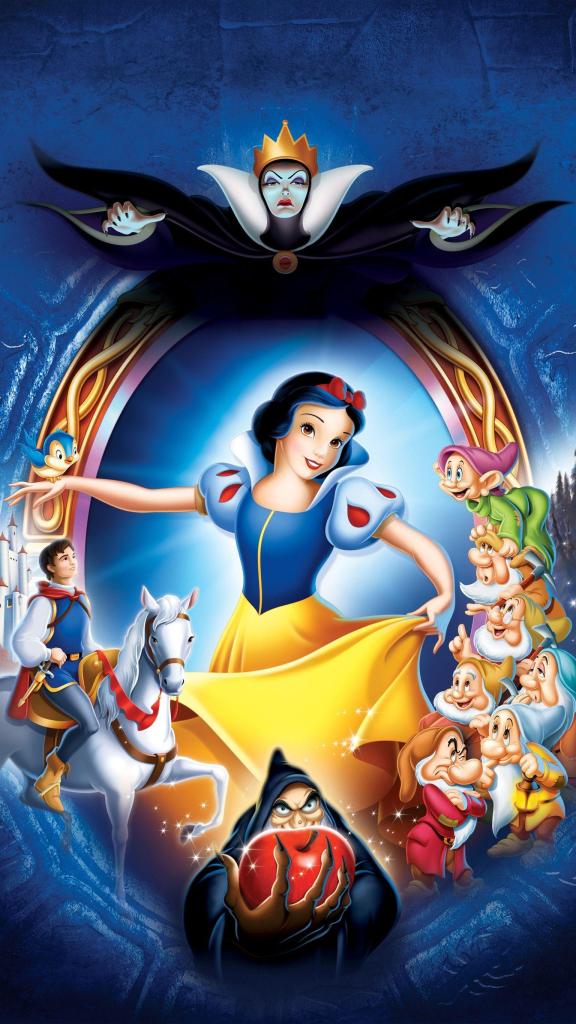
Modern retellings such as the theatre fairy tale children show in Québec, Iniminimagimo (80s, 90s) depicted a tamed version of the Grimm’s tale, Snow White: A Tale of Terror (1997) and The Huntsman: Winter’s War (2016) have leaned into the story’s dark origins, embracing its eerie themes and tragic underpinnings.
Today, we remember Snow White as a story of resilience against cruelty. But beneath the surface, it is a grim reflection of jealousy, deception, and the human obsession with beauty and youth—a tale that remains hauntingly relevant.
 Gothic Bite Magazine