
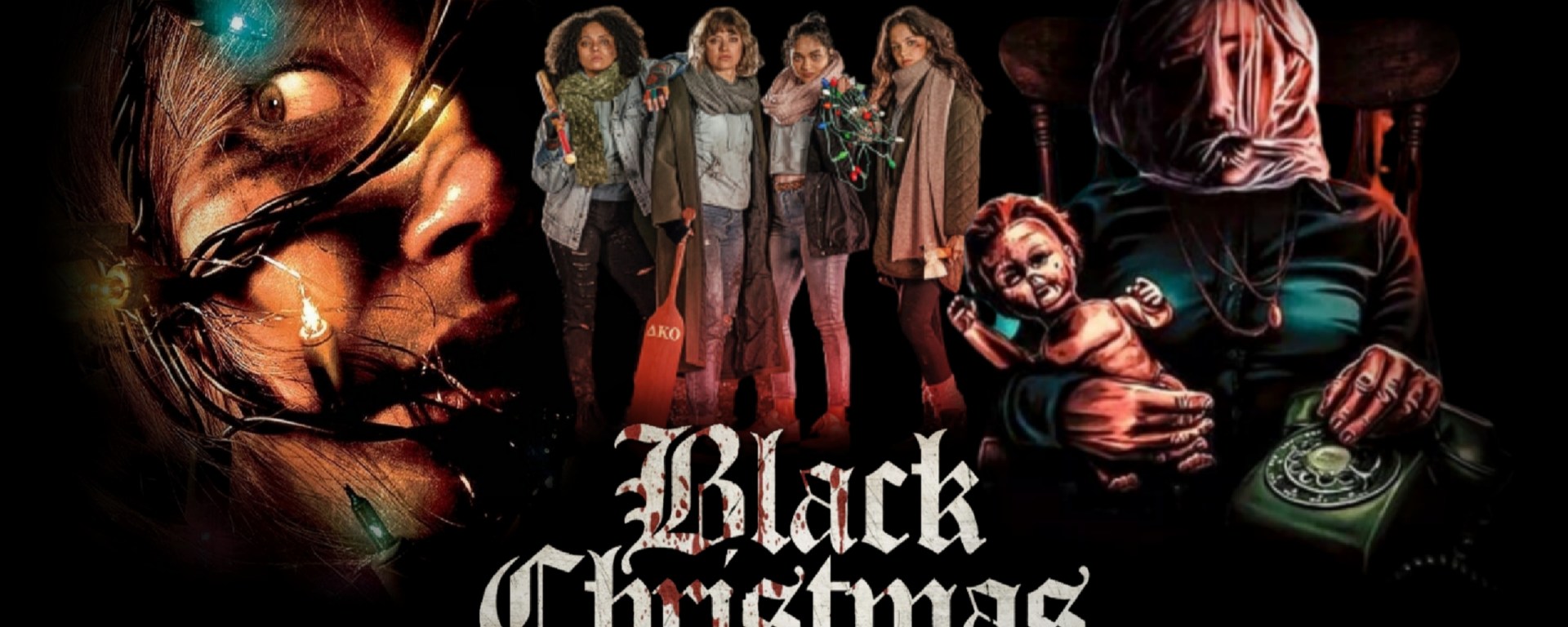
Danny Micheal Vaillancourt stopped by Gothic Bite Magazine to give his reviews on the Black Christmas movie and its remakes. What better than a good horror movie to start the holidays?
The Originals Are Always Better Aren’t They?
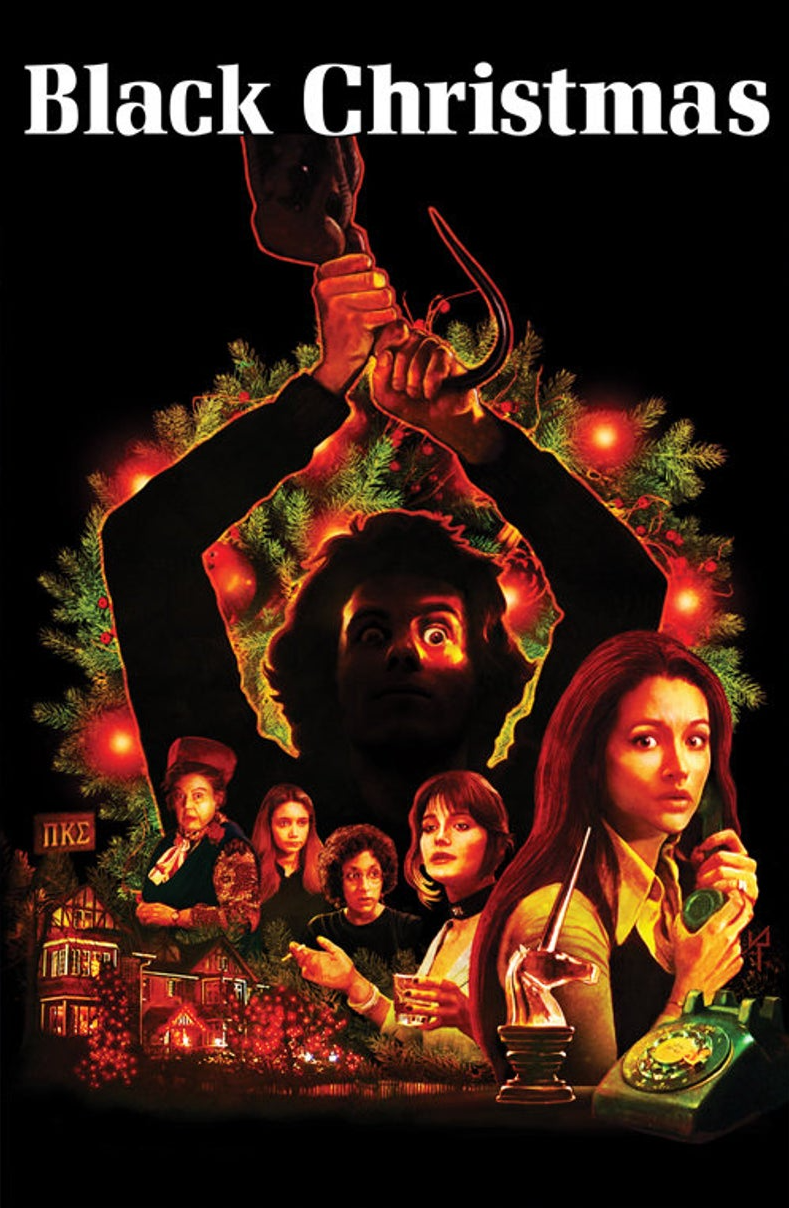
Bob Clark’s Black Christmas from 1974 is arguably one of the best of its kind within the sub-genre of holiday horror films. It remains undoubtedly influential in laying the groundwork for slasher films.
It has even inspired some of the genre classics that we know and love today, such as John Carpenter’s Halloween from 1978, and would go on to establish the formula and genre rules to come.
If you haven’t seen the movie, its premise might be a familiar one, but instead of finding influence from similar films of its kind, it’ll serve as inspiration for many films to come:
- A group of sorority sisters started receiving bizarre phone calls from an anonymous caller over the Christmas holidays.
- They’re stalked.
- Phone calls are becoming more threatening and increasingly unhinged.
- They’re murdered one by one by the mysterious caller.
It also has the particular distinction of not only having one remake but two remakes—both that would be wildly different in tone and approach, two other executions- and also polarizing for genre enthusiasts alike. The first remake is set up like its predecessor in its plot.
Still, where the original film made the killer’s identity unknown and played out more as a mystery, this one fleshes out the entire backstory and emphasizes the gore.
The second remake bears little similarity to the previous films other than a college setting and events during the holiday season. The villains are frat boys this time but are neither gory nor a mystery and instead add in supernatural elements.
Let’s dive into all of the ho-ho-horror with the Black Christmas movies!
Bob Clark’s 1974 Black Christmas
If you haven’t seen this holiday staple, you may know of another one that would come just nine years after this movie was initially released—A Christmas Story. It is a beloved family comedy directed by the same director, now regarded as the staple holiday movie for many families growing up—including my very own, and with good reason.
It brilliantly captures the magical time of the year and many memorable comical moments and iconic quotes that would be ingrained in pop culture. Now, with all that said, there’s not a shred of doubt regarding Clark’s success within the holiday genre of cinema; Black Christmas is no exception. It is a Christmas horror classic.
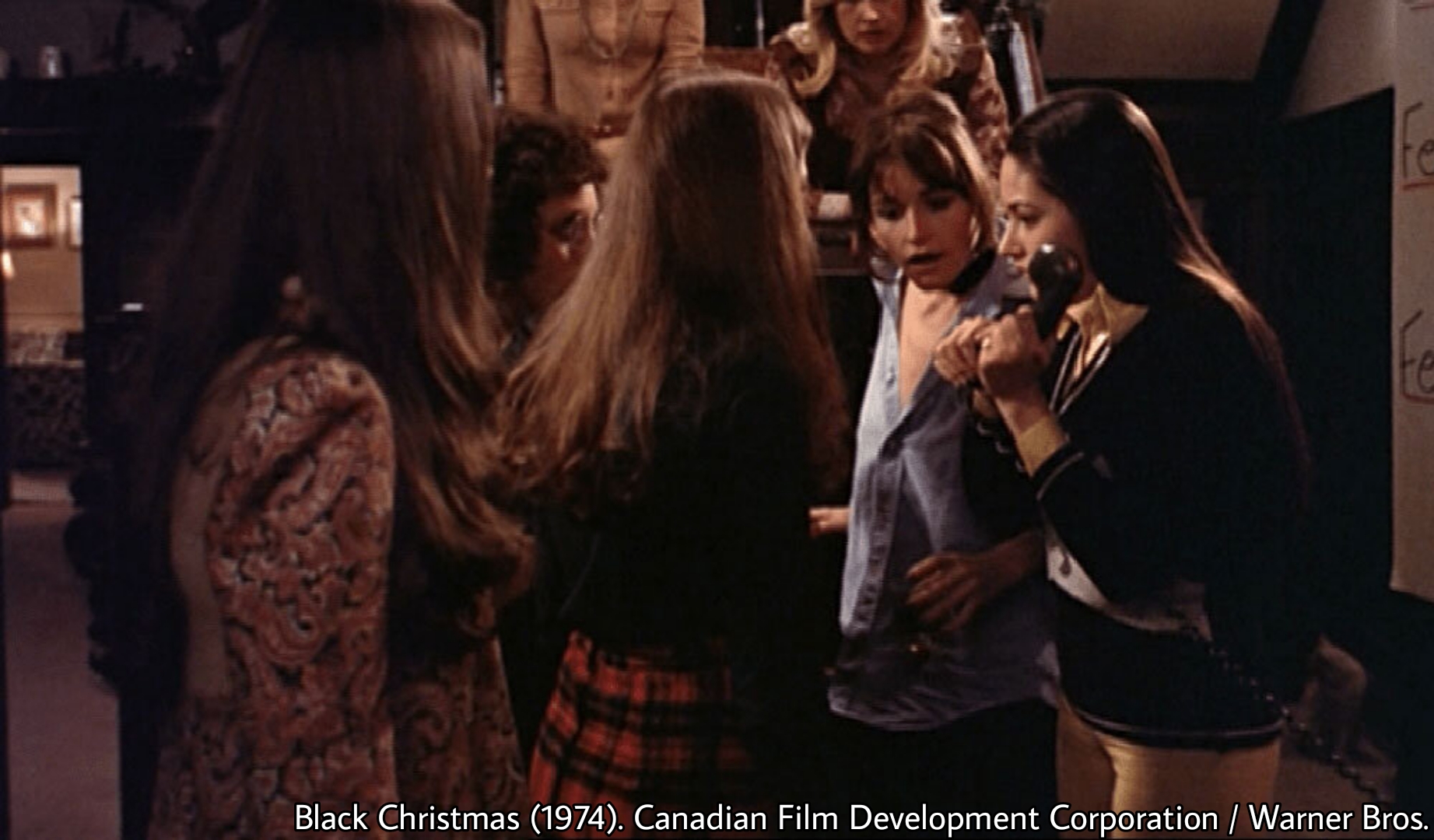
1974’s Black Christmas is monumental for first establishing familiar tropes seen today within the slasher sub-genre. It’s also a masterclass setting the stage for impeding dread and an overly tense atmosphere. It may be minimalist for the violence—particularly compared to today’s standards and (de)sensibilities towards gore.
It delivers some of horror’s most chilling imagery that, even decades later, is equally effective. It’s also worth noting that this movie came just one year after Roe vs. Wade, and the subplot of abortion has not only established this movie as being pro-feminist in its handling of its subject but also quite honourable for being ahead of the times when few movies would dare to tackle it.
Glen Morgan’s 2006 Black X-Mas
Now, onto the first remake, Black Christmas—often stylized as ‘Black X-Mas,’ 2006, directed by Glen Morgan. To understand this film’s direction and execution, you need to look into a troubled production history and distributor, helmed none other by Harvey & Bob Weinstein’s Dimension Films.
From its concept, screenplay, and creative differences to studio interference, the final product had little resemblance to what Morgan had initially envisioned for his remake. Cue in the Weinstein will deliberately shoot very elaborate sequences behind the director’s back made solely for its trailer to draw in more audiences under false pretenses.
If you watch the U.S.A. theatrical trailer from the 1-minute 35-second point, none of those scenes are present in the movie or in any of the deleted scenes either; it was only deceptively shot for the movie trailer only – this just gives you an idea of what Glen dealt with during its production.
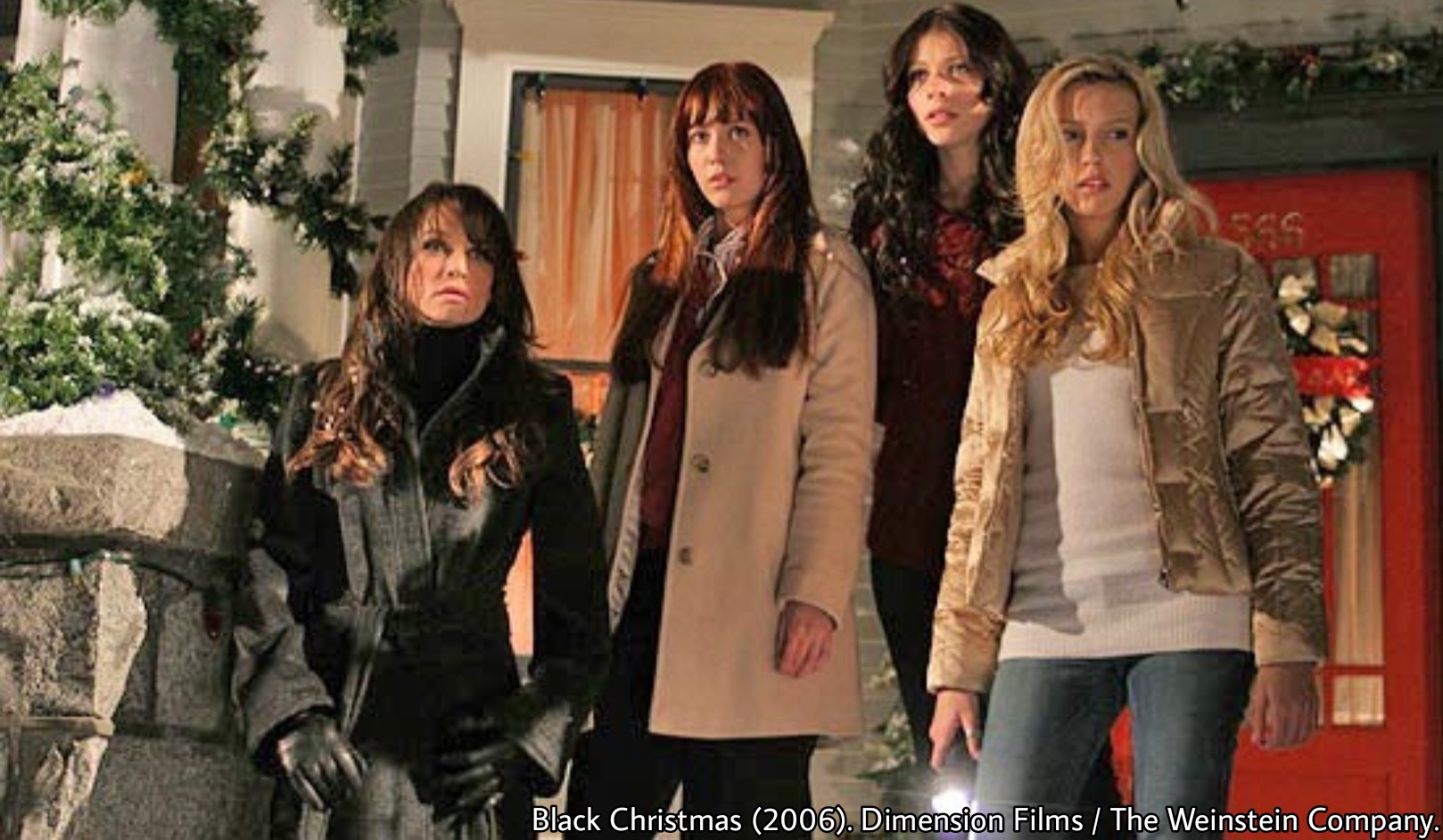
Lambasted by critics at the time and the many fans of the original, it has gained reappraisal in its later years. The movie is unabashedly batshit for just about every aspect of this film, a film that’s so intentionally overly gross and over-the-top in its gore.
Eyeballs getting gouged out and eaten, cookies made of human flesh, choking done by Christmas lights, and an incestuous plot point are a few key elements to this absolute bonkers take, but I’d be lying if I said I didn’t enjoy the hell out of this one.
It’s wildly amusing, never short of a blast and has become my go-to guilty pleasure film. It’d be a mistake to take any of these films seriously, so if you can’t improve the perfection of the first movie, you might as well carve its path in excess and spectacularly gory fashion, and boy, it delivers!
Sophia Takal’s 2019 Black Christmas
The third and most recent entry in its franchise is 2019’s Black Christmas from Sophia Takal. It is the film entry straying the furthest from its predecessors, both in the plot and having supernatural elements added in for the first time in the Black Christmas franchise.
It also admirably wants to tackle more contemporary feminist themes like rape culture on college campuses. The end result, however, is a mixed bag, to say the least. The movie’s themes are definitely a topic worth addressing, but the problem lies in its own execution with the heavy-handed issues, and that would be in the film’s script.
It’s done in a way that’s too superficial, where every character is blatantly good or undoubtedly evil. The reality is that abusers in real life are usually, and statistically, the victim’s acquaintances, friends, or family circles. It’s a clumsy take on a significant topic that needs discussion.
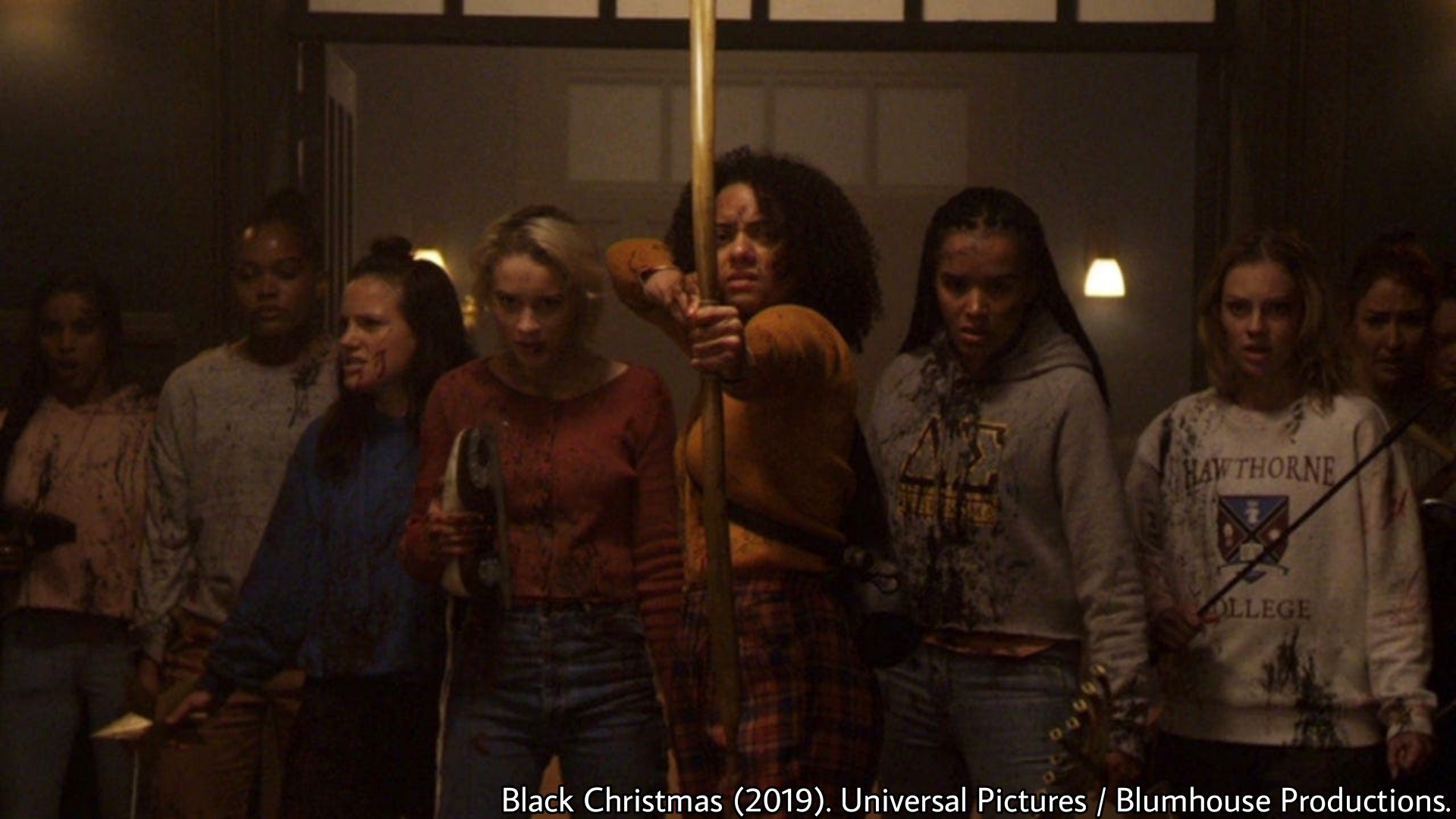
However, it’s not all bad; this movie has grown on me with subsequent viewings. I’ll give it major points for trying something new in the franchise’s history. At the same time, I’m not particularly fond of watering down slashers to a softer PG-13 rating—since it tends to come with the territory of softening the tension in the wrong direction.
There is something worth admiring, though, in having it reach broader demographics. It’s infinitely less bleak than both previous films, and the display of sisterhood and female empowerment is excellent.
Still, it probably would’ve fared better with audiences had it had more precise direction and dialogue that doesn’t seem like it was written in A.I. Despite all its flaws, it could’ve been far worse, but it certainly deserved to be far better.
Written by: Danny Micheal Vaillancourt
 Gothic Bite Magazine