

Over at Gothic Bite, we know that the word gothic runs deeper than what the populace thinks it does. It creeps in, and sometimes we find it in songs. James tells us more about Big Bad John.
A Little About Big Bad John
Alright, Biters, It’s been a while since I did a song review. Let’s revisit a favourite artist of mine, bass singer and Voice Play member Geoff Castellucci. This time, we are looking at his cover of Big Bad John.
Considering this is Geoff’s third time around with us, there is no need to rehash his stats and history. We all know that man can sing. Instead, let’s focus on the song’s history.
This country number was released in 1961 by Jimmy Dean. Yes, that Jimmy Dean. The one who sells you sausage and breakfast sandwiches.
The song got its name and inspiration from actor John Minto, who was six and a half feet tall and had Dean call him Big John. The hit spent weeks as a number one on the charts across multiple genres.
A Much Darker Song Than We First Thought
Biters, I can see you doing the come-on. When does this get gothic? Hand wave. So, let’s break down John the character before we move on to Geoff’s cover.
To start it off, John is a miner, which can invoke some scary imagery. Whether it’s PG and campy like Scooby Doo’s Miner Forty-Niner. Something a bit more middle of the road like The Chilling Adventures of Sabrina‘s The Darkness. Full-blown R-rated horror with entries like My Bloody Valentine; this occupation has earned its spot in the horror culture.

The song lyrics also tell us he is an introvert who killed a man. So not only do we have a potential killer but signs of the trope that it’s the quiet ones you have to look out for.
The other bit this song has going for it is narratively touching on monatophobia and taphophobia, both of which our Mystical Family tackled during our fear week some time back.
But What About The Song Itself?
Enough setup. Let’s get into the main event and talk about Geoff’s video. This has all his trademark staples. Parked in front of the camera: check. Geoff is showing his range by singing all the parts. You got it. He absolutely uses editing to make clones of himself.
What I particularly love about this video aesthetically is his theatricality and showmanship. He shot the video in fellow Voice Play member Layne Stein’s production theatre backstage area.

He did so while wearing tank tops and jeans and raiding his father’s tool shed. It gives the video an industrial feel like we are in a mine shaft.
As I said before, we all know that man can sing. But I really wanted to highlight how he used his more behind-the-scenes talents of arranging and composing to use his voice to the fullest.
Some More About The Video
Geoff drives the narrative, pulls you in, and gets you invested in this rollercoaster of a short story. We all show up for his low bass notes.
However, you can’t help but feel the character’s hope and salvation when he goes into the high notes. As we are talking about this song in a gothic magazine, Biters, we know it can’t end well for John.
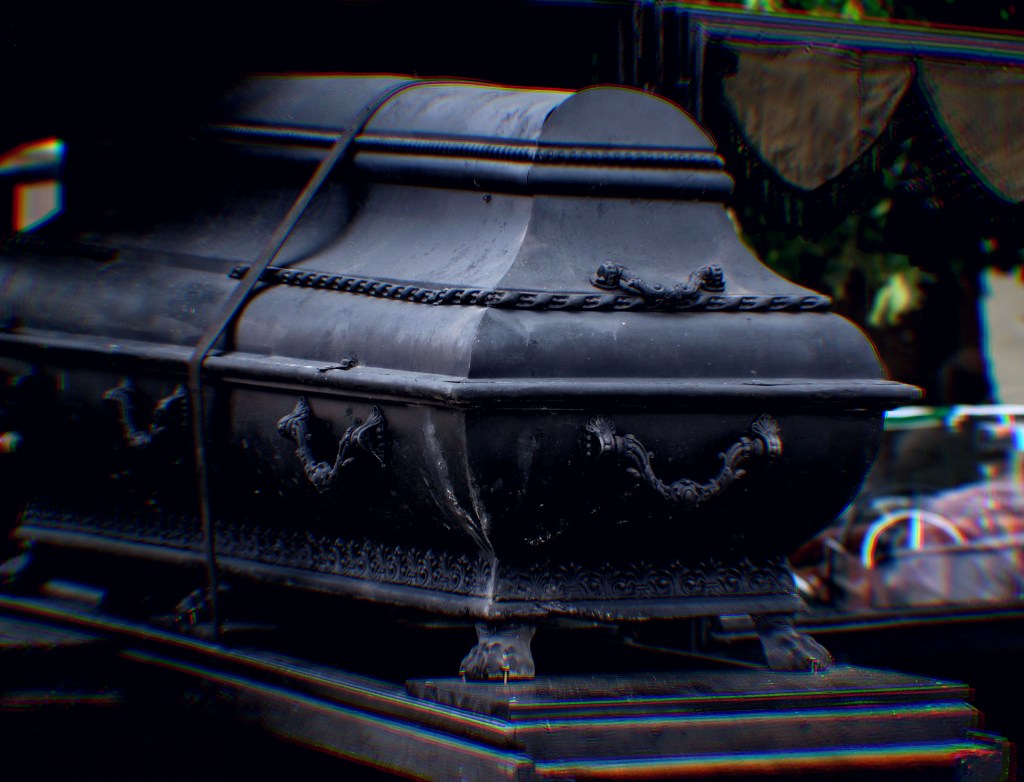
This is where that monatophobia, and taphophobia come into play. The video glitches out, the Geoff doubles disappear, and the warm yellow glow of the stage light is replaced with a cold blue filter. We are ‘John’ trapped in the mine alone, buried alive.
Buried Alive As Big Bad John
No surprise, but I’m turning this review into a two-for-one. Something I’ve noticed, and it may be just me. But when Big Bad John comes up, so does another song, Tennessee Ernie Ford‘s Sixteen Tons, released in 1947.
“Every morning at the mine, you could see him arrive. He stood six foot six and weighed two forty-five.” — Big Bad John
Big Bad John & Sixteen Tons
“I was born one mornin’ when the sun didn’t shine. I picked up my shovel, and I walked to the mine.” — Sixteen Tons
While not officially connected, this song is a spiritual precursor to the other. Wouldn’t you know Geoff has covered both? Not only did he use a similar setup of his co-singer’s backstage, dad’s tools, and blue-collar wardrobe. But there are some lyrical connections as well.
“Big Bad John: “Somebody said he came from New Orleans. Where he got in a fight over a Cajun Queen. And a crashin’ blow from a huge right hand. Sent a Louisiana fellow to the promised land.” — Big Bad John
Big Bad John & Sixteen Tons
“If you see me comin’, better step aside. A lotta men didn’t. A lotta men died. One fist of iron, the other of steel. If the right one don’t get you. Then the left one will.” — Sixteen Tons
“Big Bad John: “The gas and smoke belched out of that mine. Everybody knew it was the end of the line for John.” — Big Bad John
“Sixteen Tons: “Saint Peter, don’t you call me ’cause I can’t go. I owe my soul to the company store.” — Sixteen Tons
The Gothic Side Of The Miners
These songs are both clearly about miners of great strength. So, Biters, who’s to say it isn’t John? After all, a man who can hold back a collapsing mine shaft will likely haul sixteen tons.
As you can see, both protagonists are racking up a body count with their bare hands. Finally, Sixteen Ton‘s chorus of Saint Peter not calling is rather tragic poetry if you do connect the two songs.
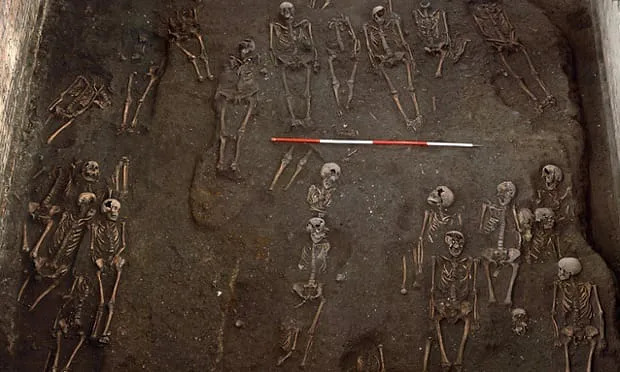
John got his wish, but they never recovered his body. His soul remains with the company store.
Trying to sell the gothic qualities of these songs, I was sidetracked by this article’s main feature, Geoff. So, let’s close this out by getting back on track.
This multi-talented bass vocalist has masterfully covered these two vintage hits. If you have yet to find your way down the Geoff Castellucci rabbit hole, these classics are not a bad place to start.
 Gothic Bite Magazine
I never thought such old songs could have that level of gothic and morbid angles to them! Awesome article!
LikeLike