
The Witchcore Magazine is a place for studying and reporting on the history of haunted locations. Here is one of them in Texas, United States.
A Famous Local Haunting Not As Popular Worldwide
San Antonio, Texas, is a city steeped in history, with tales of ghosts and hauntings echoing through its centuries-old streets. One of the most famous haunted places in San Antonio is the San Fernando Cathedral, an iconic landmark with a history that dates back to the 18th century.
In this article, we will delve into the origin of the cathedral, explore its historical significance, recount the types of hauntings reported, and examine the evidence that suggests paranormal activity within its sacred walls.
The Origins of San Fernando Cathedral
The San Fernando Cathedral, officially known as the Cathedral of San Fernando, is a Roman Catholic cathedral in downtown San Antonio’s heart. Its history is closely intertwined with the city’s founding and development.
The cathedral’s origins can be traced back to 1731 when Spanish settlers established the Mission San Antonio de Padua. The mission’s chapel eventually evolved into what we now know as the San Fernando Cathedral.
The History Of The Cathedral
The history of San Fernando Cathedral is intricately linked to the arrival of the Canary Islanders in San Antonio. In 1731, as part of Spain’s efforts to expand its influence in the New World, fifteen Canary Island families and a few soldiers arrived in San Antonio de Béjar, a small settlement in Spanish Texas.
They brought a deep Catholic faith and a determination to establish a mission and presidio in the area. As the settlement grew, the original mission chapel, known as the “Capilla de Nuestra Señora de la Candelaria y Guadalupe,” gradually expanded and evolved into the grand San Fernando Cathedral we know today.
The legacy of the Canary Islanders’ faith and contributions to the cathedral’s history remains vital to San Antonio’s cultural heritage.
A Struggle That Keeps On Giving
The struggles between the Canary Islanders and the Apache tribes were a challenging and defining aspect of the early history of San Antonio, Texas. The arrival of the Canary Islanders in the 18th century marked the beginning of conflicts with the Apache, who were indigenous to the region.
The Apache, skilled warriors and nomadic hunters, resisted the encroachment of Spanish settlers on their ancestral lands, leading to frequent skirmishes and raids on the Canary Islander settlements. These clashes disrupted the settlers’ efforts to establish a stable presence in the area and posed significant challenges to their survival.
The ongoing conflicts with the Apache highlight the complex dynamics between European colonizers and indigenous peoples during Spanish colonization in the American Southwest, ultimately shaping the history and development of San Antonio.
The cathedral holds immense historical significance for San Antonio and the entire state of Texas. It played a central role in the Battle of the Alamo in 1836, as its bell tower was used by Texan forces to alert the inhabitants of the impending Mexican attack.
Moreover, it served as a place of worship and community for generations of San Antonians, symbolizing the city’s rich cultural heritage.
There Are Many Types Of Hauntings
Over the years, numerous reports of paranormal activity have been associated with the San Fernando Cathedral. Let’s begin with the first haunting on the list of many more.
One of the most well-known stories is that of the ghostly nun who is said to roam the cathedral. Legend has it that she was a nun from the early days of the mission who fell in love with a soldier and was tragically separated from him. Some visitors claim to have seen her apparition in the cathedral, often on the balcony.
The legend of the ghostly nun who haunts the San Fernando Cathedral is one of the most enduring and captivating tales of paranormal activity associated with this historic site.
The Nun But Not That Nun
According to local lore, the story of the ghostly nun dates back to the early days of the mission and the settlement of San Antonio. It is said that the nun in question was a devoted member of the clergy, serving the mission’s religious community with unwavering dedication.
As the legend goes on, amidst the mission’s religious fervour and the bustling life of the Spanish colonial outpost, the young nun finds herself entangled in an illicit love affair. She fell deeply in love with a dashing soldier stationed at the nearby presidio, their clandestine romance flourishing in the shadows of the mission’s walls.

Their love, however, was tragically doomed. The criticisms of the Church and the social norms of the time forbade such unions between clergy and soldiers.
The nun and the soldier faced severe consequences when their forbidden love was discovered. They were forcibly separated, torn apart by the institutions and ideals they had pledged their lives to uphold.
Heartbroken and unable to reconcile the rupture in her heart and soul, the young nun is said to have perished under mysterious and sorrowful circumstances. Her tragic death, fueled by unfulfilled love and a broken heart, left a lingering imprint on the spiritual fabric of the San Fernando Cathedral.
The Haunting Keeps On Going
Now, centuries later, her spirit is said to roam the cathedral’s sacred halls, particularly in the dimly lit balcony area. Witnesses have reported encountering a spectral figure cloaked in a nun’s habit, her ghostly visage emanating an aura of sadness and longing. Some claim to have heard faint, mournful whispers and soft sobbing, echoing the anguish of a love lost to time.
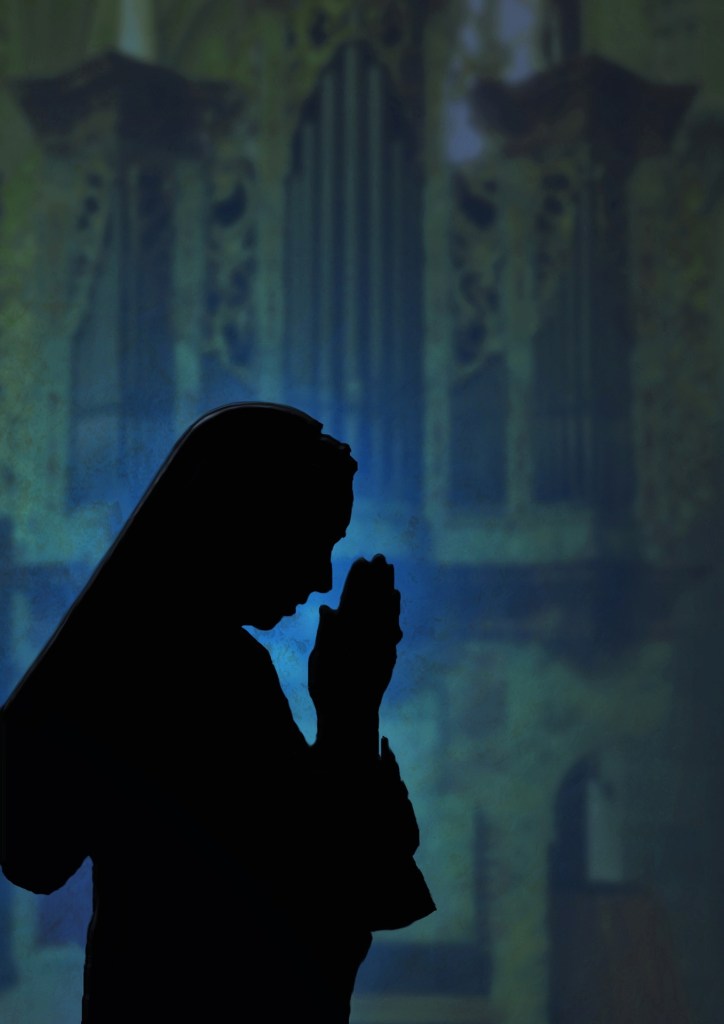
The story of the ghostly nun serves as a poignant reminder of the human emotions and conflicts that have played out against the backdrop of the San Fernando Cathedral’s storied history.
Her ethereal presence continues to captivate visitors and paranormal enthusiasts, adding an air of mystery and melancholy to this iconic Texas landmark. Whether one believes in the supernatural or not, the legend of the ghostly nun remains an enduring and enigmatic part of the cathedral’s legacy.
 Gothic Bite Magazine