
History remembers the mighty, the long-reigning, and the victorious, but what about the nearly forgotten? This article explores the short, shadowy life of Ælfweard, the little-known son of Edward the Elder, who may have briefly ruled England for just sixteen days.
Between the political turmoil of Anglo-Saxon succession, rival claims to the throne, and the uncertain legacy of his education and legitimacy, Ælfweard’s story is one of potential, tragedy, and mystery. Was he truly king? Was he meant to rule at all? Dive into the lost life of a prince who stood on the edge of power—and vanished almost as quickly as he appeared.

Before The Kings Of England
When we think of the formation of England, our minds often turn to names like Alfred the Great, Edward the Elder, or Æthelstan, the latter often dubbed the first true king of all England. But between Edward and Æthelstan lies a curious void. A sliver of time. A ghost of a reign.
That ghost is Ælfweard, son of Edward the Elder. The boy who might have been king. The boy who, depending on which dusty manuscript you read, ruled for 16 days, or never ruled at all.
In the haze of the early 10th century, Ælfweard stands as one of Anglo-Saxon history’s most elusive figures: a monarch potentially crowned and uncrowned by time itself.
A Prince in the Shadow of Greatness
Born in 902, Ælfweard was the son of King Edward the Elder and his second wife, Queen Ælfflæd. This made him a legitimate prince born of a crowned queen, an important distinction in royal circles where bloodline and marriage alliances often shaped the crown’s destiny.
His elder half-brother, Æthelstan, had been born years earlier to a woman named Ecgwynn, a figure whose legacy would become hotly debated. Later chroniclers, especially those sympathetic to Wessex factions that favoured Ælfweard, would label Ecgwynn a concubine, implying that Æthelstan’s claim to the throne was less legitimate. But this is likely a political distortion rather than fact.
Modern historians believe Ecgwynn was a noblewoman, possibly with ties to the Mercian elite. She was certainly highborn enough for Edward to entrust her son Æthelstan to the household of Lady Æthelflæd, Lady of the Mercians, the powerful ruler of Mercia and Edward’s sister.
This fosterage wasn’t just a family arrangement; it was a political alliance, the kind reserved for royal children with honourable lineage. The attempt to erase Ecgwynn’s status may have been a strategic smear to delegitimize Æthelstan during the early power struggle that followed Edward’s death.
Regardless, in the eyes of many Anglo-Saxon nobles, Ælfweard had the stronger maternal claim, and that mattered. He was a prince born of a reigning queen, raised in Wessex, and seemingly groomed for succession. But legitimacy isn’t everything in medieval politics, and in this case, it wasn’t enough to guarantee the crown.
But What Do We Know About The Legitimate Son?
What little we know of Ælfweard’s life suggests a youth spent in Wessex, likely immersed in the monastic and military traditions befitting a royal son.
While Æthelstan was famously fostered in Mercia under the formidable Lady Æthelflæd, his aunt and one of the most powerful women in English history, Ælfweard seems to have remained close to the Wessex court. This physical separation would later mirror a political divide.
Though records are sparse, some sources hint at Ælfweard being a studious, pious youth. His name, meaning “Elf-guardian” or “Protector of the Elves,” is more than just Anglo-Saxon whimsy; it reflects a tradition of mythic symbolism in naming royal sons, aligning him with otherworldly wisdom and guardianship. Could this have foreshadowed a reign that never was?
The Scholar Prince of Wessex
Though the surviving records about Ælfweard are frustratingly thin, it’s highly probable that he received a monastic or scholarly education, especially considering the practices of the Wessex royal court in the early 10th century.
His grandfather, Alfred the Great, had been a devout champion of learning and had set a precedent for educating noble children, especially future kings, in both warfare and wisdom. That cultural legacy was still strong in Edward the Elder’s court.
Ælfweard, as a legitimate son of the queen, would almost certainly have been educated in religious and administrative disciplines, likely by monks tied to one of Wessex’s great ecclesiastical centres. Winchester, being the royal and religious heart of the kingdom, is a strong candidate.
Some evidence suggests he may have been connected with the New Minster, where he would later be buried, a place known for both its religious significance and its elite educational role.
While there’s no direct record naming which monastery or religious school Ælfweard may have attended, sending royal sons into monastic environments was not uncommon, even for those destined to rule. This was not necessarily a sign they were being steered toward the Church, but rather that they were being trained in literacy, law, diplomacy, and moral instruction.
The monasteries were the intellectual powerhouses of the time, one of the few places where a young prince could learn Latin, study scripture, read the law codes, and prepare for the bureaucratic demands of kingship.
It’s even possible Ælfweard was placed in a monastic setting as part of a strategy to groom him as a future king-priest figure, balancing the sword and the psalter in equal measure.
His education would likely have included copying religious texts, studying biblical kingship models, and learning about the responsibilities of rule as divinely ordained. This would have positioned him as not just a warrior prince, but a pious and learned one, a perfect heir in the eyes of a pious Wessex court still shaped by Alfred’s vision.
If so, Ælfweard may have been raised to see kingship as a sacred duty, not merely an inheritance. And that makes his sudden, brief appearance on the stage of history all the more tragic. He was possibly fully prepared for the crown in mind and spirit, only to lose both his life and his legacy before his reign could even begin.
The Question of Succession: Brother Against Brother
Edward the Elder died on 17 July 924, after an extensive reign spent solidifying the gains of his father Alfred, and fighting to bring the Danelaw under English control. His passing left a dangerous vacuum.
Enter the murky world of Anglo-Saxon succession.
The Anglo-Saxon Chronicle, that ancient, semi-reliable bedrock of English historical record, says only that Ælfweard died shortly after his father. One manuscript claims he survived him by 16 days. Another, the Textus Roffensis, gives him a reign of four weeks. In contrast, William of Malmesbury, writing in the 12th century, states Æthelstan succeeded directly, as per their father’s wishes.
So who was king?
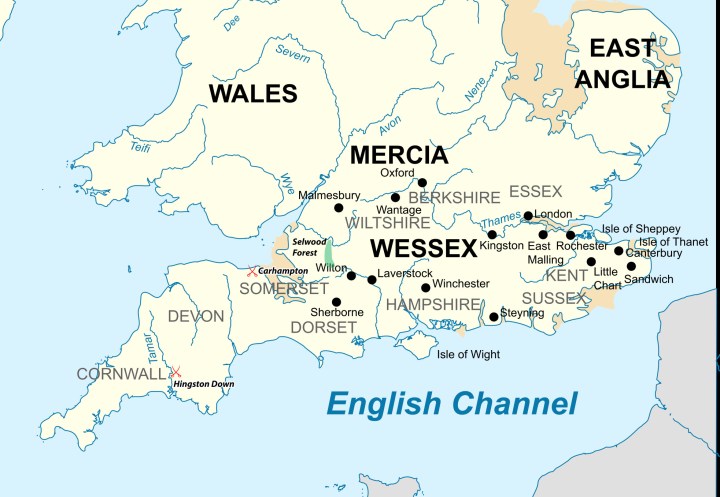
Some historians argue that Edward intended a split succession: Ælfweard to rule Wessex and Æthelstan to rule Mercia. This theory is partly supported by Æthelstan’s upbringing in Mercia, and Ælfweard’s strong ties to Wessex.
Others believe that after Edward’s death, the witan (a council of nobles and clergy) backed Ælfweard in the south, while Mercia rallied behind Æthelstan.
In the words of historian Simon Keynes, “Ælfweard was recognised as king in Wessex and Æthelstan in Mercia,” implying a brief, uneasy co-rule, or more likely, a tense rivalry.
But then—Ælfweard died.
A Death That Changed England’s Course
On 2 August 924, a mere sixteen days after his father’s death, Ælfweard died at Oxford. The cause is lost to history. Was it natural illness, so common in a world of poor sanitation and medical ignorance? Was it stress, or perhaps heartbreak, as some more poetic minds have mused? Or, and this is purely speculation, was it something darker?
Whispers have existed in obscure corners of historical fiction and amateur theory for centuries: Was Ælfweard murdered? After all, Æthelstan had powerful Mercian allies and may have seen his half-brother as an obstacle to unification. While there is no direct evidence of foul play, the timing is enough to raise an eyebrow.
What is clear is that Ælfweard was buried with his father at New Minster in Winchester, the heart of Wessex, and a sacred royal burial site. This was not the treatment of a pretender or failed claimant, it was the funeral of a king.
Legacy: A Reign Written in Dust
After Ælfweard’s death, Æthelstan faced resistance in Wessex, despite having the support of Mercia. It took over a year before he was crowned King of the Anglo-Saxons on 4 September 925. This delay hints at ongoing political tension, perhaps from nobles loyal to Ælfweard’s claim.
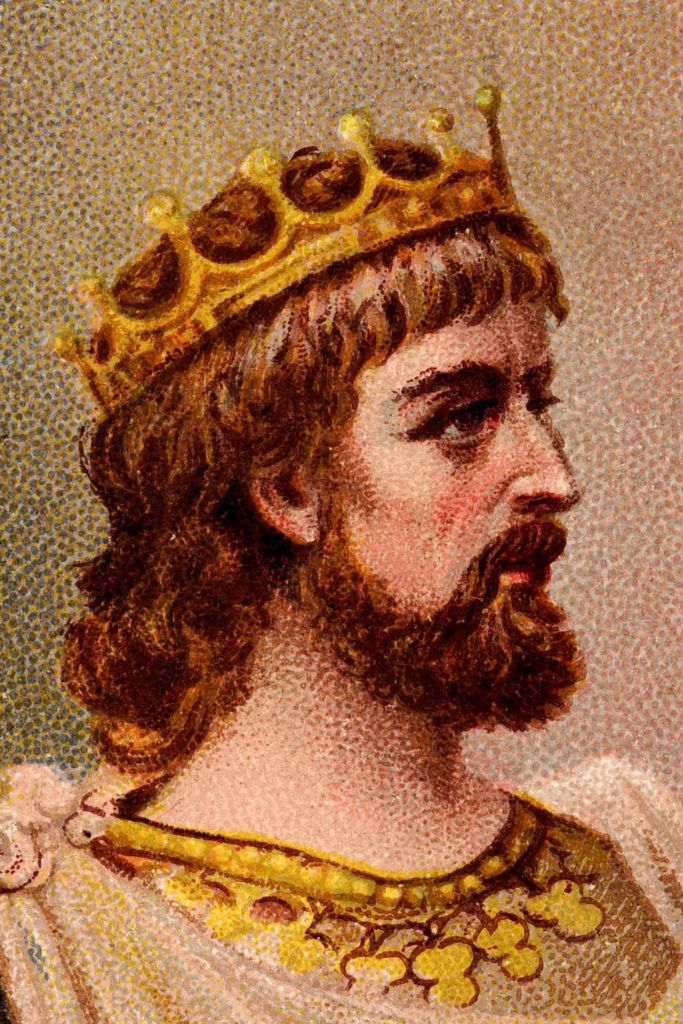
Had Ælfweard lived, it is not unreasonable to believe that England’s future might have looked very different. Would we remember Ælfweard as the first king of a unified England instead of Æthelstan? Would Æthelstan have faded into obscurity, his achievements lost in the shadow of his half-brother’s longer rule?
Instead, Ælfweard became a footnote, a fleeting spark in the chronicles of kings, his name whispered only by scholars, historians, and curious minds like ours.
Conclusion: The King Time Forgot
Ælfweard is a perfect example of how history remembers the victors, not the contenders. In a different timeline, perhaps he would be the one celebrated in epic tales and historical novels. But in our world, his name lingers in the margins, still there, barely remembered, yet fascinating all the same.
In the vast, blood-soaked tapestry of English monarchy, Ælfweard is a ghost king. A boy on the brink of power. A ruler who, for sixteen days, or maybe none at all, held the fate of a kingdom in his hands.
We’ll never truly know what kind of king he might have been. But sometimes, the most haunting stories are the ones history tried to forget.
 Gothic Bite Magazine